Dairy Business, Finance & Labor
Should You Expand Your Dairy? Run the Numbers First
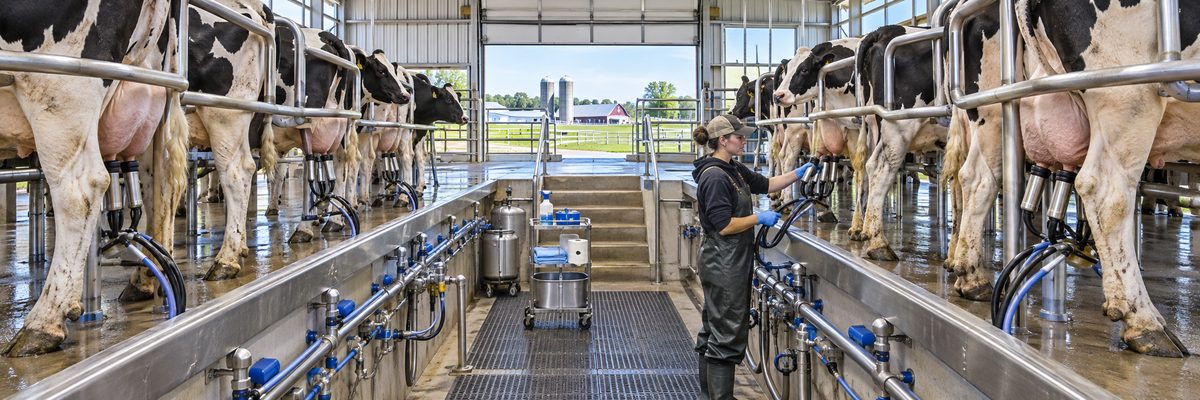
Most dairy expansions fail on the boring parts, not the exciting ones. Cows are easy to buy. What goes wrong is the manure storage that's too small, the heifer supply that can't keep up, the labor that isn't there on the second shift, and a milk price that drops the same month the new barn payment starts.
The question to answer is not "can we fit more cows?" It's "will the extra cows make more money than they cost, in a bad year as well as a good one?" That's a number you can work out on paper, and the paper is cheaper than the barn.
Start by finding the actual bottleneck
Before you add anything, figure out what's holding the dairy back. Sometimes it's cow numbers. More often it's something else, and adding cows on top of it just makes the problem bigger.
- Parlor capacity: are you milking for so many hours that people and cows are worn down?
- Cow comfort: are stalls overcrowded, or are fresh cows standing in the alley?
- Feed storage and feeding space: can you feed more cows without running short on forage or bunk space?
- Manure storage and land base: do you have the capacity to store and spread more manure within your nutrient plan?
- Labor: do you have people who can do the work, or are you counting on the same three tired people?
- Heifers and dry cows: do you have space for them?
Sometimes the best expansion is not more cows. It's more milk from the cows you already have, through better comfort, fresh cow management or reproduction. That path is usually cheaper and less risky, and it's worth pricing before you pour concrete.
Price the whole project, not just the barn
Expansion budgets usually leave things out. The barn gets a number and then everything around it gets "we'll see." List the pieces.
| Piece | What to include |
|---|---|
| Housing | Freestalls or bedded pack, curtains, ventilation, cooling, lighting, alleys |
| Milking | Added parlor capacity, holding area, cooling and washing capacity, or robots |
| Manure | Storage, pumping, separation, hauling or spreading equipment, permits |
| Feed | Bunker or bag capacity, mixer, feed lane, bunk space |
| Animals | Purchased cows or raised heifers, plus dry cow and calf facilities |
| Labor | Added staff, training, payroll costs, possibly housing |
| Soft costs | Engineering, permits, interest during construction, contingency |
For the barn alone, what a freestall barn costs per cow shows how to think about building costs on a per-cow basis. Add a contingency to every line. A project always costs more than the first quote, because the soil is wetter, the steel is later or the inspector has an opinion.
Work out the extra money the extra cows make
The test is incremental. Don't ask what the herd earns on average. Ask what the added cows will bring in and what they'll cost, beyond what you already spend.
- Added milk income: additional cows times expected production times a conservative milk price.
- Added variable costs: feed, bedding, breeding, vet, supplies, utilities and extra hauling.
- Added labor and overhead: actual extra payroll and any step-up in insurance, repairs and management time.
- Added debt service: principal and interest on the project.
If what's left over after all four is thin, the project is thin. Your own cost of production per hundredweight and break-even milk price are the benchmarks. If the expansion raises your break-even, the herd is working harder for the same money.
Stress-test it
Run the plan three ways: a decent milk price, a poor one, and a poor one with high feed costs. The poor scenarios are the ones that decide whether you survive the project. Build the lowest case on a monthly cash flow projection, because the first year of an expansion is expensive. Cows are bought or raised before they pay, there's a learning curve, and production often dips while a larger herd settles in.
A few more questions to put through the stress test:
- What happens if construction runs late by several months?
- What if production per cow is below plan during the first year?
- Can you service the debt if the milk price stays low for a long stretch?
- If the project fails, what's the exit? Can the buildings serve another purpose or be sold?
Check the rules and the neighbors
Expanding a herd can trigger permit, nutrient management and zoning requirements, and the thresholds differ by state and sometimes by county. The EPA gives an overview of its animal feeding operations program, but your state agency and local zoning office set the practical rules. Talk to them early, and talk to the neighbors before the heavy equipment shows up. A neighbor who hears about a new manure lagoon from the county notice is not a neighbor in a good mood.
Regional factors matter too. In the Upper Midwest and Northeast, land base and manure storage tend to be the squeeze. In the arid West, water and feed supply loom larger. In the Southeast, heat abatement has to be part of the budget from the start, not added after the first July.
Check with the people who'll have to live with it
Before you commit, talk to your lender, nutritionist, veterinarian and herd manager. Your lender will want a plan, and what lenders want in a dairy loan package is a good checklist for what to prepare. Your own family should have a say too, especially if the dairy is meant to support more than one generation. An expansion is often the moment when succession planning either gets done or gets postponed once more. For help with the economics, university dairy programs such as UW-Madison Extension and Cornell PRO-DAIRY have publications and worksheets for farm business decisions.
Signs you're ready, and signs you aren't
- Ready: your current herd performs well, your records are in order, your finances can absorb a bad year, and you have a labor and heifer plan.
- Not yet: you're expanding to "get ahead of costs" without a clear cost picture, the current barn is already stretched, or the plan only works at a milk price you've seen twice in a decade.
Cows have a way of finding the one thing you forgot to budget, usually at 4 a.m. and usually in the one pen with no spare gate.
Quick answers
How do I know if my dairy should expand?
Find your bottleneck first, then work out whether extra cows would add more income than they add in costs and debt payments, even in a low-price year. If the answer is only yes in a good year, wait or look for cheaper ways to raise production.
What's the biggest hidden cost of dairy expansion?
Often it's manure storage, labor and the first year of lower production while the larger herd settles. Contingency money for construction delays catches the rest.
Is it better to buy cows or raise heifers to fill a bigger barn?
It depends on your heifer capacity, biosecurity concerns and the price of purchased cows. Raising your own is generally better for disease control but slower and takes space, so price both.