What to Expect in the First Year of Robotic Milking
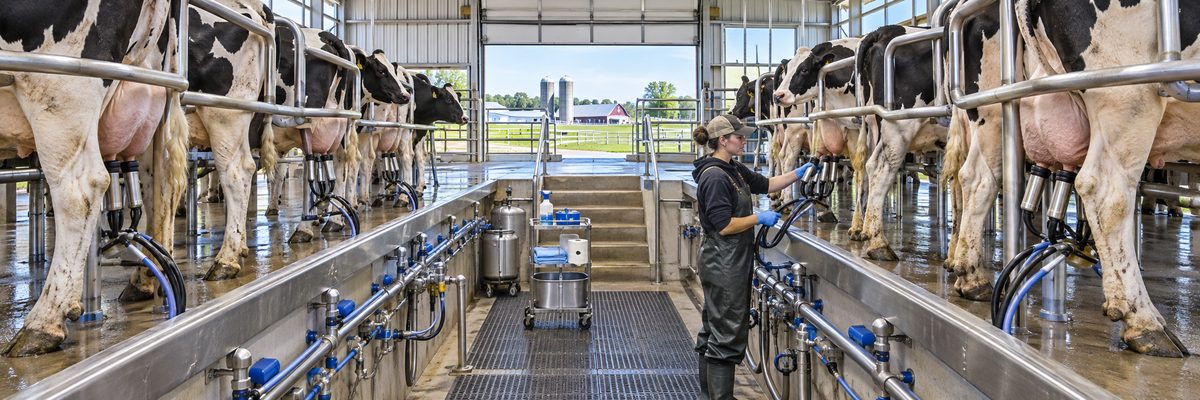
The robot does not sleep, and for the first few days, neither do you. Anyone who tells you the arm just quietly takes over the milking has either never installed one or has forgotten the first week. The good news is that the first week is the hardest one. The slower news is that the first year is a long adjustment of cows, barn, software and your own sense of what a day looks like.
Here is the short answer. Expect round-the-clock work during startup, a steep learning curve with the software, a list of cows that need to be fetched, some alarms at awkward hours and a milk-quality blip that settles if you stay on top of it. After that, the farms that do well tend to share the same habits: they watch their cows closely, keep the barn and the robot clean, feed consistently and treat the robot report as a daily chore rather than a monthly one.
If you are still deciding whether a robot belongs on your farm, start with whether a robotic milking system is right for a small dairy and what a robotic milker really costs. This article assumes you have decided and want to know what comes next.
Startup: the first few days
Penn State Extension published notes on one small Pennsylvania farm's switch from a herringbone parlor to a single robot, and they read like a field diary. The herd was trimmed to exactly 60 milking cows before startup, and on transition day the crew worked around the clock. Two to three people moved cows into the robot for the first 12 hours, which is how long it took to milk all 60 cows the first time. Looking back, a two-person cow crew would have been enough, with the owner free for equipment issues. (Transitioning to a new robotic milker has the full account.)
The notes list the kind of trouble to expect: the robot struggling to find and attach to teats, especially rear teats close together, cows fighting the arm, a hind foot stepping over it, a dirty laser shield and cows with high-hanging rear teats that the laser could not see. About a third of the cows did not let their milk down well on the first day, and stress showed up in the robot records and in the bulk tank. It is a sobering paragraph if you were picturing a calm morning with coffee.
The same notes also describe how quickly it improved. The second pass through the herd took about 9.5 hours instead of 12, and by the second day one person could manage cow flow most of the time. By the fourth day things were running well. Treat this as one farm's experience, not a promise, because barns, cows and robots all differ.
Small things that turn into big ones
That same farm hit a water-pressure alarm on day three, because the waterers in the barn were competing with the robot for supply, and a bottleneck at the robot exit where cows loitered to watch the action. Plan your water supply, lighting and exit traffic before startup. Cows are curious animals and a robot is the most interesting thing to happen in their lives since the gate that never latches.
The fetch list
Not every cow will visit the robot as often as you want. The robot report will show you cows overdue for milking, and you will go get them. That is called fetching, and it is a normal part of life with a robot. In the Penn State farm story, two weeks in the owner was fetching about eight cows each morning and eight each evening, with some regular offenders. At two months, a few fetch cows each day were still normal, and the cows with the fewest milkings, around 1.4 a day on average, were typically the ones on the fetch list, while others visited as much as 3.7 times a day.
Fetch lists get shorter with a good barn, consistent feed and well-trained heifers. Heifers in particular benefit from getting used to the robot before they calve. Read training first-calf heifers to a robotic milker for the plan. And older cows can have a rougher time: the same Penn State account noted older cows visiting less often and showing a bigger production drop than younger ones, though herd production stayed fairly consistent.
What successful robot farms do differently
University of Minnesota Extension's dairy educators describe the habits of farms with high production per cow and robot in keys to success with robotic milking systems. The list includes:
- They enjoy working with cows and keep observing them, adjusting management and robot settings based on what they see.
- They run strong transition cow programs so fresh cows are healthy and visit the robot.
- They feed consistent, high-quality forage and manage the bunk well, since inconsistent diets reduce robot visits.
- They build barns for cow comfort and labor efficiency, with comfortable stalls, automatic manure removal and sort pens.
- They minimize pen disruptions and keep the robot clean, maintained and updated, with a technician they can count on.
- They work with their nutritionist and robot company on feed tables and milking permission settings.
If that reads like a long list for a machine that was supposed to save labor, it is. The labor changes from physically milking to watching, fixing and deciding. Some people love that change and some find that they miss the cows.
Fresh cows, treated cows and milk you cannot ship
This is where the first year bites a little. Robots need to know which cows' milk can go into the tank, and fresh and treated cows complicate things. UW-Madison's dairy extension team notes in its article on fresh cow management in automatic milking systems that farms must program the system so it identifies treated cows and discards their milk, and that this typically requires additional wash cycles, which can reduce robot availability. Some farms keep a bucket milker or the old parlor for fresh and treated cows, and others set aside a pen. Even the Penn State farm saw it: the robot treated a cow recorded as fresh by the default setting and separated her milk for four days, and one other cow's milk was diverted for a reason nobody could explain. Check your settings against your treatment records early. For the record keeping side, see milk withholding times and discard records.
Milk quality in the first year
Expect some movement. In the Penn State farm, somatic cell counts for several cows rose slightly at the first test after the change and dropped back by the next one a few weeks later. Your numbers may behave differently, so test often, watch conductivity and treat cleaning, teat preparation and post-dip checks as daily jobs. Milk quality checks on a robotic dairy goes through what to monitor.
A rough first-year calendar
| Stage | What it usually involves |
|---|---|
| Before startup | Barn and water work, settings review, herd size decision, training the crew |
| First days | Round-the-clock help, hands-on cow training, constant adjustments |
| First weeks | Fetch lists, fresh cow plan, cleaning routines, daily report reading |
| First few months | Settings fine-tuning, heifer training, a handle on milk quality trends |
| Rest of the year | Maintenance schedule, feed table tweaks, an honest look at labor and results |
The barn matters more than people think. See barn layouts for robots: free flow vs guided flow before you commit to a layout.
Quick answers
How long does it take cows to adjust to a robot?
Many cows catch on within days, and most of the herd is usually settled within a few weeks. A few cows will always need fetching, and older cows and heifers may need extra help.
Will my somatic cell count go up with a robot?
It can rise briefly after the change, as it did on the Penn State farm, and then settle. Results vary by farm, and management, cleaning and cow cleanliness matter more than the machine.
Do I still need to be at the barn all the time?
No, but you do need to be reachable. Robots send alarms, and someone has to check reports and handle problems at any hour, so plan how you will cover nights and weekends.