How Milk Quality Premiums Work
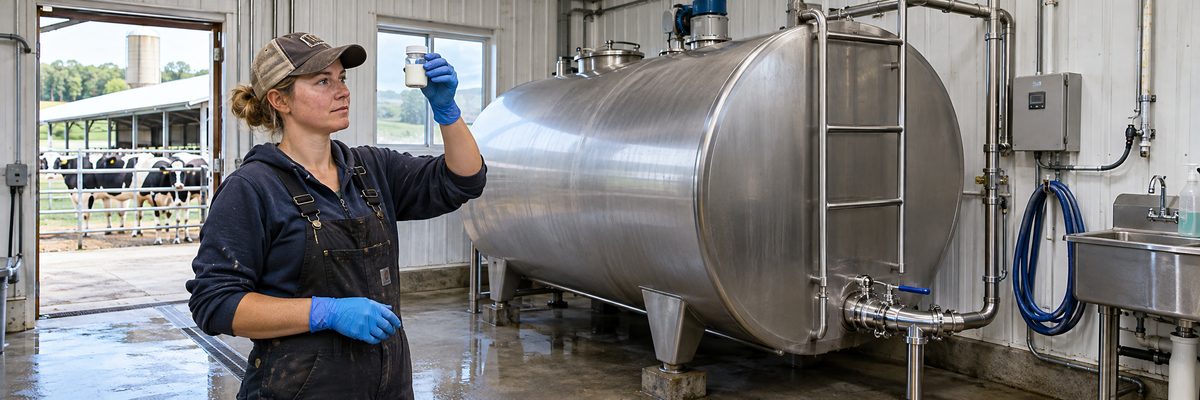
Quality premiums are extra dollars per hundredweight that your milk buyer pays when your somatic cell count and bacteria counts come in below set levels, and deductions or lost premiums when they don't. There is no single national schedule. The cooperative or handler that picks up your milk writes its own, and the numbers vary by buyer, region and market.
What is national is the legal floor. Milk that fails the Grade A limits can't be sold as Grade A at all, and premiums only begin to matter once you are comfortably above that floor. Think of the legal limits as the entrance fee and the premium program as the part where you actually get paid for doing well.
Because the details live in your own milk contract or member handbook, this article explains the mechanics and points you toward the right questions to ask.
Legal limits versus premium levels
Under the model Grade A rules described by UW-Madison Extension's overview of milk testing, individual producer milk should not exceed 100,000 bacteria per milliliter and, for cow milk, 750,000 somatic cells per milliliter. Go over repeatedly and the state can warn you or suspend your Grade A permit. Those numbers decide whether you can ship milk. They don't decide whether you get a premium.
Buyer programs usually set much tighter levels. A handler might pay a bonus at one threshold, a bigger one at a lower threshold, and nothing or a deduction above a certain line. The specific cutoffs are theirs, and they change, which is why you should always read the current version of your own program.
What the premium schedule usually contains
- Somatic cell count tiers. Lower SCC earns more, because it reflects udder health and affects the quality of the milk downstream. See what somatic cell count measures and why buyers care.
- Bacteria count tiers. Often standard plate count, and sometimes preliminary incubation or laboratory pasteurized counts as well.
- Penalties. Many programs deduct for high counts, for positive drug tests, or for repeated violations, and these can be much larger than premiums.
- Component pay. Butterfat, protein and other solids are priced separately and aren't quality premiums, but they appear on the same check and are worth keeping straight.
Where premiums come from
This confuses a lot of people, so here is the short version. Federal milk marketing orders, administered by USDA, set minimum prices that handlers pay for milk in each region. The USDA Agricultural Marketing Service explains them on its dairy marketing orders page. Quality premiums sit on top of that. They are set by your cooperative or processor and are paid out of that company's own returns, so what one buyer offers may not match the next.
Not every farm is in a federal order, and some states run their own pricing. Where you milk changes the rules, whether you ship to a cooperative in the Upper Midwest, a handler serving a large Western herd, or a bottling plant in the Northeast or Southeast, so ask your own buyer instead of a neighbor.
A worked example with made-up numbers
To see how premiums add up, take a hypothetical herd. The figures below are for illustration only, not any real buyer's schedule.
- 100 cows averaging 80 pounds of milk a day ships 8,000 pounds a day, which is 80 hundredweight.
- A premium of 25 cents per hundredweight works out to $20 a day.
- Over a full year of daily shipping, that comes to about $7,300.
Now flip it. A deduction of the same size costs the same amount. Numbers like these are why a herd that fixes a persistent high-count problem often finds the milk check improves by more than the cost of the repair.
What the premium really pays for
Premiums reward the practices behind the numbers, so every improvement in the parlor shows up twice: in herd health and in the check. The same steps that lower SCC and bacteria are things you can control:
- Consistent teat prep and dipping, covered in how to lower bulk tank SCC.
- A clean, well-maintained milking system and a written wash routine.
- Fast cooling and a tank that holds temperature.
- Treating mastitis early, and keeping drug residue records tight so that no treated milk ever reaches the tank.
When counts rise, a bacteria count checklist will usually find the cause before the premium drops very far.
How to learn your own premium schedule
- Get a copy of the current quality program from your cooperative or milk handler. Ask for the SCC and bacteria thresholds and the dollar amount at each level.
- Check how counts are calculated: a monthly average, a rolling average, a single sample or a geometric mean. This matters a great deal.
- Ask which tests are used, how often samples are taken and whether results are posted online.
- Find out what triggers a deduction or a field visit.
- Match the schedule against your last few milk checks to see which tier you landed in.
Fieldmen field a lot of questions that start with "why did my check drop," and most would rather answer them early. A conversation with the field rep is free, and the milk check is not.
Cautions
- Don't assume a neighbor's premium schedule is yours. They may ship to a different buyer.
- Don't chase a premium by holding back cows with high counts in ways that hide problems; the point is to improve udder health, not the paperwork.
- Never ship milk from a treated cow before withdrawal ends. One positive drug test can cost far more than a year of premiums.
- For large decisions, such as switching handlers or signing a contract, talk to your lender and a farm financial advisor, and check with your state dairy agency about rules that apply to you.
Quick answers
Who decides how much a quality premium is worth?
Your cooperative or milk handler sets it in its own pay program. Federal orders set minimum prices, but the quality incentives layered on top vary by buyer.
Is the Grade A limit the same as a premium level?
No. The legal limits decide whether milk can be sold as Grade A. Premium thresholds are usually much stricter, and you earn them by running well below the legal line.
What if I am not sure which tier I am in?
Ask your field rep for the current schedule and compare it with your recent test results. Many buyers report results on a regular schedule, so you can track where you are before the check arrives.