Training First-Calf Heifers to a Robotic Milker
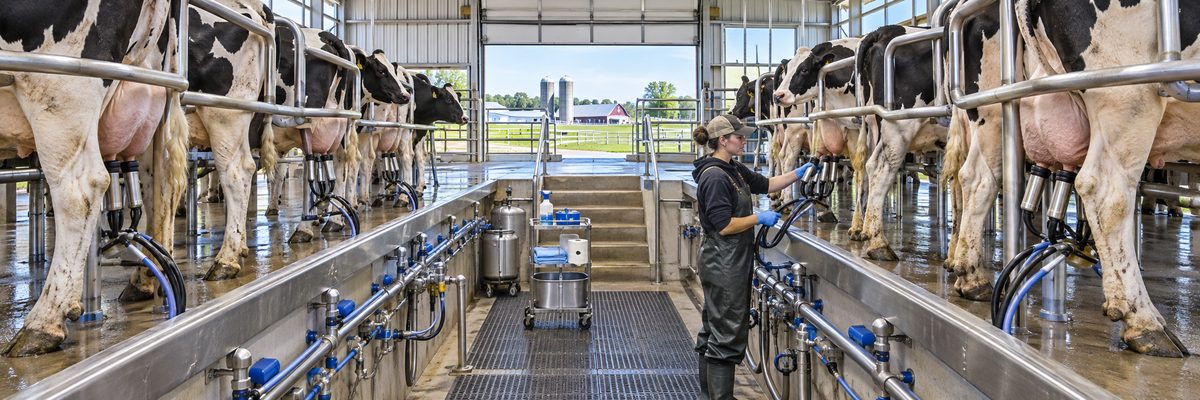
A first-calf heifer has a long list of firsts in a short time: calving, a new pen, older cows who outrank her and a large machine that wants to reach under her. Then everybody expects her to walk into the thing on her own, politely, three times a day. Some do. Some stand outside and look at it like a bank teller who just asked for ID.
The short plan: get heifers used to people and to the robot's sights, sounds and routine before they calve, handle them gently and consistently for the first days fresh, keep them in a group of their own if you can, and set your fetch list so that no heifer sits unmilked while she figures it out. A few extra minutes of training now is cheaper than weeks of fetching later.
This article is about the heifer side of the equation. For the whole picture of a first year, see what to expect in the first year of robotic milking, and if you milk in a conventional parlor, training first-calf heifers to the parlor covers that version.
Why heifers struggle
Penn State Extension describes the problem well in its article on training heifers to robots. Getting a heifer through her first milking can be a challenge, whether in a tiestall, a parlor or an automated system, because it is a new and scary environment and probably the first time she is handled daily. Before calving, heifers are often on pasture or in barns where their only experience with humans is feeding, vaccination and breeding. Then, depending on the farm, she joins a group of new and older animals at the same time.
Temperament matters too. The same article cites research suggesting that heifers trained to a parlor before calving experience less stress during milking, but that the response depends on temperament, and flightier heifers responded less to training than calmer ones. Translation: your quiet heifers will take to it, and the nervous one in the back may need more time and a patient hand.
What the research on pre-calving training found
Penn State summarizes a University of Guelph study of training heifers to robots before freshening. Half the heifers were trained three times daily, starting 10 to 14 days before their expected calving date, with sessions lasting 5 to 20 minutes, and half were not trained. Heifers were moved to a robot pen between 3 and 7 days in milk, after being milked with a portable unit in their calving pen. According to the article, the trained heifers entered the robot more easily, let down milk more effectively, made more voluntary visits and were fetched less often than untrained ones.
The authors of the Penn State piece are realistic about the cost: training three times a day for two weeks before calving is unrealistic for most farms because of the labor. Their suggestion is to start by training once per day, a few days before expected calving. That is a plan a real farm can fit into a real schedule.
The phantom robot option
If your robot time is precious and you don't want heifers using it for practice, the same article mentions a "phantom robot": a structure designed to look and feel like a robot, without the mechanics, so it is much cheaper. A study cited there found that heifers can be successfully trained on phantom robots, with more milkings in the first days in milk. A sturdy pen with a stall, a feed bowl and a few gate sounds can do part of the work. Talk to your robot dealer, since some will have dimensions and ideas.
A training plan you can actually follow
Before calving
- Move springing heifers to a spot where they can see and hear the robot, ideally near the dry or close-up group.
- Walk them calmly through or beside the robot area on a regular schedule, and let them eat a little feed while they are there.
- Handle them quietly: touching the flanks, the udder and the legs so that being touched around the udder is not a surprise.
- If you can, do short training sessions once a day for the last several days before calving, and add more if labor allows.
The same habits that help heifers in a parlor help here. We go through preparing animals in getting first-calf heifers used to the parlor before calving, and most of it carries over.
The first days fresh
- Milk her with a portable unit or in the robot, depending on how you handle colostrum. UW-Madison's dairy extension notes in its article on fresh cow management in automatic milking systems that milking in a conventional system, a bucket unit or the robot are all workable routes for colostrum collection, so pick what fits your workflow.
- Keep the visit calm. Low-stress handling encourages let-down.
- Move her to the robot pen at a time you can be there to help, not on a night when you're short-handed.
- Check the robot report for each fresh heifer a couple of times a day, and walk the ones who are not showing visits.
- Give her a few days of patient hand guidance before concluding she will never learn.
That same UW article calls training "a critical step to set fresh cows up for success, especially first-lactation cows who are unfamiliar with the AMS," and says proper training helps cows set up a consistent routine, encourages voluntary visits and increases production.
Grouping and pen moves
One of the biggest stressors after calving is the new group with older, dominant cows. Penn State advises keeping heifers in their own group after calving if possible, and, if that is not an option, waiting as long as you can before moving them in with older cows. When you do move them, move them together as a pair, because research cited in the article found that heifers moved with a familiar heifer had lower stress hormone levels than those moved alone.
A heifer group in a robot barn has its own logistics, including balanced numbers per robot, and our article on barn layouts for robots: free flow vs guided flow goes through how pen design affects movement and access. Plan pen moves so heifers aren't cornered at the robot entrance by bigger cows. Give them quiet times to visit, and a clean, comfortable stall to rest in.
When a heifer won't go
- Check for pain or teat problems. A sore teat or swollen quarter makes any heifer avoid the box. Call the vet if something looks wrong.
- Check the robot. A dirty laser shield or difficult attachment can make a heifer's experience worse every time, and she remembers.
- Slow down. Shouting and pushing wastes time and teaches the wrong lesson. Walk her in, give her feed and let her out calmly.
- Look at the feed. Robot feed is a major motivator. Work with your nutritionist and dealer on feed settings for heifers, which often differ from mature cows.
- Look at the schedule. A heifer who isn't visiting is not milking, and that raises the risk of udder trouble, so fetch her on time.
Let-down is a factor: stress can hold back milk, and heifers who do not let down well in early visits may form a bad association with the box. Milk let-down problems and how to fix them covers the physiology and the fixes. And watch teat ends and cleanliness on those first visits, since milk quality checks on a robotic dairy applies to heifers as much as anyone.
Penn State's article makes the payoff case: cows that let down better are less likely to develop mastitis and teat-end damage, and fewer fetches means less labor. That is the business case for the extra effort.
Quick answers
How early should I start training heifers for the robot?
The Guelph study started 10 to 14 days before calving, which is more labor than most farms can give. Penn State suggests starting with once-daily training for a few days before expected calving, and adding more if you can.
Do I need a phantom robot?
No, but it is an option if robot time is tight. Research cited by Penn State found heifers can be trained on phantom robots, and the structures are much cheaper than the real thing.
Should heifers go in with the older cows right away?
If you can, keep them in their own group after calving. If not, delay the move as long as possible and move heifers together in pairs rather than alone.