Barns, Cow Comfort & Equipment
Barn Layouts for Robots: Free Flow vs Guided Flow
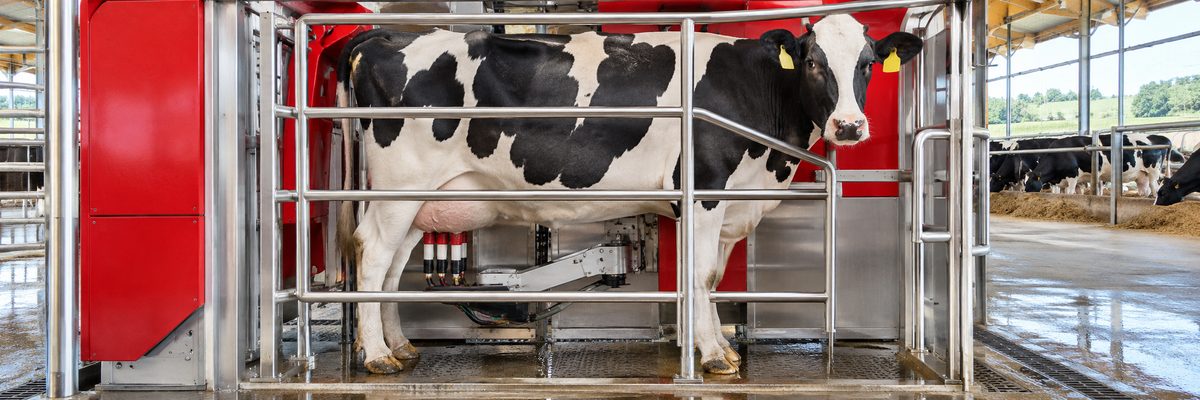
The choice comes down to who decides when a cow gets milked: the cow or the gate. In a free-flow barn, cows wander wherever they like and the robot checks them at the door. In a guided-flow barn, one-way gates steer cows through a selection gate so the right ones end up in front of the robot. Most real barns land somewhere in between.
Neither layout is the right answer in every barn. The one you pick should come from your herd size, the building you already own, how much fetching you are willing to do, and how much you want to spend on pellets. A cow does not read the layout drawings, either. She will find the quickest route to feed and the nicest stall, and she will stand in the one doorway you thought nobody would block.
How free flow works
The University of Wisconsin dairy extension has a solid write-up on facility design for automated milking systems, and its description of free flow is a good starting point. Cows have unrestricted access to the robot and to feed. When one steps into the robot, the entry gate closes if enough time has passed since her last milking. If not, the gate opens and she walks back out. She can move among the stalls, the feed bunk and the water trough without one-way gates in the way.
What gets cows to the robot in a free-flow barn is mostly the concentrated feed dispensed there. That works, but it comes with trade-offs.
- Advantages: cows are not forced to wait at gates, less standing time in a holding area, and a simpler, usually cheaper layout that is easier to fit into an existing barn.
- Drawbacks: more fetching of cows that do not come on their own, since lower-ranking or less motivated cows can drag their feet. The robot also spends time identifying and releasing cows that are not due, which cuts into capacity.
Wisconsin extension notes that free-flow systems, on average, produce slightly more milk per cow, but that edge was linked to greater use of robot feed, which costs more than the same nutrients in the mixed ration. In other words, some of the extra milk is bought at the pellet price. Free flow also fits best in barns with lower stocking densities, which is worth thinking about before you fill every stall.
How guided flow works
Guided flow uses one-way gates. When a cow leaves the resting area she passes through a selection gate that checks whether she is due for milking. If yes, she is sent to a holding area in front of the robots, often called the commitment pen. If not, she goes straight to the feed. After milking she exits toward feed. A cow earns her way to the bunk by getting milked or at least trying.
Wisconsin extension lists several advantages: fewer cows to fetch by hand, fewer rejections because cows without milking permission never get to the robot, and lower pellet use per cow because cows are motivated by the route rather than by treats alone. Guided flow can also support more cows per robot by cutting wait time at the door.
The downsides are the flip side of control. Cows spend more time standing in the commitment pen, a cow that is stuck behind a boss cow has a longer wait, and the layout is more complex and more expensive to build. In a retrofit it can mean rebuilding fences and gates until the barn looks like a maze for a cow that is already unimpressed with mazes. The extension article's takeaway is that guided flow gives the owner more control while free flow gives cows more autonomy, and either can perform well under the right conditions.
The hybrid most barns end up with
A modified or hybrid layout is a compromise. Cows can walk freely from the feeding area back to certain stalls without passing through gates, but they use a one-way gate to get to stalls in other areas. Water troughs are sometimes placed to encourage cows to head back toward the resting area. Wisconsin extension says that most automated milking facilities are custom-designed hybrid barns, which makes sense because every building has a post, a wall or a manure alley in the wrong place.
| Feature | Free flow | Guided flow | Hybrid |
|---|---|---|---|
| Cow movement | Unrestricted | One-way gates, selection gate | Some free movement, some gated |
| Fetching cows | More | Fewer | In between |
| Pellet use | Typically higher | Typically lower | Varies |
| Build complexity | Simpler | More complex | Custom |
| Retrofit fit | Usually easier | Harder in older barns | Common compromise |
| Standing time in holding area | Lower | Can be higher | Depends on design |
Retrofit or build new
A retrofit can work when the barn already gives cows a good environment and infrastructure upgrades will not force big compromises. If it has narrow alleys, poor airflow or an awkward floor plan, the extension article suggests a new barn offers better long-term value. New construction lets you design traffic and space for future expansion. Before you decide, it helps to know what a robotic milker really costs and whether the rest of the barn needs money too, such as fans and ventilation. Wisconsin extension flags ventilation as a core design item in robot barns, not an afterthought.
Basic cow traffic principles still apply. Dead ends, blind corners and tight cross alleys make cows hesitate, and a hesitating cow is a missed milking. The basics in cow traffic flow, cross alleys and dead ends carry over to any robot barn.
Sizing the barn to the robots
Layout and robot count work together. The Wisconsin article gives a common recommendation of one robot per 60 to 80 cows and an example where 7 minutes per milking and 2.8 milkings a day means a robot serves about 63 cows and runs close to 21 hours a day. Guided-flow systems tend to support more cows because they cut waiting time, while free flow usually calls for a lower stocking rate to avoid traffic jams. Fresh cows take longer to milk, so a barn with many fresh cows needs spare capacity. Don't size it so tight that a bad week breaks the system.
Checklist before you pick a layout
- Count cows per robot honestly, including heifers that will calve in.
- Decide how much fetching you can live with every day.
- Price pellets as a real line item, not a rounding error.
- Walk the barn the way a low-ranking cow would, not the way an owner would.
- Plan feed, water and rest so a cow has a reason to move in each direction.
- Ask your dealer for references on farms with the same layout and similar cow numbers.
Once the layout is in, the learning curve begins, and the lessons in the first year of robotic milking are worth reading before the concrete cures. Layout mistakes cost the most to fix, and the cows will not be shy about showing you where they are.
Quick answers
Is free flow or guided flow better?
Neither wins everywhere. Free flow is simpler and gives cows freedom, while guided flow gives you more control and usually less fetching. Most barns end up as a hybrid shaped by the building they already have.
Do guided-flow barns need fewer pellets?
Wisconsin extension says guided systems tend to use fewer pellets per cow because the gate system, not feed alone, motivates the cow to go to the robot. That can matter because pellets usually cost more than the same nutrients in the mixed ration.
Can I retrofit an old barn for a robot?
Often, if the barn has good cow comfort and room to move. If alleys are narrow or the layout is poor, a new barn may be the better long-term investment. Talk it over with your extension dairy educator and your dealer.