Milk Quality Checks on a Robotic Dairy
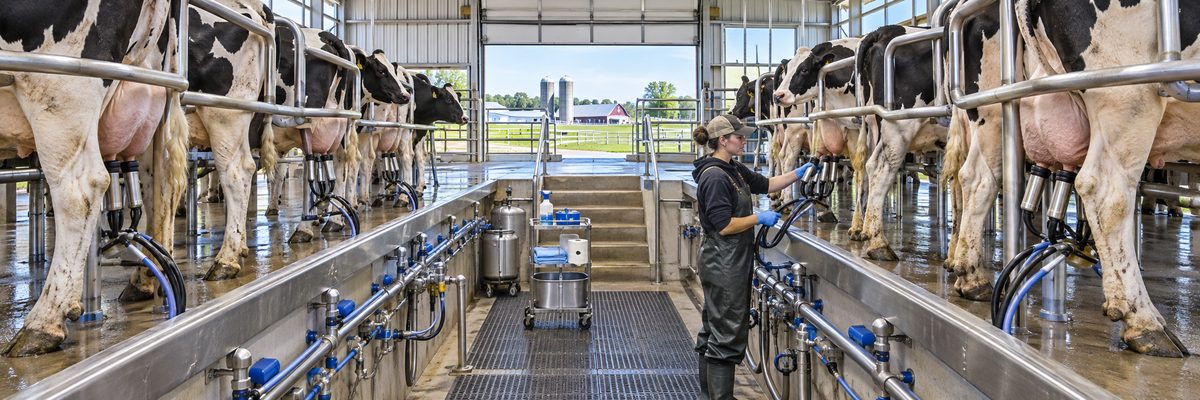
A robot never gets tired, never skips a step because the hauler is early and never rolls its eyes at a cow. It also cannot look at a muddy teat and decide it needs a second wipe. That is the heart of milk quality on a robotic dairy: the machine is consistent, but only about what it was set up to do, and somebody still has to check that the setup is right.
Quick version: watch four things. First, individual and bulk tank somatic cell counts. Second, conductivity and other sensor alerts, with a manual check on any cow that gets flagged. Third, how well the robot actually cleans teats and applies post-dip. Fourth, the wash cycles and the bulk tank bacteria results. Then keep stall hygiene tight, because robots clean teats, they don't clean barns.
If you are in the middle of adjusting to a new machine, what to expect in the first year of robotic milking sets out the bigger picture, and this article is the checklist behind it.
Do robots make milk quality better or worse?
It depends on the farm, which is an unsatisfying but honest answer. Penn State Extension puts it plainly in its article on milk quality on Pennsylvania dairy farms using robotic milking systems. One farmer reported bulk tank SCC typically in the 300,000 to 350,000 range and did not expect better, while another started to worry if hers went over 100,000. Scientific reports are just as mixed, with some studies finding improved milk quality, some finding worse and some finding no difference. In theory, consistent udder preparation and sensors such as electrical conductivity should help udder health, but the robot's inability to tell a clean teat from a dirty one can work against it. As the article says, proper maintenance of the equipment and good management of the barn and cows can make the difference between good and bad milk quality.
That's the right way to think about it. The robot is a very consistent employee who will repeat your mistakes perfectly.
Somatic cell count: individual and bulk
Bulk tank SCC tells you where the herd stands. Individual cow SCC tells you which cows are responsible. On a robot dairy both are important, and conductivity alone will not do the job of a cell count. UW-Madison's dairy extension describes a farm with two robots whose mastitis detection relied on high conductivity followed by manual stripping, and when it began monthly individual SCC testing for the whole herd, it found several cows with high SCC (200,000 cells per mL or more) that had not registered high conductivity. The full case is in their case study of a mastitis investigation in an automatic milking system.
The take-home from that case is sensible for any robot farm. Run individual SCC through DHI or an in-line analyzer on a regular schedule, and compare the results to what the conductivity alarms are telling you. If you are new to reading the numbers, start with what somatic cell count is and why buyers care and how to lower bulk tank somatic cell count.
Conductivity, color and other sensors
Most robots watch milk conductivity, color, temperature and sometimes yield and flow by quarter. These are the early warning system. In conventional parlors people see clots, flakes and watery milk, and in robot herds the system flags changes in sensor readings. Both approaches depend on someone acting on the alert. Some practical rules:
- Treat sensor alerts as a reason to look at the cow, not as a diagnosis.
- Check flagged cows by hand, with a strip cup or the California Mastitis Test, and keep notes on what you found.
- Review how many alerts are true and how many are false. Too many false alarms train people to ignore them, and settings may need adjusting with your dealer.
- Where the robot diverts milk from flagged or treated cows, check that diverted milk actually goes where you think it does.
Teat cleaning and post-dip: check the robot's work
This is the part of robot milk quality that people most often assume is taken care of. Penn State's article notes that the study visits measured teat cleanliness before and after the robot's cleaning, whether the cleaning device made contact with each teat, teat-end scores and the effectiveness of post-dip application. Do the same on your own farm. Stand and watch a couple of dozen milkings, look at the teats on the way in and out and check whether every quarter got treated.
Kentucky Cooperative Extension makes the same point in its milking guide: in robotic systems, managers need to keep checking that the robot is applying post-dip adequately to all quarters, checking several cows, and adjusting the calibration if coverage is poor. Get that guide at explain the whys along with the hows. Teat-end condition is the best long-term indicator that the vacuum, pulsation and liners are doing their job, so look at it routinely. Also, clean the laser and camera, keep teat hair trimmed and replace liners on schedule. Our article on how often to change milking liners still applies when no human puts them on.
Washing and bulk tank results
Robots wash themselves, and they can do it wrong too. Check wash temperatures, water flow, chemical dosing and the number of cycles per day against the manufacturer's settings and your handler's requirements. Pay attention to the water supply. The first-year farm notes from Penn State described a water pressure alarm when the barn's waterers competed with the robot, and a low flow can undercut cleaning without anyone noticing. When bacteria counts drift, troubleshooting a high bacteria count in milk and what a high PI count says about your cleaning work through the possible causes in order.
The UW case farm saw bulk tank standard plate count and preliminary incubation counts spike and then return to normal after a problem was corrected, and bulk tank cultures identified contagious and environmental pathogens, which is why bulk tank culture is worth doing a few times a year. Ask your vet and your lab how often.
A working checklist
Daily
- Read the alerts and the fetch and treatment lists, and check flagged cows by hand.
- Watch a few milkings for teat cleaning, attachment and post-dip.
- Confirm treated cows' milk is being diverted.
- Look at stalls, alleys and cow cleanliness.
Weekly
- Check wash cycle reports and tank temperature records.
- Review the high SCC and chronic cow lists.
- Clean the laser, camera and brushes, and swap parts as scheduled.
Monthly and beyond
- Individual cow SCC from DHI or an in-line analyzer, with trends compared to conductivity alerts.
- Bulk tank results by date, with changes noted against what happened in the barn.
- A service visit with the technician, and a review with your vet of mastitis cases and treatment.
Treated cows add record-keeping and cleaning cycles, and nobody likes either. A short discipline pays off in loads that never get rejected. See milk withholding times and discard records to set up the paperwork.
Where the barn comes in
A robot cleans a teat, but it does not clean a stall. In the UW case, recommendations included improving stall maintenance to keep lower legs and udders cleaner, and using udder hygiene scoring to measure progress. Dirty cows will give the robot more than it can reasonably deal with, and the bulk tank notices. Good bedding, clean alleys and a manure removal plan are as much a part of robot milk quality as the software.
Quick answers
Is conductivity enough to detect mastitis on a robot?
No. One extension case found cows with high somatic cell counts that did not trigger high conductivity, so use individual SCC testing alongside sensors and manual checks.
Do robots lower somatic cell counts?
Sometimes, but not automatically. Studies are mixed, and results depend on equipment maintenance, teat cleaning, stall hygiene and how fast you act on alerts.
How often should I check the robot's post-dip coverage?
Often enough to catch problems early. Many farms check several cows on a regular schedule, such as daily or weekly, and recalibrate if any quarters are missed.