Herd Health Checklist for Small Family Dairies
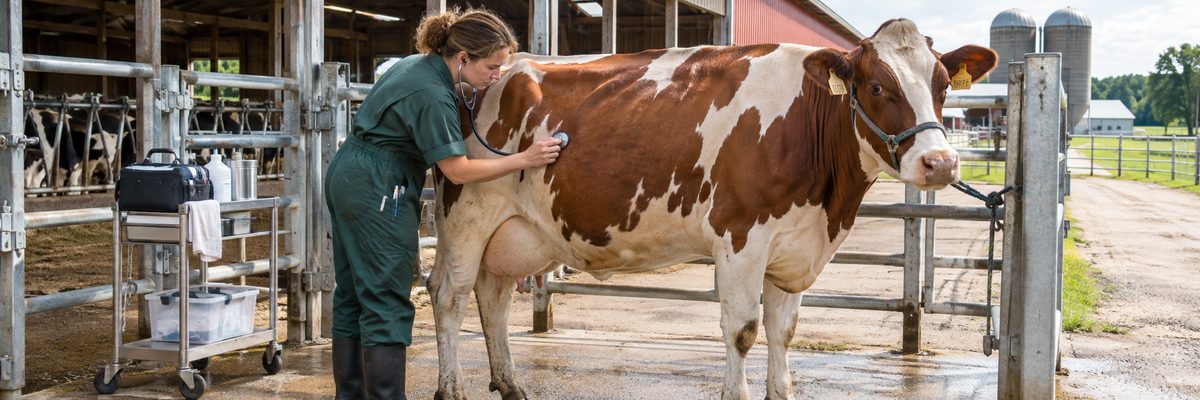
Small herds don't need a big herd health program. They need a short one that actually gets done. With a handful of milking cows or goats, you know every animal by her habits, which is a real advantage, but it also means one sick cow is a big share of your milk check.
The plan below is built around a yearly cycle, a vet who knows your place, and written records. Nothing in it needs a full-time vet or a fancy herd management program. A notebook on a nail by the milk house door will do the job better than software you never open.
One rule before anything else: this is general education. Vaccines, parasite control and treatments depend on your region, your animals and your vet's judgment, so use this list to organize the conversation, not replace it.
Start with a vet who knows your farm
The best time to meet a large animal vet is on a calm Tuesday, not at midnight with a cow down. Many vets will take on a small client for a yearly herd visit and then work with you on emergencies. Ask what they can handle and what they would refer out. If you milk goats or sheep, check that the vet actually works with small ruminants. Finding a large animal vet covers where to start, and the veterinary client patient relationship explains why it matters when you need drugs or prescriptions.
Ask for a standing yearly visit. Use it to review vaccines, parasite pressure, body condition, feet and anything that bugged you last year. It's cheaper than a string of emergency calls, and the vet will know your barn when it counts.
The yearly cycle
| When | What to do |
|---|---|
| Before breeding | Check body condition, review vaccines with the vet, trim feet if needed |
| Pregnancy and pre-dry-off | Check udder health, plan the dry period, keep feeding and minerals on track |
| Dry period | Dry cow housing, a clean calving area, any dry cow plan your vet recommends |
| Calving and fresh period | Colostrum plan, fresh cow checks, watch for retained placenta, milk fever and ketosis |
| Peak lactation | Milking routine, mastitis checks, hoof checks, breeding records |
| Late lactation | Decide who is bred, who is open, and who is dried off when |
The point of a calendar is that it replaces memory. Your memory is excellent right up until the week hay is down and the baler breaks.
The checklist itself
In a small herd, every cow has a name, a personality and a grudge, and the vet will want to hear about all three.
Daily, in the barn
- Look at every animal at feeding or milking. Is she eating, standing normally, chewing her cud, and walking without favoring a foot?
- Check the udder for heat, swelling or clots at milking. Strip a few squirts onto a dark surface if you do not already.
- Check water and feed. Clean water is one of the cheapest health tools you have.
- Write down anything off, even a small thing.
Monthly
- Walk the pens and pasture for hazards: broken boards, wire, mud holes, anything that can hurt a cow or stab a tire.
- Check body condition on the herd and note who is slipping.
- Review treatment records and make sure nothing is waiting on a withdrawal time.
- Clean waterers, feed bunks and the milk house.
Yearly, with your vet
- Vaccination and deworming plan for your region and your animals. The dairy cattle vaccination schedule gives the general shape, and your vet fills in the details.
- Testing decisions, such as Johne's disease and BVD, based on your herd history and any animals you buy. See Johne's disease testing and control for background.
- Hoof trimming and a foot check.
- Review of milking equipment and routine, ideally with your milk quality field rep or dealer.
- A look at the plan for any animal that is old, injured or chronically sick. Hard decisions get easier when they are made early and calmly.
Keep records, even if they are simple
Records are what turn a guess into a pattern. Without them, nobody can tell whether mastitis in the spring is a one-off or a yearly problem. At minimum, track:
- Calving dates, breeding dates and due dates.
- Every treatment: the date, the animal, what was given, who prescribed it, and the milk withdrawal date.
- Vaccination dates and products.
- Milk quality results, including bulk tank or individual somatic cell counts if you have them.
- Deaths and culls, with the reason.
If you ship milk to a plant, treatment records are also how you show that you manage antibiotic residues. Keeping treatment records that pass an inspection goes into what an inspector or a buyer typically wants to see.
Biosecurity on a small place
Most disease comes onto a farm in one of three ways: a new animal, a visitor, or a borrowed piece of equipment. Small dairies buy animals often, because a few cows is a tiny gene pool, so quarantine matters. Keep new animals separate for a period your vet recommends and ask the seller about testing and vaccination history. If you milk goats, ask about CAE and CL in the herd you are buying from, since those can move with the animals.
The neighbor who walks in to look at your new heifer is well meaning and has probably walked through three other barns this week. A pair of boot covers and a hand wash station will not insult anybody.
Know your limits and your phone number
Write the vet's number, the after-hours number and your milk buyer's field rep on the wall. Typical reasons to call promptly include a cow that is off feed and not chewing her cud, fresh cows that are weak or down, hard or lopsided udders, a cow in labor that is not progressing, bloat, scours in a young calf that is dull, or any sudden death. If you are unsure, call. A short call costs far less than waiting a day too long.
Resources from land-grant extension offices are free and often written for small producers. Penn State Extension's dairy page and University of Minnesota Extension both have material on herd health, and your own state's extension dairy specialist can point to local help.
Quick answers
How often should a small dairy see the vet?
At least once a year for a planned herd visit, plus whenever a cow is clearly off. Many small farms add a visit around dry-off or calving season if problems are recurring.
Do I need to vaccinate a herd of three cows?
Disease can spread in a small herd as easily as in a large one, but which vaccines make sense depends on your region, your animals and your vet's advice. Ask at your yearly visit rather than buying a general kit.
What is the cheapest thing I can do to improve herd health?
Watch the cows closely every day and write down what you see. Catching a problem early usually costs less than treating it late.