Controlling Bovine Leukosis Virus in a Dairy Herd
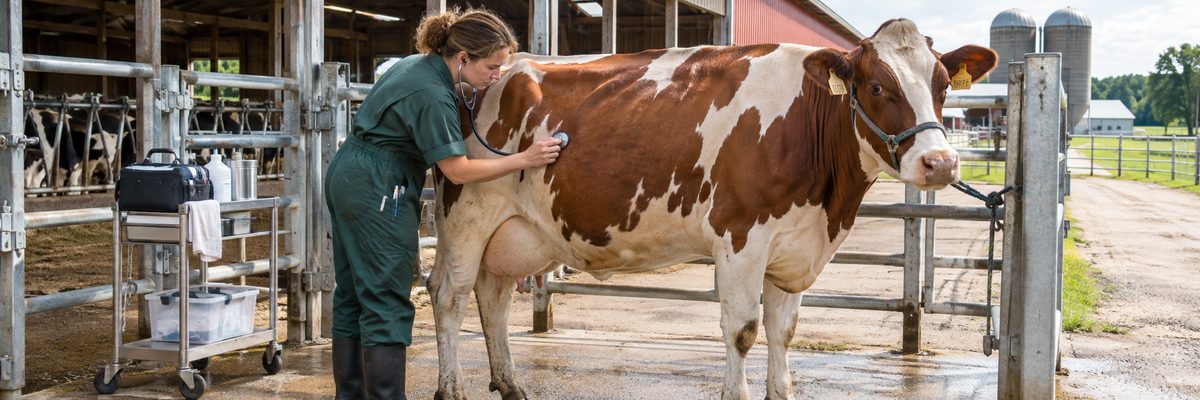
Bovine leukosis virus, usually shortened to BLV, is the disease that rides in on a needle. Most infected cows never show a tumor, which is why it flies under the radar on a lot of dairies. But a herd with a lot of infected cows is quietly carrying a cost, and the way it spreads is mostly about blood.
The good news is that blood is something you can manage. A clean needle for every cow, a rinsed dehorner and a fresh palpation sleeve do more for BLV than any single product on the shelf.
This article covers how the virus moves, why it matters even when the cow looks fine, the four control options in order of effort, and what to start doing Monday morning.
Why a "quiet" infection still matters
Most BLV-infected animals stay clinically normal for life, which is why many farms ignore it. A Washington State University veterinary extension piece by James Evermann on bovine leukemia virus says that infection is not simply subclinical. Several studies it cites found that BLV infection reduces milk production, increases death losses, and that infected animals were more likely to be culled early or die. A small share of infected cattle go on to develop lymphosarcoma, the cancer form that gives the disease its name.
The same article notes there is also interest in reports of BLV genetic material found in human tissue, but says further analysis is needed before a direct cause and effect can be established. Treat that as one more reason the dairy industry is paying attention, not as something to panic about. Your vet or extension office can fill you in on the current thinking.
Because this is a herd-level issue, think of it the way you would any slow leak: an extra bit of lost milk and an early cull here and there add up over years.
How BLV spreads
The Evermann article says it takes only a fraction of a drop of blood, about 0.001 mL, to infect an animal. So anything that moves blood from one cow to another is a risk. Common routes in a dairy include:
- Needles and syringes used on more than one animal
- Dehorning tools, ear taggers and tattoo pliers that are not cleaned between animals
- Rectal palpation sleeves reused from cow to cow
- Surgical procedures and removal of extra teats
- Biting flies moving blood between animals
- Natural service with an infected bull
- Colostrum or milk from infected cows fed raw to calves
- Infection in the womb, which the article puts at roughly 3 to 20 percent of infections in the herds studied
The article describes three age-related risk periods in the Northwest herds it covers. A fraction of infections happen before birth. A second wave happens during calfhood, with up to 40 percent of infections, which the authors link to infected colostrum, shared instruments and shared needles. The third comes in heifers and mature cows, where infection rates in the herd can climb as high as 80 percent. Blood-contaminated instruments and needles, and in some herds rectal palpation, are the big drivers.
Finding out where you stand
Testing is how you size the problem. The article describes antibody tests on blood serum or on milk. It reports that the serum test has very good sensitivity and specificity, and a milk test also performs well, though it noted the milk test was not USDA-licensed at the time of writing. Check with your vet or lab about current test options. Many herds use milk samples from the bulk tank or from individual cows to get a picture of herd prevalence, and a bulk tank sample can give a rough early read on how common BLV is before you commit to testing every cow.
A test tells you what you have. It does not stop the spread. The plan you build around it is what matters.
Four ways to handle it
The WSU article, drawing on published work by Bartlett and colleagues, lists four approaches for U.S. dairies.
| Option | What it involves | Effort and trade-offs |
|---|---|---|
| 1. No action | No testing and no changes | Cheapest on paper. Described as the main approach taken in the U.S. |
| 2. Monitor and change management | Test with blood or milk antibody tests and put management changes in place to cut spread | Used on many farms and can reduce herd prevalence within several years |
| 3. Test and segregate | Test all cattle, separate positives from negatives, keep the herd closed or add only negative animals (two negative tests 30 days apart) | Requires space and labor to run two groups; a way to phase infection out |
| 4. Test and cull | Test all cattle, cull positives, keep a closed herd with strict biosecurity | Most aggressive. Hard on a herd where many cows test positive |
For many dairies, option 2 is the realistic place to start. Whether you move toward 3 or 4 is a herd-by-herd call that involves your vet, your lender and the milk check.
Management changes that cut spread
The WSU article lists a set of practical changes. Most cost almost nothing, which is the point. Based on its list:
- One needle per animal. Disposable needles are cheap. A box of them costs less than one early cull. See your vaccination routine for the moments when needles are in your hand most.
- Clean and disinfect blood-contaminated tools between animals: ear taggers, tattoo pliers, dehorning tools and surgical instruments. A bucket of clean disinfectant beside the chute helps more than good intentions. If you are disbudding calves, dehorning and disbudding is a good moment to review your tool cleaning.
- Use a new or cleaned palpation sleeve for each cow. One sleeve for forty cows is cheaper, until it is not.
- Use AI instead of a natural service bull where possible. The article lists using AI exclusively for breeding as a way to reduce spread. If you do AI yourself, how artificial insemination is done covers the technique.
- Control biting flies. Stable flies and other biters can move blood. Fly control in the barn and calf area pulls double duty.
- Keep positive and negative cattle apart where you can, and cull positives that have lymphocytosis (ask your vet what that means for a given cow).
- Keep newborn calves away from positive cows and avoid feeding raw colostrum from BLV-positive cows. Heat-treating colostrum is a topic for your vet; see pasteurizing and freezing colostrum.
A calf crew that follows a written routine for needles and tools will make a bigger dent than anything you can buy, since management is the main tool this disease leaves you. If your people have a habit of "one more quick one with the same needle," that is the habit to retire.
Buying cattle and keeping the herd clean
If you add cattle, the WSU options mention adding only BLV test-negative cattle, with two negative tests 30 days apart for closed-herd approaches. Ask for BLV results from the seller the same way you would for other diseases, and fit the animals into a proper quarantine before they mix.
Regional notes
BLV is found in dairy herds across the country, and the practical levers are the same. Where fly pressure is heavy, as in humid Southeast summers and wet-manure setups, the fly-control piece gets more weight. Large herds with many people working the chute need written protocols so needle and tool habits are the same on every shift. Small herds with a handful of people may find that segregation is easier than it sounds, though only if the barn layout lets you do it.
Quick answers
Is there a vaccine or treatment for BLV?
No vaccine is in routine use on U.S. dairies, and there is no treatment that clears the virus, so control comes from management and, where it fits, testing and removal. Research continues, so ask your vet what is currently available.
Can I still milk a BLV-positive cow?
Many herds do, because most infected cows are clinically normal. Cows with lymphosarcoma or signs of illness need a vet exam. Your vet can talk through the milk and culling decisions for your herd.
What is the cheapest first step?
Switch to a fresh needle for every animal and a rinsed tool for every procedure. It costs very little and addresses the main route of spread, which is blood.