How Often to Change Milking Liners
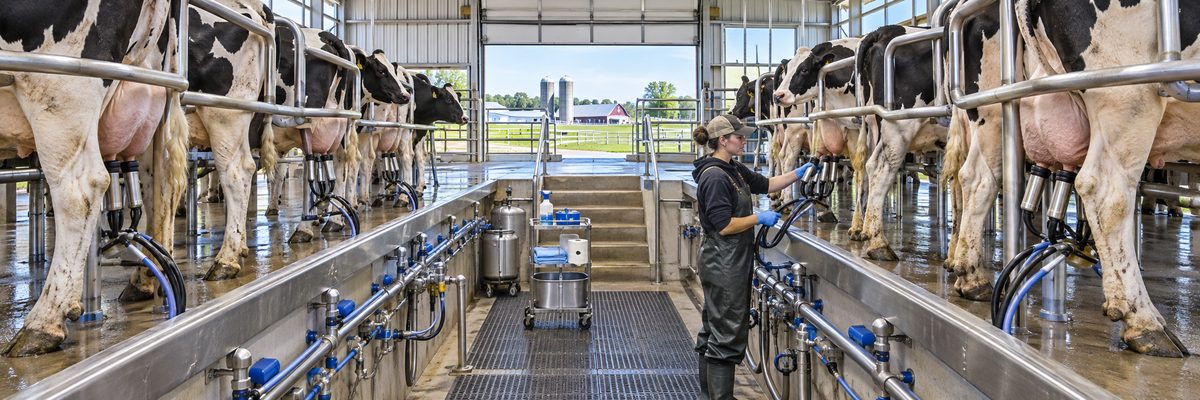
The most common liner replacement schedule on dairy farms is "when somebody notices." That works about as well as changing the oil in your truck when the engine starts knocking. Liners are the only part of the milking machine that touches the cow, and they wear out whether or not they look like it.
The better way is to count milkings. Every liner has a rated life, given by the manufacturer in number of cow milkings (or sometimes in hours of use). Divide that by how many cows each unit milks per milking, and you have a replacement interval you can put on a calendar. Rubber liners are often rated in the low thousands of milkings, while silicone liners are commonly rated for considerably more, but the real number comes from the label or the dealer for the exact liner you buy.
Put the date on the calendar, buy the liners ahead of time, and stop relying on the one guy who can feel when a liner is "getting soft."
Why liners wear out
A liner opens and closes about fifty to sixty times a minute for every minute of milking. Over weeks, that squeezing causes the material to lose its shape and tension. Add teat dip, cleaning chemicals, hot water, sunlight and barn temperatures from sub-zero to over a hundred degrees, and the liner slowly changes.
Worn liners tend to:
- Lose the tension that holds them on the teat, so they slip and let air in.
- Go stiff and hard, which makes massage rougher and milking slower.
- Develop cracks, pits and rough areas that hold bacteria and are hard to clean.
- Change the way the liner collapses during the rest phase, which can affect the teat end.
That last one connects to pulsation rate and ratio: a pulsator may be set correctly, but if the liner no longer opens and closes the way it was designed, the teat is not getting the rest the setting promises.
The milking-count method
This is the step-by-step version. You need three numbers: the liner's rated life in cow milkings, the number of cows milked per unit per milking, and the number of milkings per day.
- Get the rated life. Check the liner packaging, the manufacturer's data or ask your dealer. Rated life is usually given in milkings per liner set.
- Figure cows per unit per milking. Divide the number of cows milked by the number of units. If you milk 200 cows with 20 units, that is 10 cows per unit per milking. A tiestall with 40 cows and 20 units would be 2.
- Divide rated life by cows per unit. This gives you the number of milkings the liners will last.
- Divide by milkings per day. That gives you the days until replacement.
Here is an example with made-up numbers: a liner rated for 2,500 milkings, a parlor milking 10 cows per unit at each milking, twice a day. That is 2,500 divided by 10, or 250 milkings. At two milkings a day, 250 milkings is 125 days. Mark the date, order the liners at day 100, and change them at day 125 or sooner.
If your herd size, milking frequency or unit count changes, redo the math. A dairy that goes from two to three times a day will burn through liners about a third faster than before. The same goes for a dairy that adds cows without adding units. Three-times-a-day milking pays off in milk, but liners are one place where the bill shows up.
Typical life by liner type
| Liner type | General expectation | Notes |
|---|---|---|
| Rubber (including nitrile blends) | Often rated in the range of about 1,200 to 2,500 milkings | Lower end for heavy use, harsh chemicals or strong sunlight |
| Silicone | Often rated several times longer than rubber | Higher price per liner, slower to change shape, still needs inspection |
| Mixed or specialty liners | Follow the manufacturer's rating | Some are designed for specific teat shapes or robotic units |
Those ranges come from general industry practice and from memory. Rated life is a ceiling set under ideal conditions, not a promise. If your liners are rated for a number and your barn is hard on them, change early. The label is not the cow.
Signs a liner is already past due
- Cracks, splits, roughness or a chalky surface, especially around the barrel and mouthpiece.
- The liner has gone stiff or, on the other extreme, feels slick and swollen.
- Cups that keep slipping or creeping up the teat.
- Units that fall off more often, or squawking at attachment.
- Slower milk-out and more cows with leftover milk.
- Rough or ring-shaped teat ends, which you can watch with teat end scoring.
- A rise in somatic cell count or clinical cases with no other obvious reason.
If you see any of these, do not wait for the date. Worn liners are an inexpensive fix compared with a month of high-SCC milk.
Practical habits that stretch (or at least protect) liner life
- Rotate sets if you can. Some farms keep two sets and rotate them, letting each rest between uses. Manufacturers differ on whether this extends life, so follow their guidance.
- Use compatible chemicals. Wash chemicals, dips and sanitizers can affect rubber differently. Check your dealer's recommendations.
- Store spare liners out of sunlight and away from heat. The box under the window is not a storage plan.
- Do not reuse old liners on new shells. They are old for a reason.
- Change all four liners in a unit together. A mismatched unit milks unevenly.
- Keep a log. Write the installation date, the milkings count, and the date of the last change on a whiteboard or in your dairy record keeping system.
Climate plays a role. Southwest and Southeast dairies with high heat and strong sun tend to see rubber age faster, and Upper Midwest barns in deep cold can see liners stiffen. Parlors that milk three times a day and robotic units (which have specific manufacturer schedules) need their own math. Large herds often replace on a fixed calendar schedule so no one has to guess. For further guidance, the National Mastitis Council protocols and guidelines and the University of Wisconsin Extension dairy program are good places to start, and your equipment dealer can supply the exact rating for your liner.
Quick answers
How many milkings does a milking liner last?
Rubber liners are commonly rated in the low thousands of milkings, and silicone liners are often rated for a lot more. Check the manufacturer's rating for your exact liner and change early if the barn is hard on equipment.
Can I tell a liner is bad just by looking?
Sometimes, such as with cracks or rough spots, but many worn liners look fine while they have lost tension or shape. That is why counting milkings works better than eyeballing.
Do I need to change liners if my SCC is fine?
Yes. A good cell count is a result, not a reason to skip maintenance. Worn liners tend to cause damage slowly, and by the time it shows up in the tank you have already paid for it.