Pipeline Milker Wash Cycle Basics
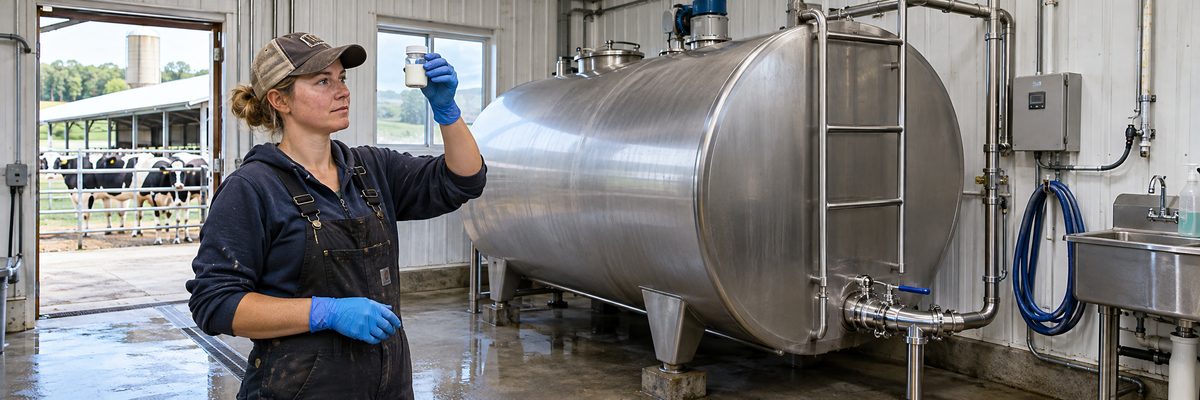
Every pipeline wash follows the same four moves: rinse the milk out, circulate a hot alkaline detergent, rinse again with an acid rinse as part of the program, and sanitize right before the next milking. Cleaning and sanitizing are two different jobs, and getting them out of order is one of the quickest ways to a bad count.
Put another way, the detergent cleans, the acid keeps minerals from building up, and the sanitizer kills what is left. The sanitizer cannot do anything useful on a dirty surface, so it gets the last word and not the first.
What follows is the sequence laid out in extension guides like this one from Virginia Tech. Exact temperatures and amounts vary by chemical, water and system, so the label and your equipment dealer have the final say.
Step 1: Pre-rinse, right after milking
The wash starts the moment the last cow is done, not after the crew eats. The goal is to flush milk out of the lines before it dries or gets cooked on. Use lukewarm water, roughly 100 to 110°F, and keep it from going above 120°F. Water that is too hot can set milk protein onto the surface, and water that is too cold can leave a greasy fat film.
Run the rinse to the drain and keep going until the water runs clear. Recirculating the rinse water just moves the milk around the barn.
Step 2: Hot wash with detergent
A chlorinated alkaline detergent dissolves fat and protein and holds them in suspension so they flow out. The chlorine helps with protein and film, but it is not a sanitizer. Start the wash hot, in the range of 160 to 170°F in the Virginia Tech example, and keep the solution above 120°F through the cycle. If it falls below that, soils can redeposit on the pipe walls instead of washing away.
Time and turbulence
A cycle of around 6 to 10 minutes is typical in the extension guidance. Longer than that and the water turns lukewarm anyway. Equally important is the way the solution moves. Cleaning in place relies on velocity, and the Virginia Tech sheet cites a minimum of about 5 feet per second, plus air injected into the line to create slugs of water that scrub the top of the pipe. Detergent sitting in a pipe is soaking, not washing.
If your system uses air injection, make sure the injector is working. A line that never gets slugs may look clean at the bottom and be coated on top.
Step 3: Rinse off the detergent
A rinse after the wash removes loosened soil and any traces of detergent. Skipping this step lets detergent residue mix with the acid, and mixing chlorinated products with acid is dangerous. Keep acid and chlorinated detergent separate, always.
Step 4: Acid rinse
The acid rinse brings the water to a low pH, in the range of 3.0 to 4.0 as the Virginia Tech sheet describes, and it removes cleaner residue and prevents mineral deposits, known as milkstone. Contact time is a few minutes. The lower pH also discourages bacteria. Some programs run the acid after every milking and others rotate it with a heavier acid cleaner on a schedule, which is the sort of detail your supplier should write into your posted procedure.
Milkstone is the thing that builds up when hard water and milk solids combine, and it gives bacteria a rough surface to hide in. If you milk in the Mountain West, hard water gets its own chapter.
Step 5: Drain and sanitize before milking
Let the lines drain and air dry between milkings. Then, shortly before the next milking, circulate a sanitizer at the strength on the label. Extension guidance suggests sanitizing within about 30 minutes of milking. Sanitizing right after washing and then letting the line sit for hours gives bacteria time to move back in.
Checklist for a healthy wash
- Fresh water in the sink or wash vat, measured by gallon, not by eye.
- Water heater capacity enough to keep the whole cycle hot.
- Detergent and acid measured to the label, using the right product for your water.
- Air injector working and the wash line properly sloped to drain.
- Liners, inflations and hoses checked, since cracked rubber hides bacteria. Plan liner changes on a schedule, not when they fall apart.
- Temperature checked at the end of the cycle, not just at the start.
- Procedures posted in the milk house, with names, so no one has to remember.
When the wash fails quietly
A wash that looks fine can still be failing. Warning signs include a film on the receiver jar, a sour smell in the pipeline, slimy inflations, and counts that creep up even though cows and cooling look fine. A rise in preliminary incubation counts often points toward the wash, and the guide to what a high PI count says about cleaning helps interpret it.
The usual suspects are a water heater that cannot keep up, a detergent that does not match the water, a plugged air injector, or a step someone started skipping on busy mornings. Each of these is easy to fix once you know which one it is. Finding it is the hard part, and the temperature and chemical strength details are the next place to look.
It is worth saying that nobody ever got a bonus for the wash that looked okay from across the room. Run a hand along the receiver jar once in a while and see.
Safety on the wash
Chemicals used for dairy cleaning are caustic or acidic. Wear eye protection and chemical-resistant gloves, add chemicals to water and not water to chemicals, store them in a locked, ventilated space, and keep an eyewash station within reach. Never mix chlorinated cleaners with acids or with other detergents.
Quick answers
What order do I wash a milking system in?
Rinse with lukewarm water, wash with hot alkaline detergent, rinse again, then use an acid rinse as your program directs. Sanitize shortly before the next milking.
Do I have to sanitize after every wash?
You sanitize before each milking rather than right after the wash, so the surfaces are fresh when milk goes through. Equipment should be drained and left to air dry in between.
How long should the wash cycle run?
Extension guidance commonly points to around 6 to 10 minutes of circulation with the solution staying hot. Follow the detergent label and your equipment dealer if they specify something different.