The Grade A Somatic Cell Limit, Explained
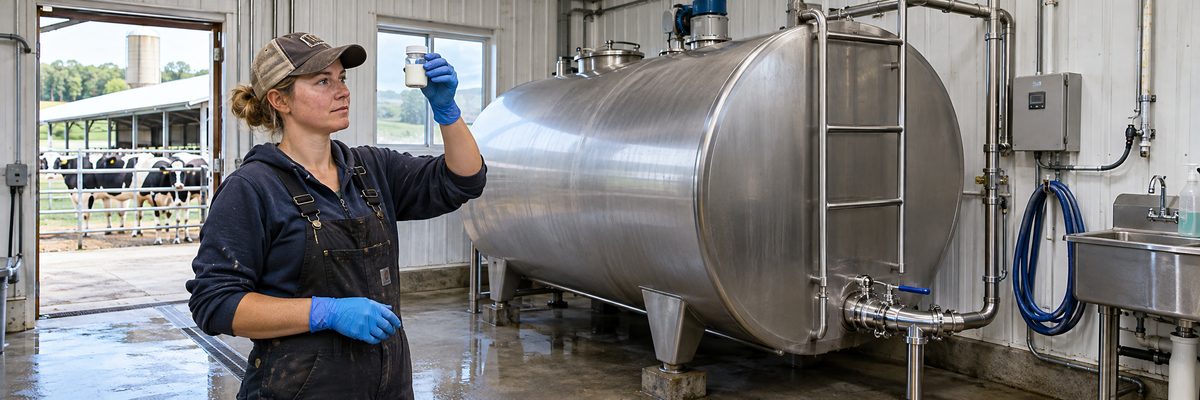
The legal ceiling for somatic cell count in Grade A cow milk in the United States is 750,000 cells per milliliter. That number comes from the Pasteurized Milk Ordinance (PMO), the model rule that state dairy regulators use for milk sold as fluid Grade A. If your commingled milk goes over it often enough, the state can take action on your Grade A permit.
That is the short answer, and the long answer is that the 750,000 line is a legal limit, not a target. Most buyers want a count far below it, and many herds run well under. Treat 750,000 as the edge of the cliff and plan to be nowhere near it.
This article is general education. Rules are administered by each state agency and adopted with local variations, so confirm the details with your state dairy regulatory office and your milk handler.
What the limit covers
The 750,000 figure applies to raw milk for pasteurization from individual producers, which means your bulk tank sample, not individual cows. A cow with a million-cell count does not by herself put you in violation, though she may help get you there. The limit is about what leaves your farm in the tank.
Goat milk has a different figure in the PMO, which is higher than for cow milk because goats naturally have higher counts without infection. Sheep and other species may be handled differently, and some states have their own provisions. If you ship goat or sheep milk, ask your state agency which limits apply to you rather than assuming the cow number.
Milk for manufactured products, such as cheese or butter produced under non-Grade A rules, is covered by different regulations and buyer standards. Check with your plant.
How often milk is tested
Under the PMO framework, regulators take samples of each producer's milk on a regular schedule, and the milk handler also tests for payment. In general, a producer should expect several regulatory samples spread across a period of months, plus frequent handler tests. How samples are collected and who does the testing is covered in how milk is sampled and graded at pickup. The details of sampling frequency and the number of samples considered in an enforcement action are set by the ordinance and your state, so ask your regulator for the current rules instead of relying on a general summary.
Most handlers test every load or every pickup, which means you can see your own trend long before the regulator does. If the numbers are creeping toward the limit, you will usually know weeks ahead.
What happens when the tank goes over
The typical enforcement ladder under the PMO looks like this, though the specifics vary:
- A violation is recorded. A sample over the limit counts against you.
- A warning notice. If violations repeat within the evaluation period, the regulatory agency usually sends written notice and may do a follow-up sample and farm visit.
- Further violations can lead to suspension. If the producer fails to bring milk into compliance, the Grade A permit can be suspended, which means the milk cannot be sold as Grade A until the producer is reinstated.
- Reinstatement. Reinstatement requires showing, through samples, that the milk meets the standard, along with any other conditions set by the agency.
A suspended permit can mean a hole in the milk check, a milk truck that does not stop at your farm, and a long phone call with your handler. Some handlers also have their own policies that penalize high counts or end hauling well before the regulatory limit is reached. Your milk contract spells out what yours does. See how milk quality premiums work for an overview of the premium and deduction side.
The state agency and your handler are separate. You can be fine with the state and still get a penalty from the handler, or the other way around.
Limits versus premiums
The legal limit is the minimum. Premium programs are where the money is. Many handlers pay quality premiums for counts well below the legal limit, and deduct for counts above their own thresholds. In some regions, buyers also set requirements for export or specialty markets that are stricter than the PMO. The numbers differ by handler, cooperative and federal order, so ask for the current schedule in writing.
It also helps to recognize that the legal limit is for Grade A fluid milk, while cheese plants and other processors often care about cell count for yield and flavor reasons. A count that is legal and still expensive is common.
Staying clear of trouble
If your tank is trending toward the limit, treat it as a farm-wide issue and act early.
- Watch the trend, not the single sample. One high load can be a fluke. Three in a row is a plan.
- Find the contributors. Use DHI data or cow-side tests. Reading DHI cow somatic cell reports shows how.
- Use the step-by-step plan. How to lower bulk tank somatic cell count has a prioritized approach.
- Keep treated and high-count cows out of the tank as appropriate. Follow withdrawal times and your vet's directions. See milk withholding times and discard records.
- Talk to your handler early. Field staff and fieldmen generally want you to stay in business and are often glad to help you find a fix.
- Know your inspection schedule. Ask your state agency what inspectors look at, and walk the barn with that list before they do.
Do not try to game the sample by diluting, delaying or otherwise tampering with milk. That is a violation and a quick path to losing your permit entirely. Handling cows and milk honestly is boring, but it is the only strategy that survives an inspection.
Regional and species notes
Large Western and Southwest herds, small Northeast family dairies and grazing herds in the Upper Midwest all face the same legal limit for cow milk, but the practical risks differ. Heat and humidity push counts up in the Southeast. Mud and winter housing do it in the Northeast. Seasonal grazing herds may see counts rise in late lactation when many cows are dried off at once and fewer cows are in the tank. Small herds are particularly sensitive because one infected cow is a larger share of the milk.
For the official side, the USDA Agricultural Marketing Service dairy marketing orders page explains federal order pricing, and your state's department of agriculture or dairy regulatory agency is the authority on Grade A permits. For general udder health reading, the National Mastitis Council fact sheets are a good resource.
Quick answers
What is the legal somatic cell count limit for Grade A milk?
For cow milk it is 750,000 cells per milliliter under the Pasteurized Milk Ordinance, applied to the producer's commingled milk. Goat milk has its own higher figure, and your state agency can confirm what applies to you.
Is 750,000 a good target?
No. It is the legal maximum, and most buyers want counts much lower. Staying well below it gives you a cushion for a bad month and keeps you in line for premiums.
Can I lose my Grade A permit over a high SCC?
Yes, if violations continue after notice, a permit can be suspended until the milk meets the standard again. The exact steps depend on your state, so ask your regulator for the procedures that apply.