How to Lower Bulk Tank Somatic Cell Count
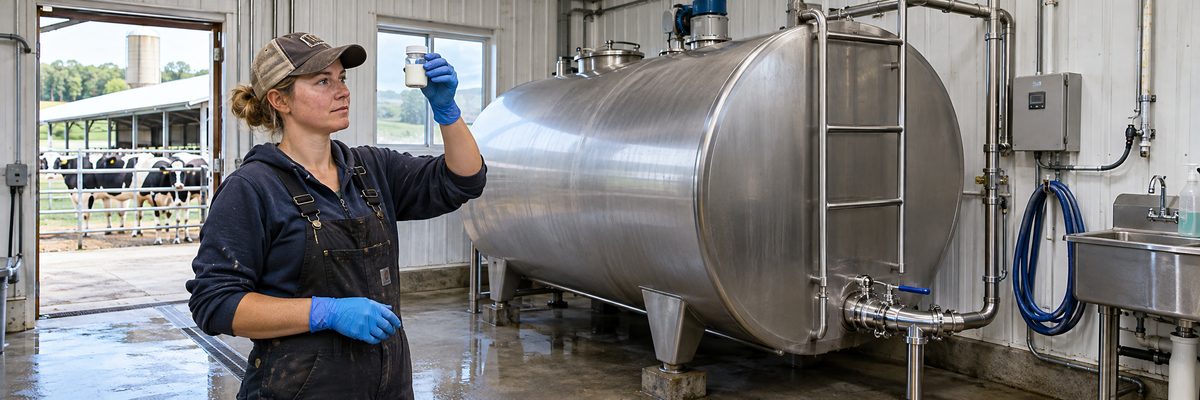
When the bulk tank cell count starts climbing, the temptation is to change six things at once and hope one of them works. Resist that. A rising count has a cause, and the fastest way to bring it down is to find the cause in the right order instead of buying a new teat dip because the rep was nice.
Here is the order that usually pays off. First, find out which cows are contributing and what bugs you are dealing with. Second, tighten the milking routine. Third, have the machine checked. Fourth, look at dry cow management and the fresh cow pen. Fifth, make hard decisions about chronically infected cows. Work with your veterinarian on diagnosis and treatment throughout, and keep an eye on milk withholding times so nothing gets into the tank that should not.
There is no secret ingredient. Low-count herds mostly just do the boring things on time, every day, and have a mug of coffee about it.
Step 1: Find the cows and the cause
The bulk tank is an average. Averages hide the cows doing the damage. Pull your individual cow SCC from the most recent DHI test, and use reading DHI cow somatic cell reports to sort for cows that are high now and were high last month. Those chronic cows tend to account for a large share of the tank's total cell load.
Next, work out what is causing the infections. That is where culturing comes in. On-farm milk culturing or lab culture of milk from high-SCC cows tells you whether you are fighting contagious bacteria that spread at milking, environmental bacteria from the pen, or something else. That answer drives everything else. The difference is laid out in environmental versus contagious mastitis. Your herd vet or milk quality adviser can help set up a sampling plan, and a bulk tank culture can give a quick look at which pathogens are in the herd.
For a quick cow-side screen, the California Mastitis Test can help you find the quarters that deserve a sample.
Step 2: Tighten the milking routine
If contagious mastitis is involved, the routine is usually where it spreads. Check the basics and then check them again with a stopwatch, because routines drift.
- Forestrip every cow. It helps detect clinical cases and stimulates let-down.
- Clean and dry teats. The full sequence is in pre-milking teat prep, step by step. Dirty teat ends are how environmental bacteria get in.
- Use an effective post-dip. Teat dipping after every milking is one of the best-proven ways to cut new infections. Product choice is a conversation for your vet or dip supplier.
- Wear gloves. Milkers who wear gloves and change or sanitize them between cows or groups spread less bacteria.
- Milk known infected cows last. That means the ones with high SCC, positive cultures or clinical cases.
- Keep units from sucking air. Proper attachment and removal cuts liner slips that can push bacteria up the teat.
Routines also depend on people. A new milker who was trained in one afternoon will do a different job than the person who has done it for ten years. Training a new milker properly is not glamorous, but it is cheaper than a high-count penalty.
Step 3: Have the machine checked
An unstable vacuum, a failing pulsator or worn liners can quietly damage teat ends and set cows up for infection. If counts have been rising and the routine looks good, schedule a milking system test. If you are not sure when the last one was, that is your answer. Look at teat ends for rings and roughness, and make sure liners are changed on a milking-count schedule rather than a guess. A machine problem is easy to overlook because it never says anything. It just wears on cows twice a day.
Step 4: Dry cows and fresh cows
A large share of new infections happen in the dry period and around calving, so this is where many herds find their biggest gains.
- Dry cow therapy decisions. Whether to treat all cows or select cows, and whether to use an internal teat sealant, are herd-level decisions to make with your vet. The trade-offs between selective and blanket dry cow therapy are worth reading before that conversation.
- Clean, dry housing. Dry cows and close-up cows in a muddy or wet pack pick up environmental bacteria in a hurry.
- Fresh cow monitoring. Watch fresh cows for mastitis and other metabolic troubles that lower immunity.
- Bedding. Wet, dirty bedding in lactating pens is a steady supply of bacteria. Stalls cleaned and refreshed often make a real difference.
Heat stress, overcrowding and poor nutrition all hurt immune function, so if counts rise in the same season each year, look at cooling and cow comfort.
Step 5: Decide what to do with chronic cows
Every herd has a few cows that keep coming back with high counts, repeated clinical flare-ups or an infection that does not respond. Keeping them can cost more than culling them, because they shed bacteria to herdmates and pull down the tank. The options are to treat under veterinary direction, dry off an infected quarter, segregate and milk last, or cull. Which makes sense depends on the pathogen, the cow's production and age, how many cows are involved and your economics. Some pathogens, like Staphylococcus aureus and mycoplasma, have a poor response to treatment, and your vet can help you weigh the choices.
Whatever you do, follow label directions and your vet's protocol, and respect milk withholding times so no residue gets into the tank. See milk withholding times and discard records for how to keep that straight.
Check your progress and set expectations
- Pick a baseline: the current tank SCC, number of cows over 200,000, and clinical case rate.
- Choose two or three changes to make first, and write down the date.
- Recheck with DHI test day results and tank values after several weeks. SCC moves slowly. A new teat dip does not bring the count down by Friday.
- Keep a record of treatments, culls and changes in the routine.
Regional patterns help you plan. Herds in the Southeast and parts of the Southwest often see counts climb in hot, humid months, so extra cooling and attention to bedding before summer are worth it. Northeast and Upper Midwest herds fighting spring mud and winter housing need a different checklist. Grazing herds in wet seasons need to watch lanes and gateways that turn to soup. For more detail, see the National Mastitis Council fact sheets and the Michigan State University milk quality program.
Quick answers
How long does it take to lower a high bulk tank SCC?
It depends on the cause, but expect weeks to a couple of months for meaningful change. Removing a few high-count cows from the tank can move the number quickly, while fixing routines and dry cow management takes longer to show up.
Should I cull every high-SCC cow?
Not automatically. Look at how long she has been high, her culture results, her production and the number of cows involved, and talk it over with your vet. Chronic cows that do not respond to treatment are the usual candidates.
Can I just dump high-SCC cows' milk to keep the tank down?
Holding milk out of the tank can be part of a plan for treated or known infected cows, but it only treats the symptom. You still have to find the cause and fix it, or the count will be back.