Bucket Milker vs Pipeline for a Small Herd
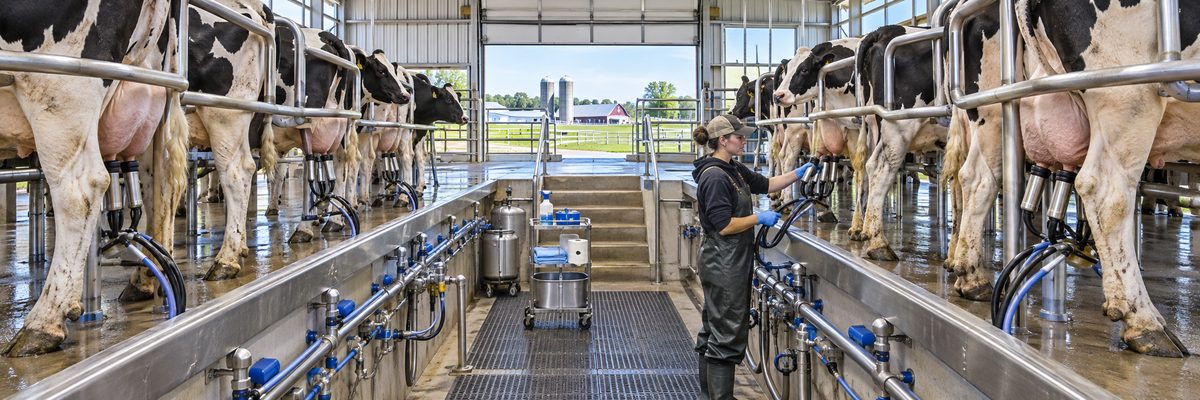
Somewhere around the fifteenth cow, most small-herd milkers start doing math on their back. A bucket milker is light until it is full, and a full one has to be lifted, carried and dumped, twice a day, every day, for as long as your shoulders hold out. A pipeline takes that job away and sends you a bigger bill for it.
The short answer: a bucket milker is the cheaper, simpler and more flexible choice for a handful of cows, a family cow, a few goats or a herd where milk is sold in a market that accepts it. A pipeline costs more up front but saves labor, makes it easier to hold up under inspection and scales better as the herd grows. Somewhere between about 15 and 40 cows the choice tips, and where exactly depends on your barn, your body, your market and your milk buyer.
Before you buy anything, find out what your milk handler and state dairy regulator require. In many places, a Grade A permit expects a milk house, specific equipment and a cleaning method that a bucket system may not satisfy. Ask first. Nobody enjoys buying equipment the inspector won't accept.
How each system works
Bucket milkers
A vacuum pump supplies a vacuum line along the barn wall with taps (stall cocks) at intervals. You carry a bucket assembly, with its pulsator, claw and teat cups, to each cow, hook the hose to a vacuum tap, and milk. When she is done you remove the unit and carry the milk to a strainer or a cooling container, and you wash the bucket and claw by hand or in a wash sink between cows or at the end.
Pipeline milkers
With a pipeline, a stainless or glass line runs above the stalls with vacuum on it and the milk travels from the claw through a hose to the line, then to a receiver jar and a pump that sends it to the bulk tank. After milking, the whole system is washed in place with a circulation cycle. The milker never carries milk, only the unit. Our article on pipeline milker wash cycle basics explains what the cleaning cycle involves.
Comparing the two for a herd of 5 to 40
| Factor | Bucket milker | Pipeline |
|---|---|---|
| Up-front cost | Lower. Used units are common | Higher. Installation, plumbing, a receiver and a wash system add up |
| Labor | Carrying and dumping buckets, hand washing | Hooking up units, with milk moving automatically |
| Cleaning | Manual, so results vary with the person | Circulation wash, more consistent when set up right |
| Milk quality risk | Open pails and handling add contamination chances | Closed system limits exposure |
| Flexibility | Move units anywhere there is a vacuum tap, handy for treated cows | Fixed to the barn layout |
| Fit for Grade A | Often limited or not accepted. Check locally | Typically what Grade A rules expect |
| Best size range | Family cow to a small herd | Mid-sized tiestall herds and up |
Treat those rows as tendencies. A well-run bucket system beats a poorly cleaned pipeline every day of the week, and the reverse is also true.
Labor and your back
This is the factor that quietly decides most of these purchases. Carrying a bucket of milk is a workout. Over the course of a milking with 20 cows, you will make a lot of trips, and you will do it again tonight. If the barn is cold in winter or the aisle is slick, the labor is worse. A pipeline eliminates the carrying, and a second person in the barn does not need to be a person who can lift. For farms planning on hired help or older family members to do the milking, that matters more than the savings.
The opposite case: a family cow and two goats, milked by one person who likes the routine. Here a bucket unit is fine and a pipeline would be like buying a locomotive to move the lawn chair.
Cleaning and milk quality
The housing around milk matters as much as the machine. Buckets and claws go through hand-washing, sanitizing and drying. Each step is a place to cut corners on a late evening. Pipelines are cleaned by a circulation cycle with the right water temperature, chemical strength and flow, and they fail when any one of those is off. In both systems the results come from following a procedure every time. The wash water and chemicals matter in both, and wash water temperature and chemical strength goes through what to check.
The National Mastitis Council, at nmconline.org, publishes recommended milking procedures and udder health resources that apply to any system. Teat prep, unit attachment and removal, and post-dip are the same whether the milk goes into a pail or a pipe. For how to attach and remove units correctly with either system, see attaching and removing milking units the right way.
Machine health: vacuum, pulsation and liners
Either way you are running a vacuum pump, pulsators and rubber liners, and they wear out. A bucket system with a tired pulsator will cause just as much teat-end damage as a pipeline with the wrong vacuum. Plan on routine checks. What vacuum level your milking machine should run is a good starting point, and how often to change milking liners will save you a few high-SCC surprises. Have a qualified technician test the system when it is installed and then on a regular schedule. Our overview of the milking system test says what to expect.
Money: what to ask before you buy
- What does the installed price include? Plumbing, electrical, a water heater and a bigger wash sink are easy to forget.
- Does the used equipment come with parts and a technician who can service it in your area?
- What are your handler's equipment and milk house requirements?
- What happens to resale value if the herd grows or shrinks?
- What will your time be worth in five years?
Prices swing widely with brand, new versus used and the barn, so get written quotes from at least two dealers rather than trusting a number in a forum post. Ask your extension dairy educator or a neighbor with a similar barn what they would do over again. Neighbors are free and will tell you for as long as you will stand there.
A simple way to decide
- Five or fewer cows, selling nothing or selling to a market that allows it: bucket milker, kept scrupulously clean.
- Ten to twenty cows, tiestall, no Grade A permit: either, and let your shoulders vote.
- Twenty to forty cows, or any Grade A market: pipeline, unless your handler says otherwise.
- Thinking about growing, hiring or retiring the milker: pipeline, and think about whether you would be better off looking at a parlor. Tiestall versus parlor milking covers that fork.
Quick answers
Can I sell Grade A milk with a bucket milker?
Rarely. Grade A permits generally expect a closed system and a milk house that meets state rules, so call your state dairy regulator and your handler before buying equipment.
How many cows is too many for a bucket milker?
There is no fixed number, but most people feel it somewhere between 15 and 30 cows, depending on how well their back, their aisles and their patience hold up. Past that, the labor and cleaning burden usually favor a pipeline.
Is a used pipeline a good idea?
It can be, if a qualified technician tests it and the parts are still available. Ask for a system test before you buy and keep the liners, pulsators and gaskets fresh from day one.