Pre-Dip vs Post-Dip: What Each One Actually Does
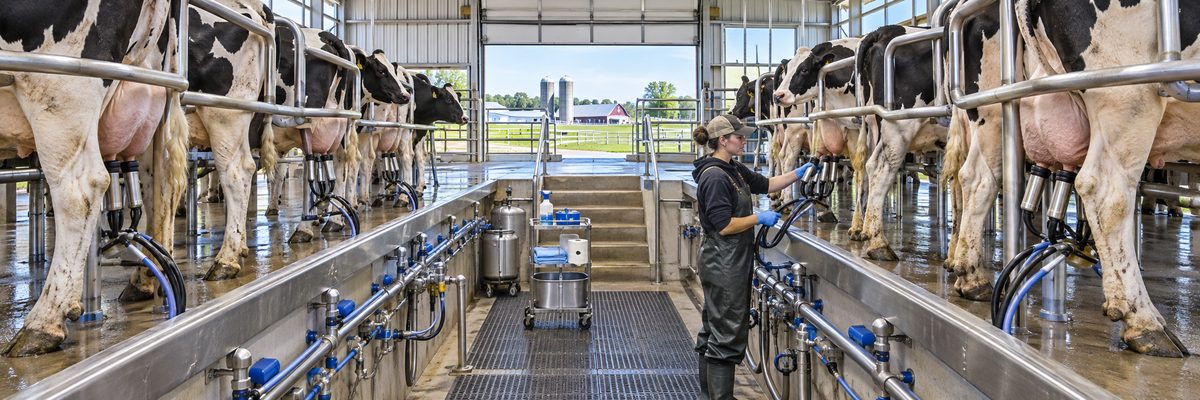
The two teat dips look alike in the bucket and do different jobs on the cow. A pre-dip goes on before milking to reduce the bacteria on the teat skin so they do not end up in the milk or the liner. A post-dip goes on after the unit comes off to protect the open teat end while it closes, which can take a while.
Mix up the jobs and you get a product on the wrong side of the milking doing the wrong work. Pre-dip is about cleaning. Post-dip is about protecting. One has to be wiped off, and one has to stay on.
Here is what each one does, how long to leave it, and where the usual confusion starts. It is the same confusion every dairy has had at least once, usually right after a label changed and the jugs got swapped.
Pre-dip: before the unit goes on
A pre-milking teat dip is applied to the whole teat surface before attachment. Its job is to kill or reduce bacteria on the skin, especially the environmental types that come from bedding, mud and manure. It needs to sit on the teat for the contact time on the label, then be wiped completely off before the unit goes on, so no product ends up in the milk.
Pre-dipping is usually most valuable where environmental mastitis is a concern, such as in wet seasons, with dirtier bedding, or in herds that struggle with coliforms or environmental streps. To understand why, see environmental versus contagious mastitis.
What matters for pre-dip
- Cover the whole teat, not just the end.
- Respect the label contact time. Many products need around 20 to 30 seconds, but check yours.
- Wipe thoroughly with a clean single-use towel.
- Use only products labeled for pre-milking use.
The full sequence for the pre-milking side is in pre-milking teat prep, step by step.
Post-dip: after the unit comes off
After milking, the teat canal stays open for a period, and bacteria on the skin or in the environment can move in. A post-milking dip leaves a germicidal film on the teat end that works as a barrier and a disinfectant while the canal closes. It is not wiped off. It stays on until the next milking.
Post-dipping is a long-standing part of mastitis control programs, particularly for contagious mastitis, where bacteria spread from cow to cow at milking time. Research and extension programs have long recommended it as a standard practice. The National Mastitis Council collects milking and mastitis prevention information on its resources page, and your veterinarian can tell you how it fits your herd.
What matters for post-dip
- Apply soon after unit removal, before the cow leaves the stall or parlor.
- Cover as much of the teat as the product directs, with special attention to the end.
- Let it dry on if you can, especially in cold weather.
- Do not wipe it off.
Side-by-side comparison
| Pre-dip | Post-dip | |
|---|---|---|
| Applied | Before attaching the unit | After removing the unit |
| Main job | Reduce bacteria on teat skin before milking | Disinfect and protect the open teat end |
| Contact time | Required, then wiped off | Stays on the teat |
| Wiped off? | Yes, always | No |
| Often tied to | Environmental mastitis control | Contagious and environmental mastitis control |
| Product type | Labeled for pre-milking use | Labeled for post-milking use |
Do you need both?
Most herds use a post-dip as a standard practice. Pre-dip use varies. Some herds with very clean cows and low environmental pressure get along fine with a dry-wipe approach; others, especially in wet climates or dirtier housing, rely on pre-dip. The right answer depends on your mastitis pathogens, bedding, housing, climate and bulk tank results. Your veterinarian and milk quality advisor can help you decide, ideally with culture results instead of guesses. On-farm milk culturing for mastitis decisions is a way to find out what you are actually fighting.
Whichever you use, the dip has to match its job. A pre-dip applied after milking, or a post-dip wiped off, is not doing what it was bought to do. Use only products labeled for the specific use, and keep records of what you used.
How to apply: cups, sprays and foam
Dip comes in different delivery systems:
- Dip cups give good coverage but need to be kept clean. Dirty cups spread bacteria, and returning unused dip to the jug is a bad habit.
- Sprayers are faster, but coverage can be spotty, especially on the back of the teat, if the spray is not aimed well.
- Foam applicators use less product but still need good coverage.
Check coverage in a few cows from time to time. A teat that looks dipped from the front and bare on the back is a common find.
Mistakes to avoid
- Not wiping off pre-dip, which can leave product on the teat when the unit goes on.
- Skipping contact time on pre-dip because the line is moving.
- Letting post-dip cups get dirty and refilling them without cleaning.
- Diluting dip or mixing it with another product without the manufacturer's directions.
- Using the wrong product in the wrong place, which is easier than it sounds when two jugs look the same.
- Ignoring weather. In freezing temperatures, wet teats can freeze, and winter milking in the Upper Midwest and protecting teats explains how to adjust.
Buying dip by price per gallon is a way of finding out what a case of mastitis costs. Our piece on choosing a teat dip for your herd goes into the product side.
Quick answers
Can I use the same dip for pre and post?
Only if the label says the product is approved for both uses. Many products are made for one or the other, and the instructions on contact time and wiping differ. Follow the label and ask your supplier or veterinarian if you are unsure.
Do I have to wipe off post-dip?
No. Post-dip is meant to stay on the teat until the next milking. Pre-dip is the one that must be wiped off before the unit goes on.
If I only have money for one, which should it be?
Many mastitis control programs treat post-dip as the baseline. That said, your situation matters, so talk to your veterinarian or milk quality advisor about where your herd's problems actually come from.