Cleaning Calf Bottles and Buckets So They Actually Get Clean
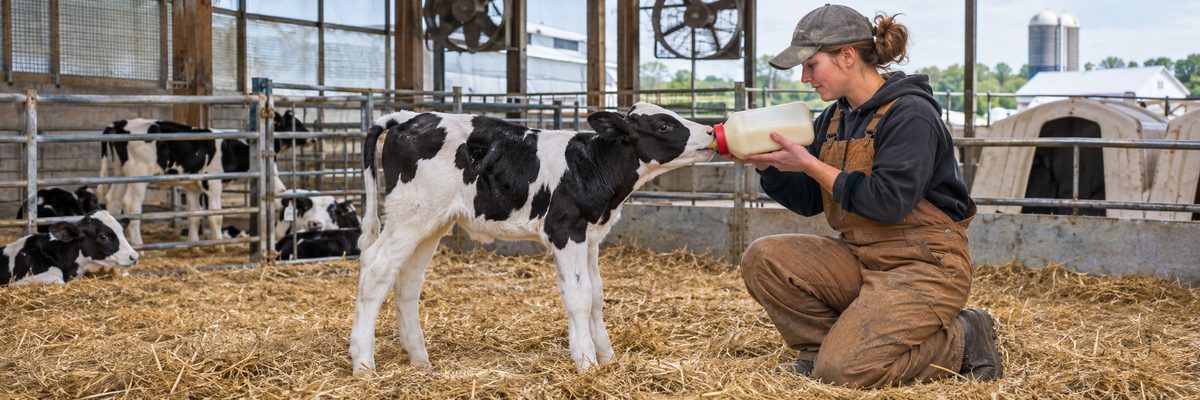
A calf bottle that looks clean isn't necessarily clean. Milk leaves a thin film of fat and protein that you can feel with a fingernail before you can see it, and that film is where bacteria set up house. Calves drink whatever's in it, then you wonder why the scours came back.
The routine that works is the one dairy farmers already know from the milking system: rinse, wash with a hot alkaline detergent, rinse with an acid, sanitize if your protocol calls for it, and let everything dry. The difference with calf equipment is that nobody has a plumbing system doing it for you. It's you, a sink and a brush.
Why a rinse isn't enough
Milk residue is a mix of fat, protein and minerals. Warm water alone spreads the fat around and leaves the protein stuck. Cold water sets it. Whatever's left feeds bacteria, which multiply fastest in the warm, damp, sheltered spots like the inside of a nipple, the threads of a bottle cap, and the seam of a bucket handle. Mastitis milk, waste milk and replacer all leave film, and if the milk was already loaded with bacteria, the film is too. Feeding waste milk to calves raises the stakes on all of this.
The wash routine, step by step
- Rinse right after feeding. Use lukewarm water, roughly body temperature, to flush out milk before it dries. Hot water at this stage can bake protein onto the plastic. Don't let bottles sit for an hour on the tailgate.
- Take everything apart. Nipples, valves, caps and rings come off. A bottle washed with the nipple on is only half washed.
- Wash with hot water and a detergent made for dairy equipment. Follow the label for temperature and concentration. A chlorinated alkaline cleaner is common, and the hot water is what melts the fat. Scrub with a bottle brush and a nipple brush, with enough elbow to feel the plastic go from slick to squeaky.
- Rinse with clean water. Get all the soap out. Leftover detergent can put calves off their feed.
- Acid rinse or sanitize as directed. Many farms use an acid rinse regularly to dissolve mineral buildup that alkaline soaps leave behind, and a sanitizer before use. Follow the product label and your milk plant or herd vet's guidance. Don't mix chemicals; chlorine and acid make a gas you don't want in the wash room.
- Drain and dry. Hang bottles upside down on a rack, nipples in a mesh bag or on a drying pin. Damp equipment stored in a closed bin grows things.
- Store clean and covered. A bucket stacked on a bucket stacked on a bucket with a dead fly in the bottom is a plan someone made at 5 a.m.
Buckets and pails
Buckets are easier to clean but easier to ignore. Scrub the bottom seam and the handle attachment points, where milk collects. Nipple pails need the nipple and check valve removed each time. If you feed several calves from one bucket in a row, rinse between calves at minimum, and feed sick calves last. Better, give each calf her own bucket or bottle and keep a spare set so you can wash while the next set gets used. For a comparison of tools and their cleaning workloads, bottle, bucket or nipple pail breaks it down.
Nipples deserve their own attention
The nipple is the hardest part to clean and the one calves put in their mouths for several minutes. Turn it inside out if you can, scrub the hole, and check for cracks. Soak in sanitizer solution if your protocol includes it, then dry. Replace nipples that are cracked, torn, stretched or discolored. They're cheap, and a leaky one means the calf is getting milk too fast, or not enough. Some farms keep a color-coded set so sick calves' gear doesn't get mixed back in.
Water temperature and hardness
Hot water is the engine of the routine. Many dairy cleaning programs call for wash water in the range of about 120 to 150 degrees Fahrenheit at the start, but follow your detergent label for the right number. If your hot water heater can't deliver that, a calf-barn wash sink can be a poor use of an old water heater. Hard water leaves mineral film, in which case an acid rinse becomes more important. If you can't get hot water to the calf area, consider moving the washing to the milk house, where you already have it.
Check your results
- Look and feel. Run a clean finger or a paper towel around the inside of a bottle. Anything slick, white or cloudy means it's not done.
- Smell. Sour or off smells indicate bacterial growth.
- Culture it. Ask your vet or lab how to swab or rinse-sample equipment for bacteria counts. A culture of a "clean" bottle can be eye-opening.
- Look at the calves. Rising scours or a pattern in the same hutch may point to equipment. Ask what's changed, and review calf scours first steps if cases are already showing up.
Common mistakes
- Using the same sponge for bottles, buckets and the hutch floor.
- Washing with cold water or water that's lukewarm and calling it a day.
- Skipping the acid rinse for months and then wondering about the white scale.
- Leaving equipment wet in a closed tote.
- Using household dish soap in place of a dairy detergent without checking whether it rinses clean.
- Not training everyone who feeds calves. A great routine only one person follows is a hobby.
Bacteria are the same wherever they land, so the sanitation logic here carries over to colostrum equipment and tube feeders too, as discussed in pasteurizing, freezing and thawing colostrum safely. For a general reference on dairy cleaning programs, UW-Madison dairy extension and the National Mastitis Council publish sanitation guidance, and your chemical supplier can calibrate concentrations for your water.
Quick answers
Can I just rinse calf bottles with hot water?
Hot water alone won't remove the fat and protein film. Use a dairy detergent with a brush, rinse, and follow with an acid rinse or sanitizer as your protocol says.
How often should I replace calf bottle nipples?
Replace them when they crack, tear, stretch or won't come clean. They're cheap compared to a calf with scours.
Should I wash bottles after every feeding?
Yes. Rinse right after feeding and wash fully before the next use. Milk left to sit dries on and grows bacteria quickly, especially in warm weather.