Signs of Milk Fever in Fresh Cows
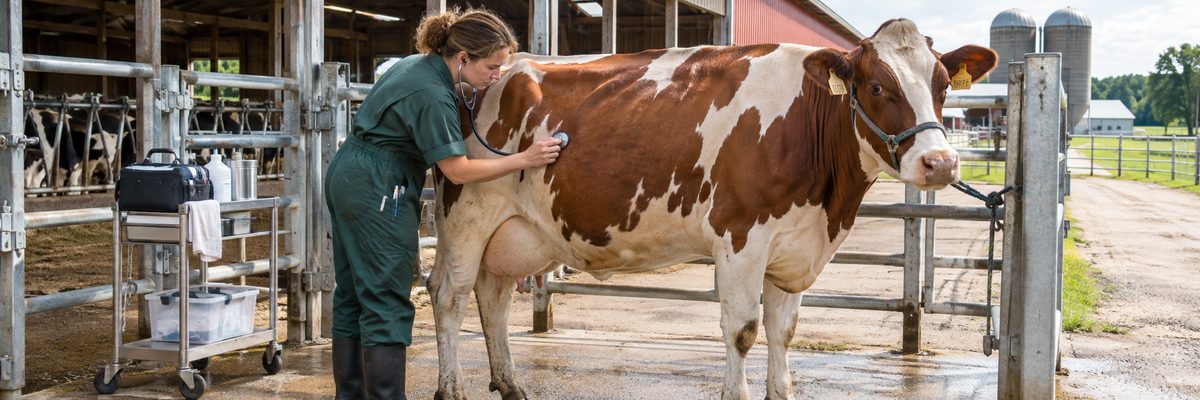
Milk fever has nothing to do with fever, and the cow that has it is usually cold. It's low blood calcium, and it hits fresh cows in the first day or two after calving, when the udder suddenly demands far more calcium than the cow's body can supply on short notice.
The classic picture is a cow down in the stall or alley, head tucked around toward her flank, cold ears, dry nose, not interested in anything. Earlier on, she may just be jumpy, shaky or stiff-legged. Catch her at that point and treatment goes better. Wait until she's flat on her side and the odds drop and the vet bill climbs.
If you only remember one thing: a fresh cow that's down, wobbly or acting strange is a call to the vet, not a wait-and-see. She's not being dramatic. She is, in fact, the opposite of dramatic, which is the problem.
What's going on inside the cow
When a cow starts making milk, calcium moves out through the udder in a hurry. Her body normally adapts by pulling calcium from bone and absorbing more from feed, but those systems take a few days to ramp up. In some cows the gap is wide enough that blood calcium drops low, and muscles stop working properly. Nerves misfire first, then the muscles weaken.
Older, high-producing cows are most at risk, with third and later lactations being the usual suspects. Jersey and Guernsey cows tend to run higher risk than Holsteins, though any breed can get it. Cases show up mostly within the first day or two of calving, sometimes just before or a bit later.
There's also a quieter version. Many fresh cows have blood calcium that's lower than ideal without ever going down. That's called subclinical hypocalcemia, and it matters because low calcium has been linked to other fresh-cow trouble, including retained placentas, displaced abomasums and mastitis. A cow can look fine and still be running behind.
The stages of milk fever
| Stage | What you see | What it means |
|---|---|---|
| Early | Standing but restless, twitchy ears, head bobbing, trembling over the flanks, stiff or wobbly in the rear, may bellow or shuffle the back feet. | Calcium is dropping and nerves are overexcited. Treat now and recovery is usually quick. |
| Down but upright on the chest | Can't stand, but holds herself up on her brisket. Dull, off feed, dry muzzle, cold ears and legs, often with the head turned back toward her side. | Muscles are failing. She needs a vet right away. Gut movement slows, and bloat and unfilled bladders can follow. |
| Flat on her side | Lying flat out, unresponsive or barely responsive, bloated, very weak. | This is a true emergency. Circulation is failing, and every minute counts. |
Remember that milk fever isn't the only reason a fresh cow goes down. Nerve damage from a hard calving, a hip or pelvic injury, mastitis, toxic metritis or other disease can all look similar at first glance. That's another reason the vet gets the call, since the right treatment depends on the right diagnosis.
What to do while you wait for the vet
Call first. Then do the things that keep her safe until help arrives.
- Get her upright on her chest if she's on her side. A cow that's flat on her side is at risk of bloat and of breathing in regurgitated rumen fluid. Prop her with bales or roll her gently onto her brisket if you can do it without hurting yourself or her.
- Give her good footing. Slick concrete makes everything worse. Put down sand, shavings or straw, or move her to a pen with bedding if that can be done without dragging her. For more on handling a cow that won't rise, see downer cow care and recovery.
- Keep her comfortable. Shade in summer, wind protection and extra bedding in winter. A cold cow with low calcium is in a bad spot.
- Don't force-feed or drench a cow that can't swallow properly. Liquids can go into the lungs. Oral calcium products have a place for prevention in certain cows, but a recumbent cow is a job for the vet.
- Don't try to give intravenous calcium unless your vet has trained you and given you a protocol. Calcium given too fast can stop a heart. This is one of those jobs where enthusiasm is not the same as skill.
- Take her temperature, pulse and respiration if you can, and tell the vet what you find. A subnormal temperature points toward milk fever, while a fever points elsewhere. See normal dairy cow vital signs for the baseline.
Your vet will usually confirm the diagnosis from signs and timing, and may take blood for calcium and other levels. Treatment is calcium given by a route and at a rate the vet chooses, with follow-up to keep the cow from relapsing. Some cows stand within minutes to hours; others need follow-up care and a second round. A few don't recover, and that's not a reflection on your care. It's the nature of the disease at its worst.
After treatment: watch for relapses and company
A cow that gets up after treatment isn't necessarily done. Calcium can dip again, so many vets recommend extra monitoring and sometimes follow-up supplementation. Look for other fresh-cow problems too. Low calcium tends to arrive with company, such as a retained placenta, a slowed gut, displaced abomasum, or a sluggish uterus. A thorough fresh cow check protocol for the first ten days catches many of these early.
If she's been down for a while, check her legs for muscle or nerve damage. A cow that's been recumbent can bruise muscle and nerves under her own weight, and may need help getting up and walking.
Preventing milk fever in the herd
Prevention happens before calving, in the dry cow pen. It's mostly about the diet of the close-up cow, which is where your nutritionist and vet earn their keep. Common strategies include:
- Low-calcium or low-potassium dry cow rations. Forages high in potassium, common in some regions and on heavily fertilized fields, raise risk. Test your forage and work on the ration with a nutritionist.
- Dietary cation-anion difference (DCAD) management. Feeding a negative-DCAD ration to close-up cows is a widely used approach, and it requires monitoring, often with urine pH, because the feed is not especially tasty and cows can balk at it.
- Oral calcium at calving. Many herds give oral calcium products to higher-risk cows, often older cows, using products and timing set by their vet.
- Magnesium. Adequate dietary magnesium helps calcium regulation, so a mineral program matters.
- Body condition and stress. Overconditioned cows and stressed cows are harder to transition. Aim for steady condition through the dry period.
Regional differences are real. In the Upper Midwest and Northeast, many herds feed high-potassium alfalfa and grass forages, which makes calcium management a bigger deal. In the Southeast and Southwest, heat stress adds to the load. Grazing herds in spring may face lush, high-potassium pasture during calving season.
For reliable detail on the disease, signs and prevention, the Merck Veterinary Manual entry on parturient paresis in cows is a solid reference, and your herd vet can tailor a plan to your farm.
Quick answers
Can a cow die from milk fever?
Yes, especially if she goes untreated or is treated late. Prompt veterinary treatment gives most cows a good chance of recovery, so don't wait to see whether she stands on her own.
How soon after calving does milk fever happen?
Most cases appear within the first day or two after calving, though it can show up a little before or after. That's why fresh cows are watched closely during those first few days.
Can heifers get milk fever?
It's uncommon in first-calf heifers, and risk rises with age and number of lactations. A down or wobbly fresh heifer still needs a vet, since other problems such as calving injuries may be involved.