Hardware Disease in Cows and Magnets
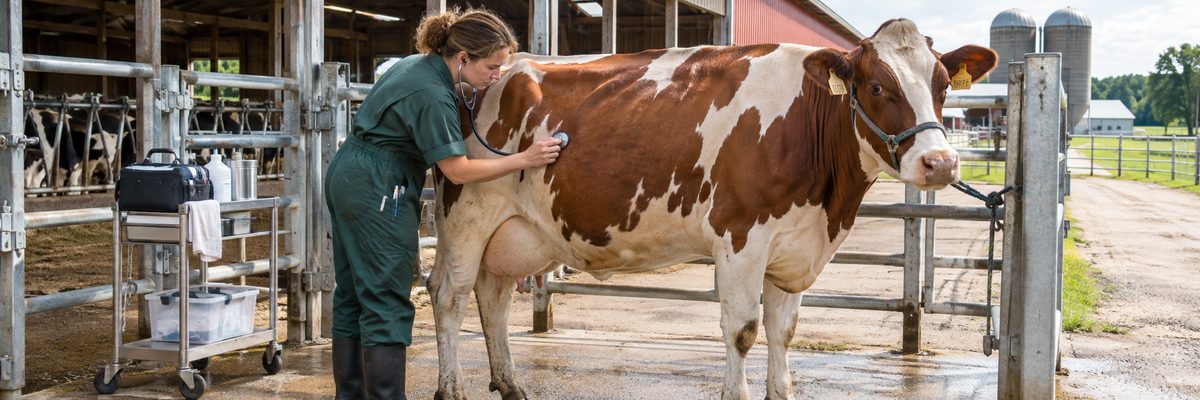
A cow does not chew her feed so much as she inhales it. Anything metal that rides along in the TMR, the hay or the silage drops straight into the reticulum, and if it has a point on it, it can poke through the wall. That is hardware disease, or traumatic reticuloperitonitis if your vet is feeling formal. It usually shows up as a good cow that quits eating and gives noticeably less milk, seemingly overnight.
Magnets help, and they are cheap compared to the milk check you lose when a cow goes off feed for a week. But a magnet is not a force field. It catches metal that is lying in the right place, and it does nothing for a wire that has already gone through the wall. So the plan has two halves: keep metal out of the feed, and keep a magnet in the cow.
The rest of this piece covers how to spot it, what your vet will do, how magnets work and where they fall short, and the farm habits that keep a bent nail from becoming a vet call.
What actually happens inside the cow
The reticulum is the front compartment of the stomach, sitting right up against the diaphragm and near the heart. Heavy, sharp things settle there. Its muscular contractions are strong, and the Merck Veterinary Manual entry on traumatic reticuloperitonitis notes that those contractions help a foreign object work its way through the wall. Once that happens, feed material and bacteria leak into the abdominal cavity and the body walls it off, which often leaves adhesions behind.
Most cases stay local. Less often the infection spreads, and the nasty complications include abscesses, infection of the sac around the heart, and problems with the liver or spleen. That is why a cow that "got over it" a few months ago and never really came back to full production is worth a second look.
Goats and sheep rarely get it. They pick through feed like a fussy eater at a buffet, while a Holstein treats the mixer wagon like an all-you-can-eat.
Signs to watch for
The classic picture, according to the Merck manual, is a sudden drop in feed intake and milk, a quiet or stopped rumen, and a cow that looks like she hurts. You might see:
- An arched back and a tucked, careful way of walking
- Reluctance to lie down or get up, sometimes with grunting or groaning
- A mild to moderate fever
- Mild bloating on the left side
- Manure that is scant, stiff or poorly digested
Chronic cases are sneakier: weeks of poor appetite, low production, and a cow that never quite recovers. Plenty of other things look the same early on, so do not diagnose this one from the alley. A displaced abomasum, a fresh cow with metabolic trouble and simple indigestion can all send a cow off feed. A displaced abomasum is one common look-alike, and knowing when to call the vet is the right first move here.
How the vet confirms it
Your vet may do a foreign body test, pressing or tapping in the area of the reticulum to see if the cow grunts. Merck's review cautions that these tests are only fairly reliable and can come back falsely negative, so they are usually paired with other tools. Ultrasound can show inflammation near the reticulum. Radiographs can show metal and, just as useful, where it sits and whether it is stuck to a magnet. Bloodwork and a sample of abdominal fluid can add to the picture in tough cases.
What magnets can and cannot do
There are two jobs a magnet does.
Prevention
A magnet given by mouth settles in the reticulum and stays there for the life of the cow. Metal that arrives later tends to stick to it instead of lying loose. The Merck manual says there is good evidence that giving magnets to all cattle at around one year of age lowers the incidence of the disease. Many dairies give one to every heifer at some point before first calving, often along with the herd vet's regular heifer work.
Part of treatment
For a cow already showing signs, the usual medical treatment is a magnet (if she does not have one already) plus antibiotics and pain control, all prescribed and directed by your vet. Merck's guidance says to give only one magnet per animal. Success is judged by whether the temperature normalizes and appetite and rumination come back within a few days. If they do not, surgery to remove the object may be an option, and radiographs help decide whether the metal is actually stuck to the magnet.
Where magnets fall short
A magnet works best on objects lying on the floor of the reticulum or standing upright. One that has already gone through the wall, or lies where the magnet cannot reach it, may not come back. Aluminum and other nonmagnetic bits are not caught at all, though Merck calls those uncommon. And a magnet does nothing for the cow's other problems. If you give a magnet and feel the job is done, the next sharp wire is still going to find its way into the bunk.
Anything involving antibiotics also means withdrawal times and milk discard. Ask your vet exactly how long milk and meat have to be held, and write it on the treatment record before the cow goes back in the string.
Keeping metal out of the ration
This is where most of the money is saved. Common sources on dairies include:
- Tire wire. Cut tires used to weigh down silage covers can shed steel belt wire into the pile. Merck specifically names this one. Cleaning up at the face matters whatever you use to hold the cover down; see packing and covering a bunker the right way for the rest of that routine.
- Baling wire and twine ends. Merck lists avoiding baling wire as a basic preventive step. Cut and discard it away from the feed alley, not on it.
- Mixer wagon parts. Bolts, knife pieces and chain links wear loose. A quick look into the mixer when you service it beats a surprise in the TMR. If you are weighing out the mixing setup, what a TMR is and whether it fits your herd is a place to start.
- Fence and building scraps. Merck advises keeping cattle away from new construction and completely removing old buildings and fences, since the smaller scraps are the dangerous ones. A fence staple is the size of a vitamin pill, and it will have the cow's name on it.
- Purchased feed. Hay and byproducts can come in with a fastener or a screw inside. A magnet in the feed line (passing feed over magnets, as Merck puts it) catches a surprising amount.
Some herds mount magnets or magnetic plates in the feed system and clean them on a set schedule. Check them. If it has been a year since someone looked, the magnet is just a very expensive paperweight.
Regional notes
Hardware disease shows up wherever cows eat from a mixer or a bunk, but the sources differ. Wetter, silage-heavy regions like the Northeast and Upper Midwest see more tire and bunker issues. Large Southwest and West Coast dairies that run big mixers and handle lots of purchased commodities tend to worry about what shows up in the load. Grazing herds cut their risk on pasture, though old fence lines and dumped farm junk still deserve a walk-through before the cows go in.
Quick answers
Can I put a magnet in every cow?
Most herds do it once per animal, typically as heifers. Merck's guidance is one magnet per cow, so ask your vet what is right and whether any cow already has one before adding another. They stay for life.
Will a magnet cure a cow that already has hardware disease?
Not on its own. It can be one piece of treatment, alongside antibiotics and pain relief directed by your vet, and it only helps if the metal is in a spot the magnet can reach. If she does not improve in a few days, go back to the vet before the cow gets worse.
How do I check whether a cow has a magnet?
Your vet can use a magnet detector (a compass-style tool) held along the cow's side, or take a radiograph. Writing it in the cow's record when you administer one saves the guessing later.