Displaced Abomasum Signs and Treatment Options
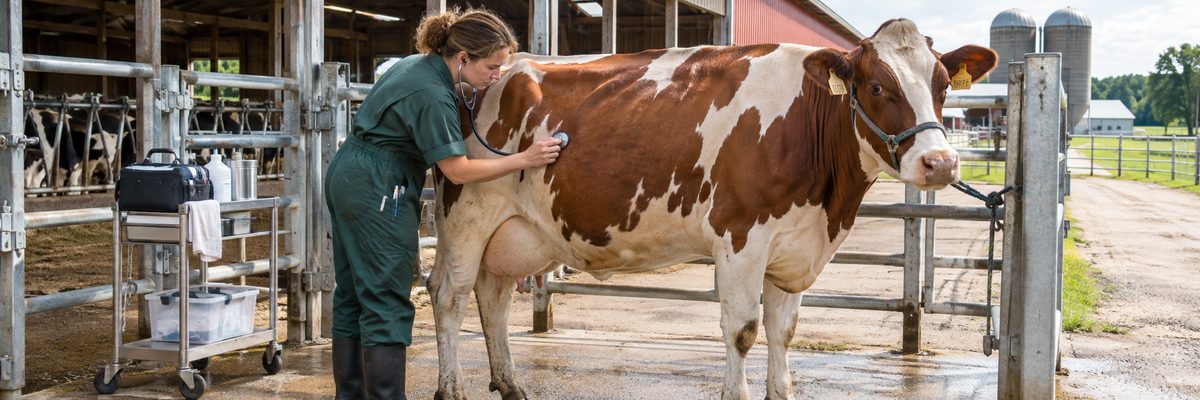
The abomasum is the fourth stomach, the "true" stomach of the cow. In a healthy cow it sits low on the right side of the belly. Sometimes it fills with gas, floats up and slides out of place, and the cow goes off feed, drops milk and starts acting like the day has been a long one. That's a displaced abomasum, or DA, and it's one of the classic fresh cow problems on a dairy.
Most cases are on the left side, where the abomasum gets trapped between the rumen and the body wall. A left displaced abomasum, or LDA, is common and usually not an emergency by the hour, but it won't fix itself. A right displaced abomasum, or RDA, is much less common and far more urgent, because it can twist into what's called a volvulus, which cuts off blood supply and can kill the cow quickly.
If a fresh cow is off feed with a belly that doesn't look right, your vet will check for a "ping," a high-pitched sound produced by tapping the side of the cow while listening with a stethoscope. That ping is the sound of a gas-filled organ where one shouldn't be, and it's the most useful single finding for diagnosis.
What the signs look like
A cow with a displaced abomasum is usually in the first month after calving, with most cases appearing within the first few weeks. Look for:
- Reduced appetite, often refusing grain and eating little forage.
- A sudden drop in milk production.
- Small amounts of loose, pasty manure, or very little manure at all.
- A slightly sunken or oddly shaped left flank, sometimes with a visible bulge high on the left side behind the last rib.
- Lethargy and mild dehydration.
- With an RDA or volvulus, a bloated right side, rapid decline, dehydration and a cow that looks seriously sick.
The cow has no way of telling you she's got an organ in the wrong zip code. All she can do is stop eating, and a cow that stops eating is one of the loudest alarms in the barn.
Ketosis often comes along with a DA, either as a trigger or a result, so any cow with this problem should be checked for ketosis too. Low calcium is another common partner. See the signs of milk fever in fresh cows for what that looks like, because low calcium slows gut movement and can set a cow up for a DA.
Why it happens
The cause is multifactorial, which is the vet's way of saying several things have to line up. The abomasum becomes sluggish and fills with gas. After calving, the space the calf used to occupy opens up, and a loosely suspended abomasum can drift. Contributing factors include:
- Low calcium or potassium, which slows gut motility.
- Other fresh cow diseases, such as mastitis, metritis and ketosis.
- Low dry matter intake and low rumen fill around calving.
- High-grain, low-fiber diets, especially when changed abruptly.
- Genetics and body shape. Deep-bodied cows are at higher risk.
It's most common in high-producing dairy cattle, which is part of why dairies see it so much more than beef herds do.
Left vs right displacement
| Left displaced abomasum (LDA) | Right displaced abomasum (RDA) or volvulus | |
|---|---|---|
| How common | Much more common | Much less common |
| Urgency | Needs treatment, but usually not minutes-matter | Emergency. Can twist and cut off blood supply |
| Typical signs | Off feed, low milk, left-side ping | Off feed, rapid decline, bloated right side, right-side ping |
| Treatment | Surgical correction, or a non-surgical approach in some cases | Prompt surgery, generally required |
| Recurrence | Higher with non-surgical methods | Lower with surgical correction |
This is the reason that "cow's off feed and the right side looks blown up" is a phone call to the vet right now, not after chores.
Treatment options
Your vet will pick the approach based on the cow's condition, which side the problem is on, and what you and the vet are set up to do. Treatment generally falls into two camps.
Surgical correction
A surgical approach involves opening the cow, usually through the flank, and moving the abomasum back to where it belongs, then anchoring it so it stays put. Variations exist, including right-flank approaches, left-flank approaches and minimally invasive laparoscopic techniques. Surgery for right displacements is generally needed because of the risk of twisting. The cow will need supportive care afterward, including fluids and treatment for any other disease, and her recovery is influenced by how sick she was going in. Your vet will explain pain control, aftercare and any drug withdrawal and milk discard that applies.
Non-surgical approaches
For some left displacements, vets may use a rolling technique or a toggle-pin method that doesn't involve opening the cow's belly. These can work, especially when the problem is caught early, but they're associated with a higher chance of recurrence than surgical fixes. A cow that gets a DA a second time is often a candidate for surgery.
Supportive care for everyone
- Treat the underlying problem, such as ketosis, low calcium, metritis or mastitis.
- Fluid and electrolyte support, directed by the vet.
- Getting the cow back on feed with good-quality forage, adjusted per your nutritionist.
- Monitoring appetite, rumen fill, manure and milk output over the following days.
Be careful about waiting. A DA can be fixed in the early days, but a cow that's been off feed for a week has more problems to deal with. When in doubt, review when to call the vet for a sick cow.
Preventing displaced abomasums
Because it's tied to the transition period, prevention looks a lot like good fresh cow management in general. A consistent diet with enough effective fiber, strong dry matter intake around calving, adequate body condition and good cow comfort all help. Beyond that:
- Control calcium and ketosis risk, since both are strongly tied to DA.
- Don't swing the ration. Abrupt changes to high-concentrate diets can raise risk.
- Manage close-up cows for intake, not just nutrient density. A cow that eats well in the week before calving usually keeps going afterward.
- Treat fresh cow diseases promptly, since mastitis and metritis feed into the problem.
- Use a routine fresh cow check. A daily look at appetite, manure, milk and rumen fill, such as in a fresh cow check protocol, catches a lot of trouble before the cow stops eating completely.
The Merck Veterinary Manual page on abomasal displacement and volvulus in cattle goes deeper on causes and treatment, and your herd vet can guide the choice for your farm.
Quick answers
Can a displaced abomasum correct itself?
Occasionally a floating abomasum moves back, but most cases need treatment, and relying on luck costs milk and body condition. A right-side displacement should never be left to wait it out.
Is a displaced abomasum the same as bloat?
No. Bloat is gas building up in the rumen, usually on the left side and often causing a visibly distended belly. A DA is the fourth stomach filling with gas and shifting position, and the diagnosis depends on finding the ping in a specific spot. Your vet can tell them apart.
How soon after calving do most DAs happen?
Most appear within the first month after calving, with the early weeks the highest-risk window. They can happen at other times too, even in late pregnancy.