Navel Dipping: What to Use and When to Do It
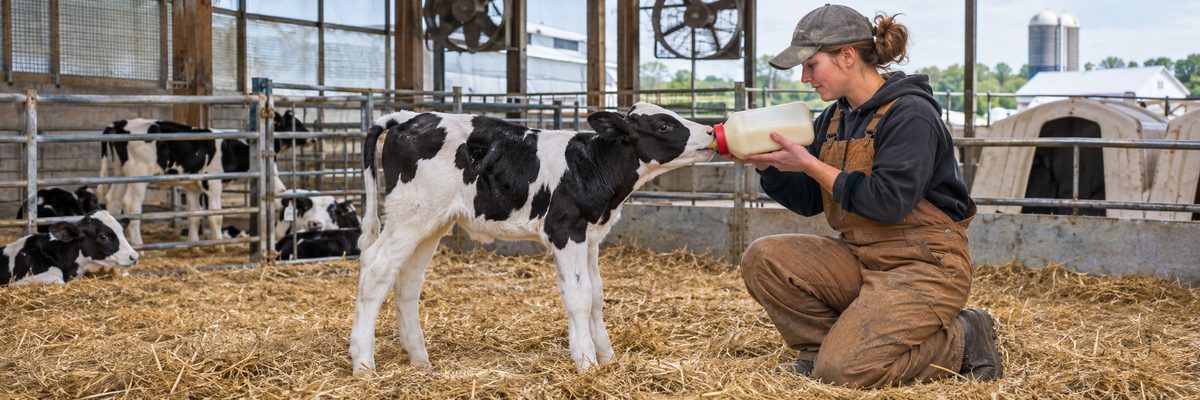
Dip the navel of every newborn calf as soon as you can after it hits the ground, and cover the whole stump and a bit of the skin around it. Most dairies use a strong iodine tincture or a chlorhexidine dip, and most put it on within the first hour or two. The point is simple: that wet cord is a doorway, and bacteria from the pen floor would love to walk through it.
Skip it, or do it halfway, and you can end up with a calf that has a hot, swollen navel and then a hot, swollen knee. That is navel ill leading to joint ill, and it is a lot more work than a bottle of dip.
Yes, it takes ten seconds. No, the calf will not thank you. Neither will the calf's mother, who has opinions about anyone touching the baby.
Why the navel matters so much
Before birth, the umbilical cord carries blood to and from the dam. After birth, the stump left behind stays moist for days and has a direct line to the abdomen and the bloodstream. Bacteria from manure, wet bedding and the calving pen can climb in. If they do, the calf can develop an infected navel, a liver abscess, or bacteria that settle in the joints and cause the stiff, swollen, painful legs we call joint ill.
Calves that did not get enough colostrum are at much higher risk, because they lack the antibodies to fight off what gets in. Dipping and colostrum work as a pair. If your first colostrum feeding is late, a perfect dip job will not fully make up for it.
What to use
The two options you will hear about most are a strong tincture of iodine and a chlorhexidine-based dip. Many extension and veterinary sources have long pointed to a tincture of iodine at around 7 percent as the standard, and it is still what many dairy vets hand out. That number is from memory, so check the label on whatever you buy and ask your vet which product they prefer for your herd.
- Strong iodine tincture: dries the cord out quickly, widely available at farm stores. It stains everything, including you.
- Chlorhexidine dips: an option some herds prefer, especially if skin irritation from iodine has been a problem.
- Teat dips and sprays: not a substitute. Products made for udders are not formulated for a cord stump, and a weak or watered-down product leaves the door open.
- Spray bottles: fine for a quick touch-up, but they often miss the underside of the stump. A cup or small bottle you can press against the belly wall does a better job.
Whatever you choose, keep it clean. A dip cup that has been sitting in the corner of the barn since spring, with straw and manure floating in it, is not disinfecting anything. Use a fresh pour for each calf or a bottle you can squeeze and close.
How to dip it right
- Wash your hands or put on clean gloves. If the calf is on a dirty floor, move it to a drier spot first.
- Do not trim the cord unless your vet has told you to. Longer cords are usually left alone, and cutting just creates a fresh wound.
- Fill a small cup or squeeze bottle with the dip.
- Hold the cup up against the belly so the whole stump is submerged, and squeeze or tilt so the liquid fills the cup around it. Hold for a few seconds.
- Coat the full length of the cord, right up to the belly wall, and the skin around the base.
- Let it drip off without wiping it away.
Many herds dip a second time several hours later, and some do a third dip the next day. Your vet or herd health plan will tell you the schedule that fits your barn. The common mistake is dipping once, lightly, and calling it done.
Timing in the real world
The ideal is soon after birth, but the real world has sleep deprivation, a heifer in trouble at 3 a.m. and a second calving behind her. If the calf is born in a clean maternity pen and gets dipped within the first hour or two, you are in good shape. If it was born in a muddy pen, being quick matters more. The wetter and filthier the surroundings, the faster you want to act.
Put the dip bottle where the calving crew can actually find it. A bottle in the office does nothing for a calf born in the back pen. Many farms keep a little calving kit near the pens with dip, gloves, a towel, an esophageal feeder, and a notebook, and it saves arguments about who had the dip last.
The first 24 hours checklist is a good place to write the navel step into your routine so it does not depend on who is on shift.
Keep the environment from undoing your work
Dip only does so much if the calf lies down in a bacteria-filled bed. A clean, dry, deep pack matters, and how you bed the area is part of this. A good test is the knee test: kneel in the bedding for a few seconds. If your knee comes up wet, the calf's navel has been sitting in the same moisture. Farms in the Northeast and Southeast, where mud and humidity win half the year, will recognize this one.
Calving pens should be cleaned out between cows. A pen that is a little bit gross for each new calf is how infection rates creep up. If you are tracking calf health, a few seasons of simple calf records will show you whether navel problems cluster in one pen, one crew or one time of year.
Checking navels daily
A normal navel dries up and shrivels over a week or two. Make a habit of feeling the navel during feeding, especially in the first week or two. Look and feel for:
- Swelling or a thick, firm stump that is bigger than a thumb
- Heat, pain or the calf flinching when you touch it
- Discharge, pus or a bad smell
- A stump that is long and wet when it should be shrinking
- Swollen, warm joints, lameness or a calf that is reluctant to stand
- Fever, poor appetite or a calf that is generally flat
None of that is a home-treatment project. A swollen navel can be an infection, an abscess or a hernia, and the three need different handling. Joint ill especially needs your vet quickly, because the sooner it is treated, the better the odds the joint heals. Any drug the vet uses will come with a withdrawal period and instructions, and you should follow them.
Mistakes to avoid
- Using an old, diluted or contaminated dip
- Only spraying the outside of the stump
- Dipping after the calf has already been lying in manure for hours
- Handling the navel with dirty hands or a dirty towel
- Assuming a calf that got good colostrum can skip the dip
- Squeezing or poking at a swollen navel to see what comes out
For authoritative background on calf care and herd health, the University of Wisconsin dairy extension program is a good place to start.
Quick answers
Can I use a teat dip on a calf's navel?
It is better not to. Teat dips are made and tested for udder skin, not for a moist cord stump. Use a product intended for navels, and ask your vet what they recommend.
Should I cut the cord first?
Usually no. Most guidance is to leave the cord alone unless your vet says otherwise, and to dip it at its natural length. Cutting creates a fresh wound and does not help the cord dry faster.
How long does the navel take to dry up?
Typically within a week or two, the stump shrivels and dries. If it is still wet, large, warm or painful after that, call your vet rather than waiting to see what happens.