Selective vs Blanket Dry Cow Therapy
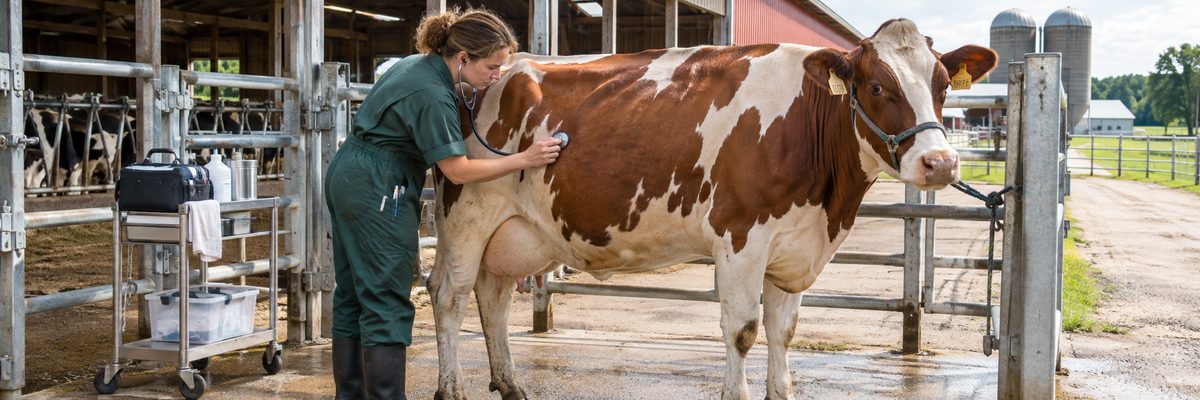
For decades the dry-off routine was simple: every quarter of every cow got a tube of antibiotic, and everyone went home. Blanket dry cow therapy was easy to teach, easy to run and, for a lot of herds, effective. The trouble is that a good share of those cows weren't infected to begin with.
Selective dry cow therapy treats only the cows or quarters that show evidence of infection, and uses something else, usually an internal teat sealant, on the rest. University of Wisconsin dairy extension reports that farms adopting the approach commonly reduce overall antibiotic use by 40 to 50 percent while maintaining udder health and milk quality. That number comes with a condition: those farms were ready for it.
Below, a plain look at what each approach involves, who it fits, and how to decide with your vet. Product choice, dry-off protocol and withdrawal times are vet territory, and rules differ by state and milk buyer.
The two approaches in plain terms
| Blanket | Selective | |
|---|---|---|
| Who gets an antibiotic at dry-off | All quarters of all cows | Cows or quarters with evidence of infection or high risk |
| What the rest get | Often nothing else, or a sealant | Typically an internal teat sealant alone |
| Data needed | Little | Cow-level cell counts, mastitis history, sometimes culture |
| Best fit | Herds with high contagious mastitis pressure, per the NMC | Herds with low cell counts, low clinical mastitis and good records |
| Antibiotic use | Highest | Lower |
The National Mastitis Council's control program says blanket treatment is an option in some places for herds with a high prevalence of contagious pathogens, while noting that policies vary and some countries prohibit it. For well-managed herds with good hygiene and reliable SCC or culture data, it recommends the selective route: antimicrobials only for infected cows, with an internal sealant alone for the uninfected ones.
Is your herd ready?
Penn State Extension, in its piece on selective dry cow therapy, points to two herd-level factors: bulk milk somatic cell count and the incidence of clinical mastitis. It gives a bulk tank benchmark of about 250,000 cells per milliliter. Cleanliness at dry-off and the types of mastitis pathogens in the herd matter too, and so do records. You need to be able to look back at a cow's mastitis history and treatment history.
A rough readiness check:
- Bulk tank SCC consistently at or below that benchmark, with no sign of contagious problems such as Strep. agalactiae, Staph. aureus or Mycoplasma. If your culture work hasn't been done, on-farm milk culturing is a good place to start.
- Reliable cow-level SCC from monthly testing or an inline system.
- Clinical mastitis records you can actually pull up.
- A clean dry-off procedure and clean dry cow housing. Selective therapy doesn't forgive a muddy dry pen.
- A vet who is on board and has helped write the protocol.
If you can't tick most of those, blanket therapy under your vet's direction may still be the safer path while you build the data.
Cow-level selection example
Once the herd looks ready, the next step is choosing cows. Penn State's article describes a protocol researchers at the University of Calgary suggest, which uses the last three SCC tests:
- If the average of the last three tests is over 200,000 cells per milliliter, the cow gets both an antimicrobial and a teat sealant.
- If the average is under that, check that the last test is also under 200,000.
- Then check that the cow had no more than one clinical mastitis case in the last lactation.
- A cow who meets all three can get a teat sealant without an antimicrobial.
Treat that as an example of how criteria work, not a recipe for your herd. Your vet may set different thresholds, add culture on high-risk cows, or adjust for parity, breed, or pathogens. Jersey herds, grazing herds and large Western dry-lot dairies may each end up with different criteria, and that's normal.
Where sealants fit
Internal teat sealants form a physical barrier in the teat canal. The Penn State article notes that, for cows entering the dry period without an existing infection, sealants have been shown to reduce the chance of a new infection during the dry period. They don't replace clean housing. When both an antimicrobial and a sealant are used, the NMC says the antimicrobial goes in first. The mechanics of clean infusion are covered in internal teat sealants at dry-off.
Dry-off procedure matters either way
Whatever approach you pick, the NMC's checklist applies: cut milk production before dry-off (it recommends 33 pounds a day or less), disinfect teats, scrub teat ends with alcohol, use partial insertion, use single-dose applicators, mark dry cows so nobody milks them by mistake, and record treatments including withhold times and batch numbers. How to dry off a dairy cow step by step goes through the routine. Housing after dry-off is a large part of the result, so dry cow housing and close-up pen management belongs in the same conversation.
Why bother changing
Three reasons come up:
- Stewardship. Penn State's article notes that antimicrobials used for mastitis prevention and treatment make up close to 65 percent of antimicrobials used on dairy farms, and that resistance concerns apply to farm workers too.
- Cost. Fewer antibiotic tubes, less milk discard where the product has a withhold. Your own numbers will vary, so price it with your vet.
- Market and regulatory direction. Some buyers and programs ask for reduced antibiotic use, and organic herds don't have this option at all. Check with your processor and, for organic, your certifier.
The cost on the other side is real too. Sealants cost money, careless infusion can introduce infection, and a poorly selected cow gets a new infection in the dry period and starts lactation with mastitis. A selective program with sloppy records is just blanket therapy with a worse hit rate.
Mistakes to avoid
- Going selective without cow-level SCC data and then guessing.
- Sealing a cow with an unrecognized infection, which can trap the problem inside.
- Skipping the teat scrub. A sealant pushed into a dirty teat is a delivery system.
- Changing the protocol and not telling the crew, who then dry off cows the old way out of loyalty.
- Forgetting withdrawal and discard on the cows who did get treated.
The cows won't care which philosophy you use. They have already decided the dry pen is for lying in the one dry corner and standing in the wet one.
Sources
Penn State Extension's Selective Dry Cow Therapy: Is Your Herd Ready? describes the herd and cow criteria. The National Mastitis Council's recommended mastitis control program covers dry cow management in its sixth section.
Quick answers
Is selective dry cow therapy legal everywhere?
It is a management choice and is permitted broadly, but the details around dry cow product use depend on labels, your vet's prescription, your milk buyer and state rules. Ask your vet and your milk handler before changing.
Will my cell count go up if I stop blanket treatment?
It might if the herd wasn't ready or the selection is sloppy. Herds with low cell counts, good records and clean dry housing tend to do well, which is why the readiness check comes first.
Do I still need a teat sealant if I use an antibiotic?
Many protocols combine the two for higher-risk cows, with the antimicrobial infused first. Whether it fits a given cow is a call for your vet and your records.