Preventing Antibiotic Residues in the Bulk Tank
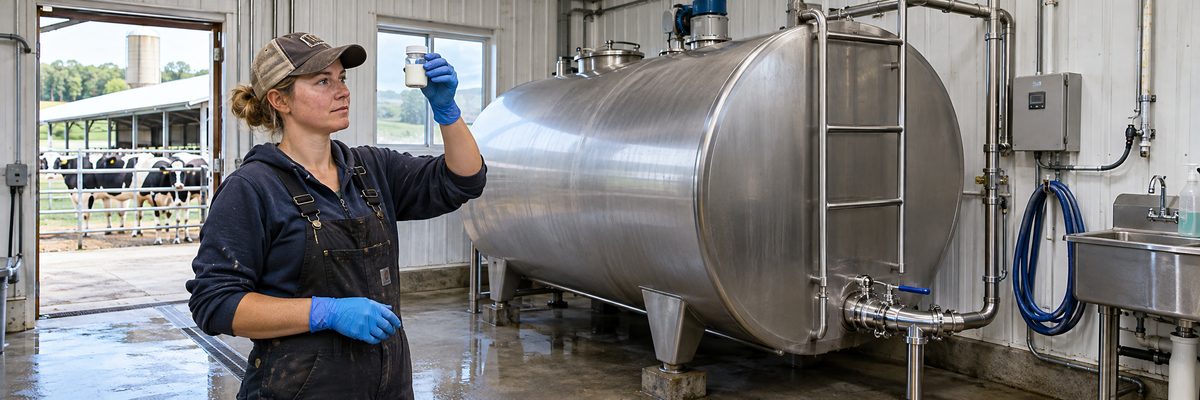
Nobody has ever dumped a tanker because the system was too well organized. A load goes down the drain because one treated cow got hooked to the pipeline on a Tuesday morning, the milker who knew about her was off, and the only record was a scribble on the back of a feed ticket. Preventing residues is mostly about making that scenario hard to pull off, even on your worst day.
The short version: every treated cow is identified in two ways, her milk is kept out of the tank until the labeled withholding time is over, one named person owns the treatment record, and anything uncertain gets pulled until you have an answer. The rest of this article is how to build that so it works with tired people, dark mornings and a fresh milker in the string.
This is general education. Drug choice, withholding times and any extra-label use come from your herd veterinarian and the product label. You will not find a dose here.
Why one cow can cost a whole load
Milk gets tested before it is unloaded at the plant. According to FDA's question-and-answer page on milk drug residue sampling, each arriving truckload at a Grade A plant must be tested for at least four of six specific beta-lactam drugs, and if a bulk sample shows concerning results, each farm that supplied that load faces mandatory testing. That is a lot of neighbors with an interest in your Tuesday.
The tank is the point of no return. Once treated milk gets into a few thousand gallons of good milk, nothing you do afterward fixes it. What you pay for a positive load depends on your handler, your state and your contract, and the dollars are rarely the only cost. Plan on a very awkward phone call with the field rep.
Build the protocol around the weak spots
Residues almost always come from a handful of predictable gaps. Work through each one on your own place.
Mark every treated cow twice
One marker fails. A leg band falls off, spray paint wears off in a muddy lot, and a whiteboard does not follow the cow into the next pen. Use two: a visible marker on the cow (leg wrap, tail ribbon, a color your crew all agrees on) and a written or software record at the milking station. Put the marker on at the moment of treatment, not later when somebody remembers. Taking it off is a decision for whoever owns the treatment record, and nobody else.
Decide how treated milk is handled before the cow is treated
Where does that milk go? Options include a bucket unit, a dedicated hose and jar on the line, a separate dump line, or milking treated cows last so the pipeline can be flushed. Whichever you pick, the cow should not have to be thought about at the milking unit. If your plan is that somebody will remember, you do not have a plan. We cover milking order for fresh and treated cows in its own article, and the order you choose changes how many chances there are to slip.
Treat the dry-off and fresh-cow periods as risky, not routine
Dry cow treatment is a classic source of trouble. A cow freshens early, the label time for milk is not over, and the milker sees a normal-looking udder and a hungry bulk tank. Dry-off dates and treatment products belong in the record, and cows that calve early need a check against it before their milk is shipped. Heifers that arrive with a history, or purchased animals with unknown treatments, are the same story. Ask the seller for records and treat the absence of any as a reason to hold the milk until you have sorted it out with your vet.
Keep drugs where mistakes are hard
Store treatment products in one place, separate from feed-through supplements, wash chemicals and the cola in the fridge. Label what is open. Throw out what is expired. Every treatment gets recorded by the person who gave it, on the day it was given, with product, route, date, cow and the first date milk can go to the tank.
The record that does the heavy lifting
The cow list on the wall matters less than the single sheet that says when each treated cow clears. Make it simple enough that someone filling in at the last minute can read it at a glance. A workable layout:
| Column | What goes in it |
|---|---|
| Cow ID and pen | Number and where she is housed |
| Date and time treated | Be exact; withholding times run from the last treatment |
| Product and route | Written as on the label or vet instruction |
| Milk withholding ends | Date and milking, per the label or vet |
| Meat withdrawal ends | A separate clock; matters if she is culled |
| Initials | Who treated, who cleared her |
The detail of how to set this up is in our article on milk withholding times and discard records, and the broader background is in antibiotic withdrawal times and milk discard rules. If your farm keeps its records in herd software, set the software to flag the cow at the milking station, not just on a report nobody opens until Friday.
What to do before the hauler pulls in
Give yourself one last look. Before the tank is agitated for pickup, someone with authority walks the treatment list against the list of cows milked into the tank since the last pickup. It takes five minutes. If a cow turns up on both lists, you have a problem you want to find now, not at the plant. Ask your vet and your milk handler how to proceed, and do not guess about whether a quarter-day of exposure is acceptable.
Some handlers supply or recommend on-farm residue test kits. They can help you check a cow or a tank, but they only detect certain drug classes, and a negative result on a kit is not a free pass to ship milk the label says to discard. Ask your vet what a kit can and cannot tell you.
Mistakes that keep showing up
- Treating late in the day and forgetting that the next morning's milking is inside the withholding period.
- Counting the days from the first treatment instead of the last.
- Assuming the cow in the neighboring stall has the same treatment as the one the vet just told you about.
- Letting a new milker start without walking through the treated-cow system, then acting surprised.
- Moving a cow to a new pen and losing her marker in the shuffle.
- Skipping the record when the treatment seemed minor. The tank does not grade on effort.
Training is half of this. A written routine that everyone, including the relief milker and the family member who only helps on weekends, has actually read does more than a binder in the office. For ideas on turning the routine into something people read, see writing simple SOPs for milking and calf care.
Regional notes
Rules and how they are enforced come through your state dairy regulator and your milk handler, and the details differ. Larger herds in the Southwest and West often run formal treatment software tied to the parlor, and Upper Midwest and Northeast tiestall herds still do much of this on a clipboard, and both work when somebody owns it. Check what your handler requires after a positive load and know the process before you need it.
Quick answers
What should I do if I think treated milk went into the tank?
Do not ship it and call your herd veterinarian and your milk handler's field rep right away. They will tell you how to handle the tank, and acting early is almost always better than explaining later.
Is a visible marker enough to keep treated cows out of the tank?
No. Markers fall off and wear away, so pair one with a written or electronic record at the milking station. Two independent signals catch what one misses.
Do heifers and bought-in cows need the same tracking?
Yes. Springing heifers can be treated before calving and purchased cows may arrive with unknown treatment histories, so check records and ask the vet before their milk goes to the tank.