Stray Voltage in the Milking Barn: Warning Signs
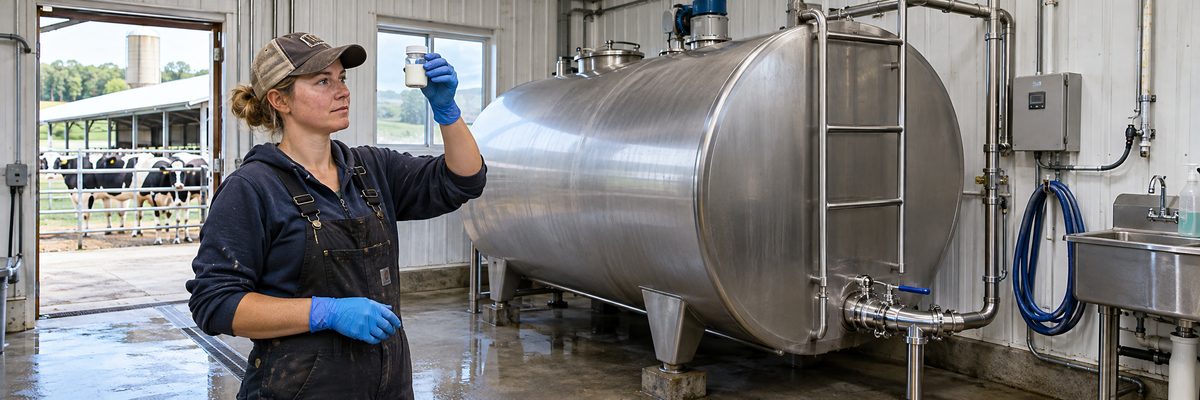
The cow that walks into the parlor like she's crossing a creek on slippery rocks is trying to tell you something. Sometimes it's a sore foot, sometimes it's a bad milker, and sometimes it's a faint electrical tingle she can feel and you can't.
Stray voltage is a small voltage that can show up between two surfaces a cow touches, such as a stall rail and a metal water cup or the parlor floor. It exists to some degree on every operating electrical system, and it can't be eliminated entirely, but it can be tested and reduced. If your herd is jumpy in the parlor and you can't find another cause, it's worth a systematic look.
What stray voltage is, and what it isn't
Utilities describe stray voltage as low-level voltage between surfaces animals contact, such as stanchion pipes, water cups and feeders. The causes are usually ordinary electrical problems: poor or corroded neutral connections, undersized neutral wires, bad grounding, unbalanced loads, and damaged or dirty wiring and equipment. The We Energies stray voltage page is one utility's plain-language summary of how it occurs and what the usual sources are.
It's worth separating it from other electrical trouble. Stray voltage is a low-level shock threat, not the kind of fault that trips a breaker or kills a cow, and it is a different thing from a dangerous fault or a lightning strike. If you ever find wiring that's hot to the touch, chewed insulation, or a cow that's been shocked hard, call a licensed electrician right away and stay clear.
Warning signs in the milking barn
No single sign proves stray voltage. Taken together, and when they cluster around certain stalls or equipment, they raise the odds. Commonly reported signs include:
- Nervousness during milking, including kicking, stepping and dancing in the stall.
- Reluctance to enter the parlor, stanchion or milking stall, especially in one position, with cows balking at the same spot every time.
- Uneven milk-out or poor let-down, with cows holding up milk. See milk let-down problems and fixes for the many non-electrical causes.
- Reduced water intake, such as cows that sniff the waterer and walk away, or lick it cautiously.
- Lower feed intake and milk production that doesn't match the ration or the season.
- Higher mastitis or somatic cell counts that don't have an obvious cause.
Cows are not subtle about electricity. A cow that jumps back from a waterer is giving you data. Cows have never once been polite about a bad waterer. If she does it every time and the neighbor cow doesn't, the problem is probably the waterer and not the cow's personality.
Rule out the usual suspects first
Before you call anyone to test the wiring, check the boring stuff. Most jumpy cows are not shocked cows.
- Vacuum and pulsation. A low vacuum level, a faulty pulsator or a worn liner can make milking uncomfortable. A milking system dynamic test will sort this out with data.
- Handling and routine. A new milker, a rough crowd gate, a changed schedule or a loud radio can cause the same symptoms.
- Cow health. Sore feet, cracked teats and mastitis make cows reluctant to stand still.
- Parlor design. Slippery floors, steep entries and poor lighting scare cows.
- Heifers. First-calf animals are easy to mistake for shocked cows. Heifer training sometimes explains the whole story.
If the same problem appears at the same stall, at the same time, or only after the pumps or fans start up, the pattern suggests an electrical cause. Write it down. Utilities and electricians will ask for the pattern first, and "the cows seem off" is not a pattern, however true it feels at 5 a.m.
How testing works
The safe way to test is to leave it to professionals. Many electric utilities offer farm electrical investigations, and some state public service commissions or agriculture departments publish stray voltage guidelines. The utility page above notes that it offers a cost-free investigation to customers, though policies vary by company and state.
In general, the process looks like this:
- A technician measures voltage between points a cow can touch at the same time, such as the stall front and the floor, or the waterer and the floor.
- The test often includes a load check, turning equipment on and off to see which circuit causes a change.
- The technician looks at the farm's wiring, grounding and neutral connections, and at the utility's lines and transformer.
- Recommendations may include repairing connections, balancing loads, improving grounding, or installing an equipotential plane, which bonds metal in the floor so a cow's feet and front end sit at the same voltage.
Acceptable levels are debated, and they vary by cow, by situation and by jurisdiction. Rather than quote a single number as the line between safe and not, ask the utility and your state agency what standards apply, and keep copies of the readings.
Common fixes
- Repair neutral and ground connections. Corroded and loose connections are among the most common sources.
- Balance loads so one circuit isn't doing all the work.
- Replace damaged wiring or motors. Moisture, manure, ammonia and rodents are rough on barn wiring.
- Add equipotential planes where cows stand, drink or eat, if recommended by a qualified installer.
- Check the water system. A metal waterer connected to a hot pipe is a classic problem. Cows won't drink from it twice.
Do not try to fix electrical problems yourself unless you are a qualified electrician. A barn is a wet, conductive place, and the cow is not the only one at risk.
Where this fits with the rest of the barn
An electrical problem is rarely the first thing to suspect, but it's one of the easiest to overlook once everything else has been checked. Stray voltage has a reputation for being blamed for everything from low milk to bad weather, so keep records, stay skeptical, and test. For a longer look at the electrical side, see finding the cause of stray voltage in dairy barns.
For wider milk quality guidance, UW-Madison Extension's milk quality page is a good reference.
Quick answers
Can stray voltage reduce milk production?
Some herds report lower milk, poor let-down and reduced water intake when cows are exposed to it, but many other things cause the same signs. Rule out vacuum, handling and health issues first, then have the electrical system tested.
Who tests for stray voltage?
Many utilities offer a farm investigation, and licensed electricians can test and repair the farm's wiring. Some states also publish guidelines, so check with your power company and state agriculture or utility agency.
Is stray voltage dangerous to people?
Stray voltage is usually a low-level problem, but the same wiring faults that create it can also create real shock hazards. Treat any suspected electrical issue seriously and let a licensed electrician handle repairs.