Youth, Shows, Careers & Dairy Life
Dairy Cattle Show Classes Explained by Age and Division
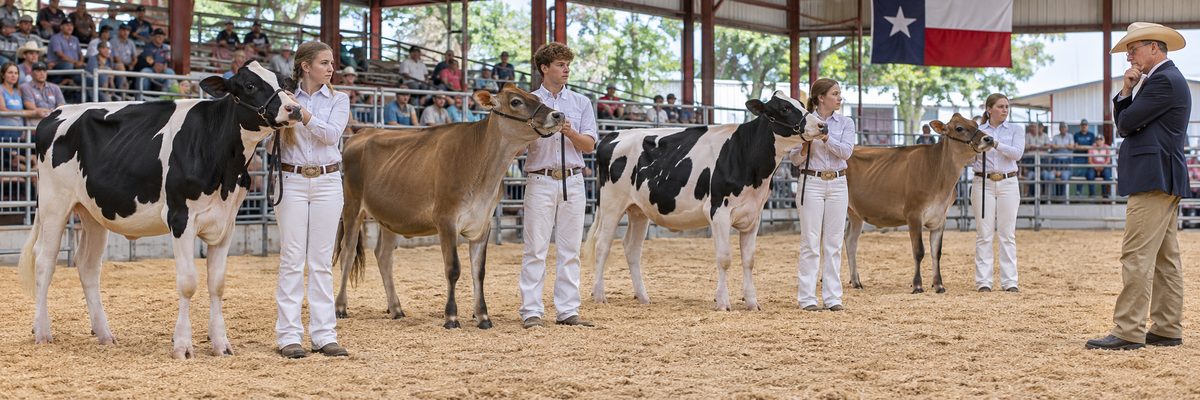
The first time you open a dairy show program it reads like a foreign language: junior calves, spring yearlings, senior two-year-olds, dry cow any age. Then someone says "she's a winter yearling" like that settles it. It does settle it, once you know the system. A dairy show is built around one idea: every animal competes against others of about the same age, and often the same breed, so a four-month-old calf is never asked to beat a five-year-old cow.
The short version: classes are grouped by birth date for young animals and by age and whether she has calved for older ones, breeds show against their own breed or are grouped by fair rule, the winner of each class moves on to a champion drive, and showmanship is judged separately from conformation. Your fair book lists the exact classes and birth date ranges. They change slightly from one show to the next.
The basic structure
Dairy classes are usually organized in layers:
- Breed or division. Many shows split Holstein, Jersey, Guernsey, Brown Swiss, Ayrshire and Milking Shorthorn into their own divisions. Smaller county fairs often combine breeds. One Nebraska Extension county fair book, for example, lists Ayrshires, Brown Swiss, Guernseys, Holsteins, Jerseys, Milking Shorthorns and crossbreds, and says registered and grade animals of each listed breed show together.
- Age class. Within each division, animals are placed in classes by age or birth date range.
- Champion classes. Winners come back to compete for champion and reserve.
- Special and group classes. These are things like pairs, herds or breeder classes, and they sometimes require advance entry.
If you are trying to tell the breeds apart before you pick a division, identifying the six dairy breeds on sight is a good start.
Calf and heifer classes by age
The youngest animals are grouped by birth date. A typical county show uses a ladder something like this, from youngest to oldest:
| Class | Who is in it |
|---|---|
| Junior calves | The youngest heifer calves entered, usually a few months old |
| Intermediate calves | Slightly older calves |
| Senior calves | The oldest calves, usually under a year |
| Summer, spring, winter and fall yearlings | Heifers about a year to two years old, grouped by the season in which they were born |
The Nebraska fair book lists a junior calf class, an intermediate calf class, a senior calf class, and four yearling classes named for the season: summer, spring, winter and fall. Each class has a range of birth dates, which changes each year as the cutoff dates move. Some shows use slightly different names or add a "junior yearling" and "senior yearling" instead. Your fair book is the final word.
Why the age ranges? A calf born in March has had a month or three more growth than one born in May. At that age three months is a lot of cow. The ranges keep the classes fair.
Cow classes
Once an animal has calved, the question changes from when she was born to how old she is and where she is in her lactation. Cow classes commonly include:
- Dry cow class. One example fair book has a dry cow any age class.
- Junior two-year-olds and senior two-year-olds. Cows in their first lactation, split by age. The Nebraska fair book requires that animals in these classes have freshened.
- Three-year-olds and four-year-olds. Cows in their second and third lactations.
- Aged cows or five-year-olds and older. The oldest cows entered.
Large shows may subdivide further, for example into milking yearlings, which are heifers that freshened young, and by udder development. A fresh cow in full production will not look like a dry cow, and a judge wants to see each in the right group. That is why your entry form asks for your animal's birth date, fresh date and breeding date. If you are not sure what to enter, ask your leader before the deadline.
Showmanship divisions
Showmanship is separate from the conformation classes. Instead of judging the animal, the judge judges you: how you lead, pose, handle her and keep track of the judge. Divisions are usually by age of the exhibitor, such as junior, intermediate and senior, and the animal you lead may not be the one you show in a breed class. The details of how this is judged are in how dairy showmanship is judged, and the University of Georgia Extension fitting guide describes the scorecard, with penalties for faults like dirt in the hair coat or poor posture.
Champion drives
Once each class is placed, the first-place animals come back for the champion class. A typical sequence is:
- The winners of the calf classes compete for junior champion.
- The winners of the yearling and cow classes compete for senior champion.
- Junior and senior champions meet for grand champion, with a reserve champion chosen too.
- If several breeds show at the fair, the breed grand champions may compete for best of show.
Many shows also select an intermediate champion between the junior and senior divisions. Your show might also pull the second-place animal behind the champion back for reserve, which is the same way many goat shows do it. See dairy goat show classes explained if you are comparing.
What the judge is looking at
Classes sort animals, but the judge is still evaluating conformation. One University of Kentucky extension page for 4-H dairy members lists four categories on a conformation scorecard: udder at 40 points, dairy strength at 25 points, rear feet and legs at 20 points and frame at 15 points. Different organizations weigh traits differently, so treat that as one example, but the pattern is real: udders, legs and dairy strength carry the weight. For a beginner's walk through those traits, see judging dairy cow udders, feet and legs.
Reading your fair book
The fastest way to find your class is to find your animal's birth date, then match it to the birth date range in the fair book. If she freshened, match her to the cow class by age. If you have a question, ask the superintendent before the show, not on the way to the ring.
A first-time checklist:
- Know her registered name, breed, birth date and freshening date.
- Find the class list and the birth-date range.
- Check whether grade and registered animals show together.
- Find out whether the fair also holds group classes, and what the entry deadline is.
- Look at the order of classes in the program so you know roughly when to be at the ring. The fair week schedule for dairy exhibitors shows how a typical week runs.
Mistakes to avoid
- Entering the wrong class by miscounting a birth date. Do it twice.
- Assuming every fair uses the same age cutoffs as the last one.
- Waiting until the line-up to ask what class you are in. The announcer has already moved on.
For one county's real class list, see the Nebraska Extension Dawes County dairy cattle fair book, and for how animals are evaluated, the University of Kentucky page on judging dairy cattle explains the traits in plain language.
Quick answers
What is a winter yearling in a dairy show?
It is a heifer born in a certain winter window who has not yet calved, grouped with other heifers of similar age. Fair books list the birth-date range for each season, so check yours for the exact cutoffs.
Do Holsteins and Jerseys show against each other?
At larger shows they usually show in separate breed divisions. Some smaller county fairs combine breeds or run one set of classes for everybody, which is why the fair book is worth reading carefully.
Is showmanship the same as the breed class?
No. Showmanship scores the exhibitor's handling and presentation, while the breed or conformation class scores the animal. You can win one and not the other, and many exhibitors do exactly that.