Youth, Shows, Careers & Dairy Life
Dairy Goat Show Classes Explained
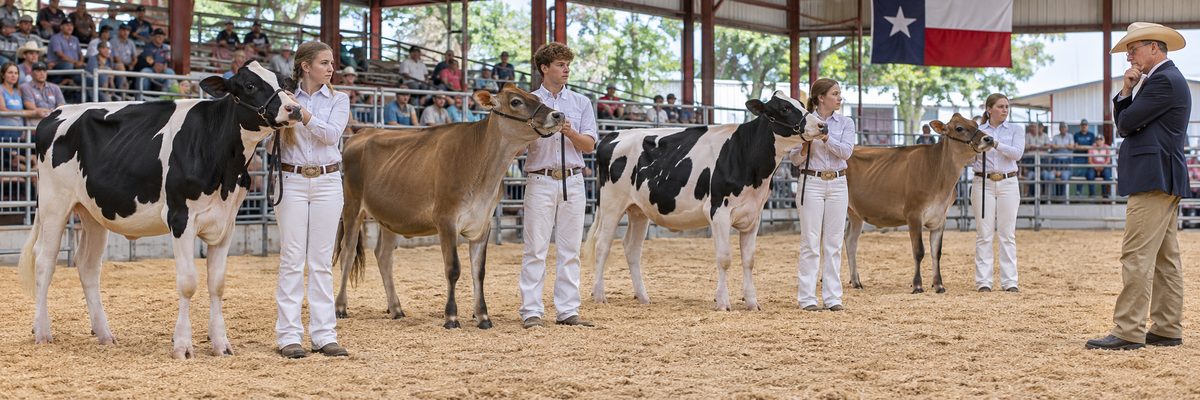
The first time you watch a dairy goat show it can look like a lot of goats walking in circles while a person with a microphone says something about "reserve" and "get of sire." Stay for the first few classes and the pattern shows up. Every goat competes against others of the same breed, sex and roughly the same age, and the winners come back to meet each other later. That is the whole system. Everything else is detail and ribbons.
Dairy goat classes are built by breed, then sex, then age. First-place winners from each class return for champion, champions return for grand champion, and many shows add group classes and a separate showmanship contest. Fair shows for 4-H and FFA follow the same logic but often simplify it, so read your fair book for the exact class list.
How shows are organized
The American Dairy Goat Association explains in its guide to dairy goat shows that shows are first divided by breed. ADGA recognizes nine breeds for its official shows: Alpine, Guernsey, LaMancha, Nigerian Dwarf, Nubian, Oberhasli, Saanen, Sable and Toggenburg. Not every breed turns up at every show. When few entries are expected, some shows lump two or more breeds into an "All Other Purebred" division. Another division found at many shows is Recorded Grade, for does whose ancestry makes them ineligible for the purebred classes.
Within each breed, animals are divided by sex and then into age classes. Each animal competes against others of its own breed, sex and approximate age. If you are choosing a breed for a project, the best dairy goat breeds for 4-H members compares the options, and the 4-H dairy goat project guide for beginners covers the rest of getting started.
Does, kids and bucks
The sorting inside a breed looks like this:
- Kids. Young goats are grouped by age, usually within a span of a few months, so a spring kid is not judged against one that is nearly a year old. Class names and age cutoffs vary by show, so look at the program.
- Yearlings and older does. Young does that have not kidded are placed in age classes, and does that have freshened show in milking classes by age. An udder on a milking doe is judged as part of the picture.
- Bucks. Bucks are shown in their own classes by age. Many 4-H and fair shows have few or no bucks, so check whether your fair allows them at all.
Fairs often simplify this with age classes for does and sometimes a milking class, and some combine breeds in one show. If your fair book lists classes by months of age, take the kid's date of birth, count and check twice. A kid entered in the wrong class gets moved, and nobody enjoys explaining that to the clerk.
Champions, reserves and best in show
The ADGA guide describes the sequence this way: first-place winners from each class compete for Champion. There may be Junior and Senior Champions, which then compete for Grand Champion. A Reserve Champion is chosen from the remaining first-place winners plus the animal that placed second behind the one chosen champion. The final class of the day is usually Best in Show, in which the judge selects a winner from the Grand Champions of each breed.
That second-place wrinkle matters. It means a goat that was beaten by the champion in her own class can still earn reserve. If you placed second and the animal who beat you becomes champion, stay in the ring and keep her posed.
Group classes
Besides age classes, shows may have group classes in which animals are sorted by criteria other than age. ADGA lists the common ones:
- Get of Sire. Animals all sired by the same buck.
- Produce of Dam. Animals all from the same dam.
- Dam and Daughter. What it sounds like.
- Dairy Herd. A group owned by the same person.
- Breeder's Trio. Three animals bred by the same person.
- Best Udder. A class for the best mammary system.
These are more common at sanctioned breed shows than at small county fairs, but you may see a pair or herd class at a larger fair. Group classes usually need advance entries, so sign up early if you want one.
Showmanship is its own class
ADGA notes that some shows have showmanship competition, in which the judge considers the appearance of the animal and the exhibitor as well as the actual showing, looking for the exhibitor who shows his or her animal to best advantage without undue fussing and maneuvering. It is judged separately from the conformation classes, so you can win showmanship with a goat that never places in the breed class. The how-to is in setting up a dairy goat for showmanship.
What the judge is looking at
ADGA provides its licensed judges with a scorecard. The guide lists the priorities as follows: for senior does, general appearance 35 percent, mammary system 35 percent, dairy strength 20 percent and body capacity 10 percent. For junior does, it is general appearance 55 percent, dairy strength 30 percent and body capacity 15 percent. For bucks, general appearance 55 percent, dairy strength 30 percent and body capacity 15 percent. The judge also checks that each animal meets the breed standard for its breed.
Plain translation: for a senior doe, her udder counts as much as how she looks overall. For young does and bucks there is no udder to judge, so overall appearance and dairy strength carry the class. Defects such as blindness, serious emaciation, permanent lameness or double teats can disqualify an animal.
How a class runs
- The clerk calls the class and exhibitors lead their goats into the ring in a wide circle.
- The judge watches the animals walk and mentally sorts them.
- Animals are stopped and lined up, and the judge goes down the line, checking skin texture and other things detected by feel.
- The judge may ask two exhibitors to walk side by side to decide a close placing.
- Exhibitors move into first, second, third and so on.
- The judge gives reasons for the placings over the microphone while ribbons are handed out.
Listen to the reasons even if your goat was in the bottom half. They are free lessons from someone who has looked at hundreds of animals. ADGA's guide says judges are often willing to talk with you after the show if you do not understand the placings, so ask politely and bring a notebook.
Sorting out a fair versus a sanctioned show
A sanctioned ADGA show follows ADGA rules, requires registered or recorded animals and uses licensed judges. A county fair open or 4-H show follows the fair book, and the judge may not be an ADGA judge. Both are good experience. If you are planning a Mountain West fair, Mountain West county fairs and dairy goat projects covers how altitude, weather and paperwork change the plan, and dairy cattle show classes explained shows how the cattle side compares.
Mistakes to avoid
- Entering a kid in the wrong age class because the birth date was in your head and not on paper.
- Assuming a county fair class list matches an ADGA show.
- Leaving the ring as soon as you placed second, in case reserve is still open.
- Skipping the judge's reasons.
The best single read for a newcomer is ADGA's own guide to dairy goat shows, and the list of sanctioned dairy goat shows helps you find one to watch before you enter.
Quick answers
How many breeds of dairy goat does ADGA recognize for shows?
Nine: Alpine, Guernsey, LaMancha, Nigerian Dwarf, Nubian, Oberhasli, Saanen, Sable and Toggenburg. Some shows group less common breeds into an All Other Purebred division.
What is a reserve champion in a goat show?
It is the runner-up to the champion. According to ADGA, it is chosen from the remaining first-place winners plus the animal that placed second behind the champion in its class.
Can I show a grade goat at a dairy goat show?
Many county fairs allow it, and ADGA shows often have a Recorded Grade division for does who cannot compete in the purebred classes. Check your fair book or the show bill to see what is allowed.