Youth, Shows, Careers & Dairy Life
Showing Dairy Cattle in Southwest Summer Heat
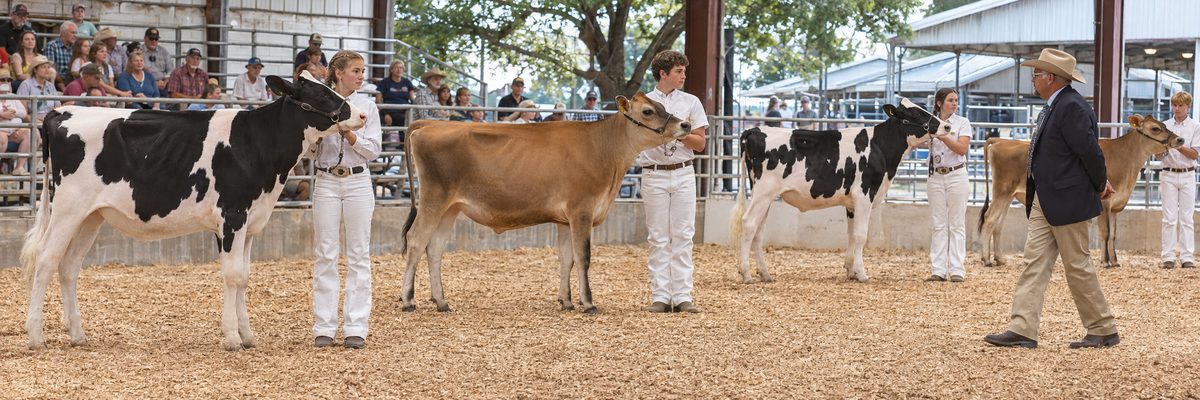
Holsteins were bred for the cool, green dairy country of northern Europe, and somebody decided it was a fine idea to show them in July in the desert. The cows do not agree. A show heifer in Arizona, New Mexico, west Texas or the Imperial Valley in fair season needs a cooling plan before she needs a halter.
The plan is simple on paper: shade, moving air, water she wants to drink, feed offered at cooler times, short and quiet work sessions, and a fast response when she shows signs of trouble. Dairy cattle start to struggle with heat much earlier than people do. The University of Minnesota Extension says mild heat stress in cows starts around 72 degrees F at 50 percent humidity, and high-producing cows can begin to feel it in well-ventilated barns at air temperatures as low as 65 degrees F. A Southwest fair afternoon blows past both numbers before lunch.
Know what heat stress looks like
A cow produces heat from digesting feed and making milk, and she absorbs it from sun and hot air. When she gains heat faster than she can shed it, she breathes faster, sweats, stands more and eats less. UMN Extension lists normal respiration for adult dairy cattle at about 40 to 60 breaths per minute and notes severe heat stress usually brings open-mouth panting with the neck extended, lethargy and unsteadiness.
For a show heifer, learn what her normal looks like at rest in the morning. Watch her flank and count breaths. Then check again in the afternoon. If she is breathing much faster, drooling, standing apart or off feed, start cooling her and call your vet. Heat stress can turn serious fast, and a vet is the right person to decide about further treatment. Reading cow behavior to spot heat stress explains the signs in more depth.
Shade, fans and soaking
An Ohio State University dairy article notes that research has found cows begin seeking shade at 61 degrees F and using sprinklers at around 72 degrees F, which is well before most people think it is hot. It also says the best cooling combines shade, fans and soakers, and that cows cool best when they are soaked first and then dried by moving air.
For show cattle at a fair, translate that like this:
- Shade first. Keep her out of direct sun at all times. If the fair barn is hot and still, ask whether you can bring a fan and where you can plug it in.
- Move the air. A fan pointed at her, mounted outside her reach and tilted so air hits her back, helps more than almost anything in the box. For barn-level information, see how many fans a dairy barn needs.
- Wet her, then air her. If the fair allows it, a light soak followed by fan time works better than a constant drip. Wetting without airflow in humid air does not do much. In dry desert air, evaporation helps cool her faster. Sprinklers and soakers for heat-stressed cows describes the principle used on dairies.
- Cool the legs and belly. A gentle hose-down of the legs and under the belly in the afternoon is often easier on her than soaking the topline you just fitted.
Check the fair rules on misters, hoses and fans. Some barns have a limit on electrical load, and some prohibit water in the aisles.
Water first, feed second
Cooling begins with water. A hot cow drinks far more than a cool one, and an animal that will not drink strange fairground water will quickly slide into trouble. Bring water from home for the first day and mix in the fairground supply gradually. Keep buckets full, shaded and clean, and check them often. The water needs of dairy cows gives a sense of how much a cow drinks, and a show heifer needs steady access too.
Heat also cuts appetite. Offer feed at cooler times, early morning and evening, and keep hay in front of her. Do not switch rations at the fair. If she picks at her feed, watch her closely, and ask your vet or your herd nutritionist about her ration in heat. Feeding dairy cows in hot weather covers the general principles a dairy uses. Do not give electrolytes, drenches or medications unless the vet says so.
Hauling, washing and work sessions
Hauling is where heat can catch you. Load early or late, never park a loaded trailer in the sun, and make sure air moves through it. Stop only where you can keep her shaded and watered, and never leave animals in a parked trailer, even for a few minutes. Rest stops are for you too.
Wash her in the coolest part of the day. The Georgia Extension fitting guide says to do the final wash just before the show, so in the Southwest that may mean a wash at dawn or at dusk and a quick touch-up before class. Use the wash and blow dry routine, but dry her in shade with a fan rather than in the sun, and do not blow dry with hot air close to the skin.
Keep practice sessions short. Walking her around the barn at noon to work on her stride only teaches her that you are an inconvenience. Do your halter work in the cool hours and let her rest through the middle of the day.
Clipping and sun
A clipped cow loses insulation, which helps shed heat, but she also loses protection from the sun. White hair and pink skin can sunburn, and black hair soaks up heat. Keep her in shade and, if she sunburns easily, ask the vet about protection that is safe for a cow. Do not slather her in sunscreen made for people without checking whether it is allowed.
A heat-day checklist
- Fill water buckets and check them at every visit.
- Run fans from sunrise until dark.
- Offer feed early and late, with hay always available.
- Count her breaths morning and afternoon, and write it down.
- Keep her out of the sun, in the barn and in the ring line.
- Soak and fan her in the heat of the day if the fair allows it.
- Call a vet if she is panting, drooling, wobbly or off feed.
Mistakes to avoid
- Skipping the water from home on day one.
- Washing at noon and calling it cooling.
- Hauling in the middle of the afternoon.
- Assuming she is fine because she is not making a fuss. Cows are stoic until they are not.
For research-based reading, the University of Minnesota Extension page on heat stress in dairy cattle and the Ohio State article on managing heat stress in dairy cows are both written for dairy producers but apply directly to show barns.
Quick answers
How hot is too hot for a show cow?
Cows can feel heat stress well below what feels hot to people. Extension sources put the start of mild stress around the low 70s F with moderate humidity. Watch breathing, appetite and behavior rather than relying on a single number.
Should I hose down my show heifer at the fair?
If the fair allows it, wetting her and then giving her moving air is an effective way to cool her. Avoid soaking a freshly fitted topline, and cool her legs and belly instead.
What do I do if my heifer is panting heavily?
Get her into shade with a fan and water, and call your veterinarian right away. Heavy open-mouth panting is a sign of serious heat stress and needs professional advice.