Barns, Cow Comfort & Equipment
Sprinklers and Soakers for Heat-Stressed Cows
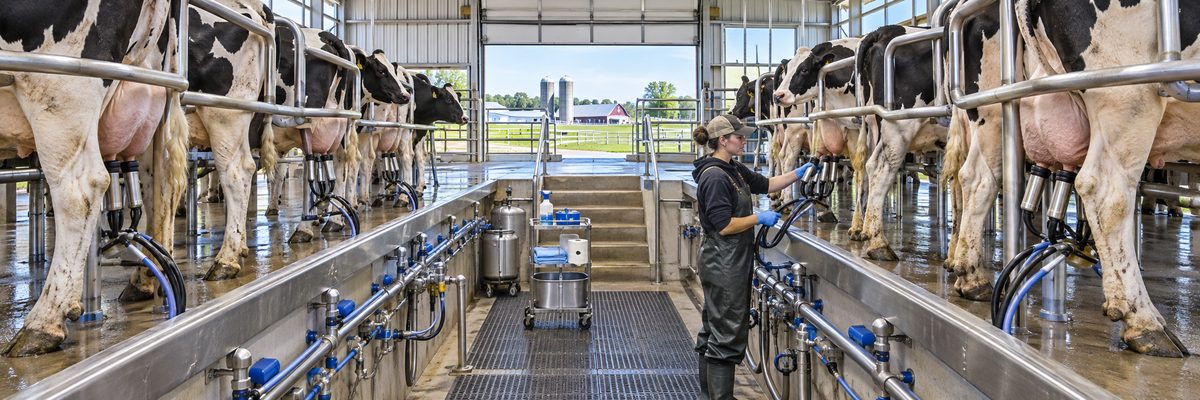
Cows don't sweat like we do, so a wet cow with a fan on her is the closest thing the barn has to an air conditioner. The water soaks the hide, the fan pulls the moisture off, and the evaporation carries heat away from her body. Skip either half and you've either got a damp cow standing in the heat or a dry cow standing in a breeze.
That's the whole trick, and it's why the timing matters more than the volume. A soaker that runs nonstop is just a very expensive way to make a swamp. The cycle is wet, then dry, then wet, with the fan doing the work in the gaps.
Done right, soakers over the feed line and sprinklers in the holding pen are some of the best money you can spend on cow cooling. Done wrong, they make a mess of the stalls, soak the bedding and bump the water and manure bill.
Why wet plus wind works
Evaporation is the cooling. The University of Minnesota Extension is clear on this: sprinklers should cycle on and off so water can evaporate off the cow, and continuous sprinkling wastes water without cooling any better. It also notes that both sprinklers and misters do best in drier conditions with a lower dew point, which matters if you're in a humid region. Evaporation gets harder as the air fills up with moisture, so the same equipment performs differently in Phoenix and in Georgia.
That's why soakers don't replace fans. They team up with them. How many fans a dairy barn needs covers the airspeed half of the pair.
Where the nozzles go
Over the feed line
Cows eat and stand there for long stretches, so the feed line is the best spot for soakers. Ohio State University Extension recommends putting soakers together with fans over the feed bunk and spacing the nozzles so each covers about three cows with overlapping spray, so a cow that shifts doesn't leave the wet zone.
The University of Wisconsin biological systems engineering paper on cooling in subtropical climates describes half-circle nozzles of 180 degrees or less spaced about 6 to 8 feet apart along the feed line, delivering around a third of a gallon per cow per cycle. Low-pressure sprinklers are more common than high-pressure misters in that setup, and the same paper warns against mounting them over the stalls because constantly wet stalls cause health problems.
In the holding pen
The waiting pen is the hottest spot on the farm, since cows are packed in and not moving. Sprinklers here are usually full-circle, covering the whole pen. The Wisconsin paper cites about 0.025 gallon per square foot per cycle. Cooling the holding pen before milking covers the whole setup, including fans and flow.
Not over the stalls and not on the udder
Keep the stalls dry. A bed that's soaked by an overshooting nozzle grows bacteria, and wet teats are a mastitis risk. Minnesota warns specifically to avoid wetting the udder. Aim the nozzles at the back and shoulders and check the spray pattern with the cows in place. A cow lying down in a wet stall is the barn's way of telling you the nozzle's off by two feet.
Timing: wet time and dry time
Ohio State suggests soaking each cow for about 30 seconds at roughly 0.9 to 1.4 gallons per minute, then following each soak with about 4 to 5 minutes of fan-only time. The Wisconsin paper gives a temperature-based schedule that gets more frequent as it warms:
| Air temperature | Sprinkler on | Full cycle |
|---|---|---|
| 68 to 78 degrees F | 1 minute | Every 15 minutes |
| 79 to 88 degrees F | 1 minute | Every 10 minutes |
| Over 88 degrees F | 1 minute | Every 5 minutes |
Those are good starting points, not commandments. Your nozzle output, humidity and barn airflow all change what's right. Watch a few cows through a full cycle. Is the hide wet when the water stops, and mostly dry before the next round? If water is dripping off cows into the stall, shorten the wet time. If they're dry in two minutes and still panting, lengthen it or turn up the airflow.
Triggers and controls
Cows start looking for relief earlier than we realize. Ohio State notes they seek shade at about 61 degrees and use soakers around 72. A common starting point for cooling is a temperature-humidity index of about 65 to 68, and using temperature-humidity index in the barn explains how to read it. Triggering on THI instead of temperature alone also saves water, since a dry 85 is not the same as a humid 85.
Sensors should sit at cow height in the barn or pen, not in the milk house. Pressure-controlled nozzles and a staged system that skips empty sections of the holding pen cut waste.
Water, manure and everything downstream
Soakers use a lot of water, and every gallon of it ends up somewhere. The Wisconsin paper's example for a 400 square foot holding area in Florida came to over a quarter of a million gallons in a year, a number that makes you appreciate the staging idea. In scraped or flushed systems, that water lands in your manure storage and affects how much you'll haul. Sizing manure storage for your dairy herd is worth a look if you're adding a lot of soak time.
Drinking water matters as much as the soaking. A high-producing cow in extreme heat may drink 25 to 35 gallons a day according to Minnesota, and drinks heavily after milking, so trough space and flow rate have to handle the rush. A cow that's standing wet but can't get a drink isn't cooled. She's just annoyed.
In humid regions, where evaporation is the limiting factor, humid heat cow cooling in the Southeast covers what to adjust.
Common mistakes
- Running soakers without fans, so cows stay wet and hot.
- Letting the spray reach the stalls and the udders.
- Running the cycle all day and night instead of on a temperature or THI setpoint.
- Clogged or misaimed nozzles. Check them in spring, not July.
- Forgetting the neighbors: wet manure and runoff from the pen don't stay on your side of the fence.
Before you plumb anything, read University of Minnesota Extension's heat stress page and Ohio State's tips for managing heat stress. Check local water-use and runoff rules with your state agency or extension office too.
Quick answers
How often should cow soakers run?
Typically about one minute of water at the feed line followed by several minutes of fan-only time, with the cycle shortening as the temperature climbs. Watch the cows to see whether they're dry enough between cycles.
Do sprinklers work in humid climates?
They help, but less than in dry air, because evaporation slows as humidity rises. Pair them with strong airflow and shorter wet times, and prioritize shade and fans in the holding pen.
Will soakers cause mastitis?
They can if bedding and udders stay wet. Keep spray off the stalls and udders, run proper cycles so cows dry between soaks, and keep up with bedding and teat hygiene.