Environmental vs Contagious Mastitis
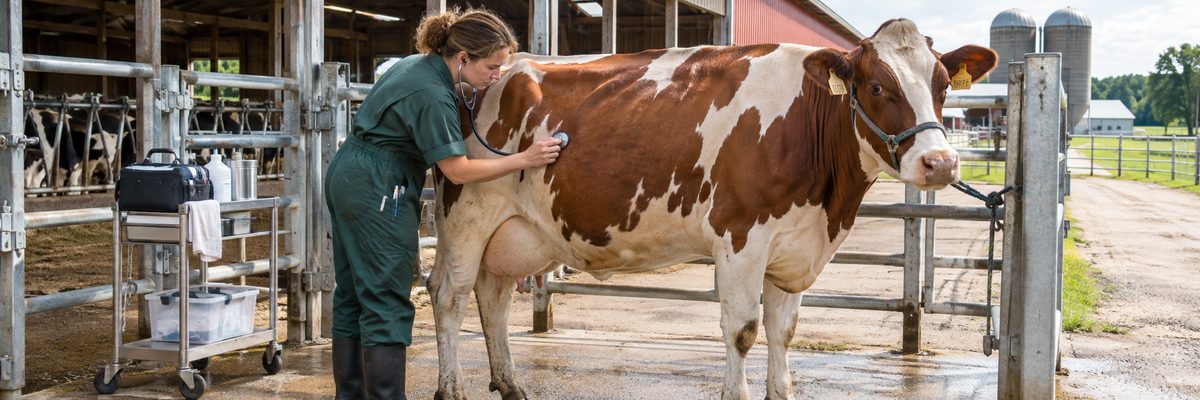
Two herds can have the same bulk tank cell count and need opposite fixes. One has an infection that moves from cow to cow through the milking machine and the milker's hands. The other has cows picking up bacteria from the bedding they lie in. Spend money on the wrong side and the numbers stay put, no matter how many new liners go on.
The National Mastitis Council sorts the bacteria that most often cause mastitis into two groups by source: environmental pathogens and contagious pathogens. The split sounds academic until you realize it decides where the next dollar goes. Contagious problems get fixed in the parlor. Environmental problems get fixed in the barn, the bedding and the dry pen.
This article lays out how to tell them apart, what each type typically looks like in a herd, and what control steps fit each one.
The basic difference
Contagious pathogens live in the infected udder and spread from cow to cow, mainly at milking time. The NMC names Streptococcus agalactiae, Staphylococcus aureus and Mycoplasma as the major ones. They are well adapted to the mammary gland, and infections can last weeks, months or years.
Environmental pathogens live in the cow's surroundings: bedding, manure, mud, water. Common examples include coliforms such as E. coli and environmental streptococci. The cow picks them up between milkings, or in the dry period, when the udder isn't being flushed out by regular milking.
The University of Wisconsin dairy extension notes that as herd hygiene, milking routines and housing improved over the decades, the mix shifted. Where many clinical cases once came from contagious pathogens like Strep. agalactiae, many now come from environmental Gram-negative bacteria such as E. coli. That's a generalization about the industry, not a promise about your herd.
Clues your records already hold
| Pattern in the herd | Points toward |
|---|---|
| Bulk tank and cow SCC climb slowly and stay high; many cows have high counts with few clinical cases | Contagious (the NMC says Strep. agalactiae often causes few clinical signs but high counts) |
| Clinical cases that cluster in wet weather, hot weather or a particular pen | Environmental |
| Many cases in fresh cows and first-calf heifers right after calving | Often environmental, picked up in the dry pen or close-up pen |
| Cows that cure and then relapse in the same quarter | Often contagious, such as Staph. aureus |
| Several cows with multiple quarters affected that keep eating and don't respond to treatment, after buying animals | Mycoplasma suspected (NMC description); lab testing needed |
| Sudden severe cases, sick cows with watery milk | Often coliform; call the vet |
None of those patterns is proof. They tell you which questions to ask the culture results.
Culture is how you find out
You can guess a lot from patterns, but the real answer comes from culturing clinical cases, high-SCC cows and fresh cows. The NMC's control program recommends determining the pathogen with bacteriology or PCR in these groups. On-farm milk culturing and a lab for the harder organisms together give you a herd profile. Once you've seen twenty or thirty results, a pattern shows up that no amount of barn staring would find.
Herds that ship multiple loads a day need extra caution. The NMC points out that SCC and culture results from comingled milk don't represent the whole herd, so a clean-looking bulk tank can hide a problem.
Controlling contagious mastitis
From the NMC's fact sheet on contagious mastitis, the transmission happens through the milking machine, milkers' hands, teat-washing materials and treatment procedures. So control is a milking-time job.
- Post-milking teat dip, applied properly with full coverage every milking. Pre-dip and post-dip do different jobs, so know which is which.
- Gloves and clean towels, one towel per cow, especially if Mycoplasma is in the picture.
- Milk infected cows last or with a separate unit. Milking order for fresh and treated cows goes into how to arrange it.
- Find and manage the infected cows through culture and SCC records. Strep. agalactiae can be eradicated from a herd by finding and treating infected animals, with a vet's guidance. Staph. aureus and Mycoplasma are tougher, and the NMC says there's no effective treatment for Mycoplasma.
- Buy carefully. The NMC notes that new purchases and shared equipment at shows are common ways contagious mastitis re-enters a clean herd. Ask for cow-level SCC and culture data before you buy, and isolate new arrivals.
Machine function matters too, since the machine can carry bacteria from cow to cow. If cases are clustering, ask your dealer for a dynamic test of the milking system rather than relying on gut feel. Nobody's gut has a vacuum gauge.
Controlling environmental mastitis
Environmental control is about reducing how much bacteria touches the teat end between milkings. The NMC lists several basics: clean, dry, comfortable lying areas, clean and dry traffic areas, adequate stall size and stocking density, good ventilation, and bedding management. For compost-bedded pack barns it adds specifics on adding new bedding when the pack looks moist and stirring it a couple of times a day.
- Keep stalls clean and dry. Keeping freestall bedding dry and clean is half the battle.
- Check stocking density and stall dimensions, because overcrowded cows lie in the alley.
- Mind the dry cow pen. Cows are especially vulnerable in the dry period and around calving, so dry cow housing and close-up pen management pay off in fresh cow udder health.
- Prep teats properly before milking so bacteria from the stall don't go into the unit.
- Manage heat stress, frostbite and stray voltage, all of which the NMC lists as environmental stressors.
- Ask your vet about vaccines. The NMC mentions Gram-negative core antigen vaccines as an option to reduce the severity of coliform mastitis.
Regional notes
Humid Southeast herds fight wet bedding and heat nearly year round. Upper Midwest and Northeast herds deal with frostbitten teats and closed winter barns. Dry-lot dairies in the Southwest and West fight mud and manure packs around water troughs and in corrals after a rare rain. Grazing herds need clean lanes and standoff areas, and the NMC advises keeping pads and lying areas clean and keeping cows out of drainage areas and natural water sources. The cause is the same word, environmental, but the fix looks different on every farm.
Mistakes to avoid
- Replacing liners to fix a bedding problem.
- Assuming clinical cases tell the whole story when the real loss is in the subclinical cows.
- Treating all cows the same without culture results.
- Both problems at once. It happens, and it makes the blame game exhausting.
Source
The National Mastitis Council fact sheet A Practical Look at Contagious Mastitis goes deeper on each organism and the step-by-step control program.
Quick answers
Can a herd have both contagious and environmental mastitis?
Yes, and many do. A herd can have a Staph. aureus problem in a few older cows while fresh cows pick up coliforms from the bedding. Culture results from your cases show how the two split.
Which type is more common now?
University of Wisconsin extension says many cases in modern herds come from environmental Gram-negative bacteria like E. coli, where contagious Strep. agalactiae once led. Your own herd's cultures are what count.
What's the first step if my SCC is stuck high?
Look at cow-level counts to see whether the problem is a few cows or many, then culture the high ones with your vet. That tells you whether to go after the milking routine or the barn.