Milk Quality Mistakes New Dairy Farmers Make
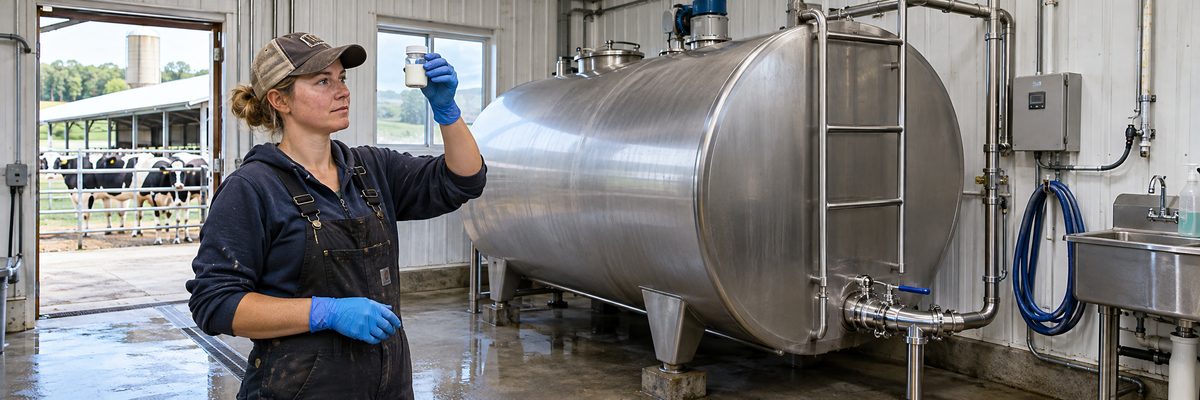
The first milk check after you buy a herd has a way of teaching things the books skipped. A new dairy owner usually knows how to feed a cow and how to run a tractor. What trips people is the milk itself: it has to be cooled fast, kept clean, kept free of drug residues, and tested by someone else who is not on your side of the fence.
Most early mistakes are not dramatic. They are small habits that pile up until a hauler flags a load, a plant calls, or a premium disappears. The good news is that almost all of them are fixable with routine, a few simple records, and willingness to ask the people whose job it is to help.
Here are the ones that show up again and again, roughly in the order they bite.
1. Treating teat prep as optional
Skipped or rushed prep is the quickest way to raise bacteria counts and mastitis. Cows need clean, dry teats and proper stimulation before the unit goes on. When the line is moving and the crew is short, prep is the first thing to be shaved down, which is exactly backward. Work out a prep routine, write it down, and make everyone do it the same way. Pre-milking teat prep, step by step is the place to start.
A good test: pull a clean white towel across a teat end after prep and see what comes off. If you would not wipe your own face with it, the cow has not been prepped.
2. Ignoring somatic cell count until it is a problem
Somatic cell count is a signal about udder health, and buyers and regulators watch it. New owners often learn their bulk tank number only when someone else brings it up. Track it from the start and learn how to read cow-level reports so you can find the few high cows driving the tank. What somatic cell count is and why buyers care covers the basics. The legal limit and any premium or penalty schedule come from your handler and your state, so ask for yours in writing.
Mastitis control has a framework behind it, laid out in the National Mastitis Council's seven-point plan. Read it once and keep it near the milk house.
3. Cooling milk too slowly
Warm milk grows bacteria. A tank that is undersized, a compressor that is tired, or a plate cooler that is clogged will drag cooling out. Check the numbers against your state and handler requirements, then test your own tank with a thermometer instead of trusting the display. The expectations are explained in how fast milk must cool in the bulk tank.
4. Treating the wash cycle as a set-it-and-forget-it job
Wash temperature, chemical strength, time, and turbulence all have to work together. A thermostat that drifted, a pump that lost pressure, or the wrong detergent for your water can leave a film that raises bacteria counts. New owners often inherit a wash program without knowing the logic behind it. Check temperatures with a thermometer and ask the chemical rep to run the system with you. When counts jump, troubleshooting a high bacteria count offers a way to work through it without guessing.
5. Sloppy records on treated cows
This one can cost the most. Milk from cows treated with certain drugs must be withheld for the period on the label or prescribed by your veterinarian. Mixing that milk into the tank can mean a rejected load, a fine, and a very bad week. Mark treated cows clearly, keep written records, train every milker, and ask your herd vet for a protocol that fits your parlor. Withdrawal times and discard rules are drug-specific and your vet is the right source, not a neighbor and not this article. For the framework, see milk withholding times and discard records and preventing antibiotic residues in the bulk tank. Cornell's drug residue avoidance module is a good general reference.
6. Skipping equipment checks
Liners wear, pulsators drift, and vacuum levels slip. A milking system that worked fine when you bought the herd can slowly start causing teat-end damage and slow milking. Put liner changes and system tests on a calendar and use them. A tech's visit beats a mystery in the middle of the night.
7. Not asking the fieldman and the hauler
The person who picks up your milk sees a lot of dairies. Your handler's fieldman or quality person can usually tell you what the plant tests, what your history looks like, and what gets flagged. Calling them early feels awkward and then becomes the best habit you have. Rules differ by state, milk market, and handler, so link up with your state dairy agency and your plant instead of relying on advice from a different region.
The USDA AMS dairy programs page is a decent place to see how federal milk marketing works, though your state agency will have the quality and licensing details.
A first-month checklist
- Get your last several months of bulk tank results from the plant.
- Have the milking system tested and the liners and hoses checked.
- Write a short teat prep and milking routine and post it.
- Set up a treated-cow marking system and a record sheet.
- Check bulk tank temperature and cooling time.
- Meet your fieldman and your herd vet.
- Learn what your milk check actually pays for, starting with how milk quality premiums work.
If you want to see what a breed can do with quality milk, this farm.FM piece on how Brown Swiss cows rule the cheese world will make you hungry. Cheese makers get picky about milk quality for a reason, and the cows get the credit, but the farmer is the one cleaning the lines.
Quick answers
What is the most common milk quality mistake?
Inconsistent teat prep and cleaning routines are near the top of the list, along with missed treated-cow records. Both are about habits, not equipment, and both are fixable with training and a written routine.
Who do I call if my milk is flagged?
Start with your milk handler's fieldman or quality contact, then your herd veterinarian and your state dairy agency if needed. They can tell you what was flagged and what to do about it.
How do I know if my cleaning is working?
Look at your bacteria and preliminary incubation counts over time, inspect the lines and tank for film, and check wash temperatures with a thermometer. If counts rise without a clear cause, ask your equipment dealer and chemical supplier to evaluate the wash.