Youth, Shows, Careers & Dairy Life
How to Lead a Dairy Heifer in the Show Ring
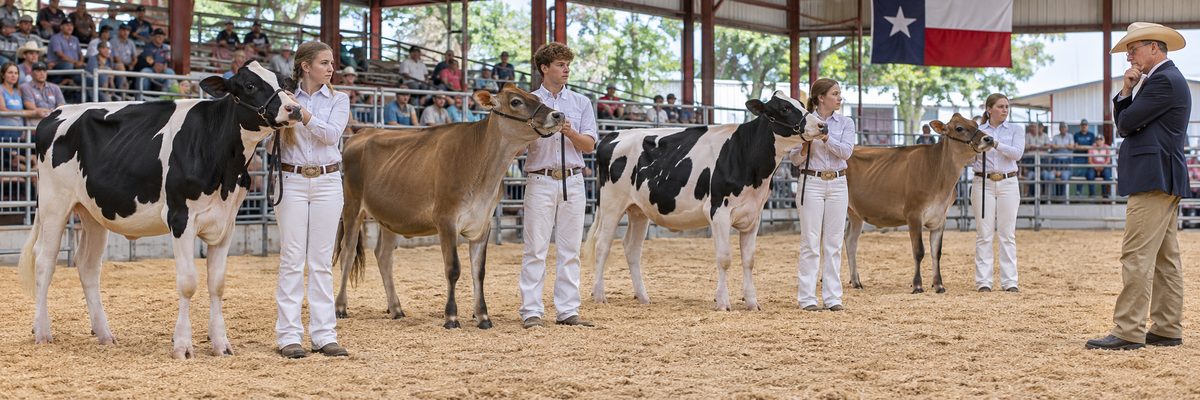
Leading a heifer in the ring comes down to a few steady rules: go the direction the steward points, keep your heifer between you and the judge, walk slowly, leave room for the animal ahead of you and keep one eye on the judge at all times. If she acts up, stay calm and keep her moving. Panic is catching, and heifers are excellent at catching it.
Most of the ring rules in this article come from the University of Georgia extension bulletin on fitting and showing dairy animals, which follows the Purebred Dairy Cattle Association standards for junior shows. Individual shows can differ, so read the show book and listen to the ring steward on the day. If your show's instructions disagree with something here, the show wins.
Walking into the ring
Lead from the heifer's left side. The bulletin says exhibitors move clockwise around the ring, which keeps the animal between you and the judge. Use the full ring and don't drift toward the middle unless asked. Walk at a slow, steady pace. The bulletin's phrase is "there is no race here," and the reason is practical: a heifer moving slowly stays put together, with her head up, her feet under her and her topline level. The exception is when the judge picks you for the lineup. Then you move quickly to the spot.
Walking forward is the current standard. The old habit of backing around the ring has gone out of favor. Face your heifer only when you stop to set her up, and keep watching the judge in either case.
Spacing and manners
- Leave an acceptable space between you and the heifer ahead of you, both while parading and in the lineup.
- If the heifer ahead stops, it doesn't mean you can pass. You may help the other exhibitor, but if your own heifer stops, she should be set up properly for the judge.
- Don't cut corners tight enough to bump other animals.
- In a lineup, keep animals in a straight line with even spacing. Nose-to-tail crowding is a fault.
Think of the ring as a two-lane road where everyone wants to be in front of the guy who's judging. Be the polite driver. Judges notice who is making room and who is making a scene.
Reading the judge
The bulletin points out that many of the judge's cues aren't spoken. A hand signal might tell you to move into line, step forward or head to the other side. If you're watching your heifer's feet instead of the judge, you can miss the signal and end up last instead of first. So always watch the judge, regardless of which way you're facing. When the judge walks around her, move with them and stay out of the judge's direct view of the animal, and switch rear legs whenever the judge crosses the center plane of the animal.
Setting her up while you lead
When you stop, the front feet go square and the rear legs scissor. For a heifer that isn't springing heavy, the bulletin says the rear leg closest to the judge goes back, and for a cow it goes forward. Move legs with halter pressure when you can. Stepping on her feet to position her is listed as a serious fault. If you can't get a foot into place after a couple of tries, don't keep fussing. The judge is looking at the whole picture, and an over-handled heifer looks nervous. Dairy showmanship tips for first-year exhibitors goes through setup habits in more detail.
Your halter and lead strap
A halter that fits sits on the bridge of the nose and doesn't press toward the eye. The lead strap should be neatly looped and never wound around your hand. The bulletin lists a lead strap looped and fastened as a serious fault, and the safety reason is obvious: if she bolts, you want your hand free. Keep your arm relaxed, not stiff or stuck out, because a rigid arm shows up on the scorecard too.
When she acts up
Every heifer has a day. Here's what usually works, and what doesn't.
- Breathe and slow down. Your heifer reads your nervousness. A slower pace and a quieter voice give her something to follow.
- Keep her moving forward. A heifer that's gone sideways or balky often settles if you turn her in a gentle circle and set off again.
- Give her room. If she's disrupting others in the lineup, the bulletin says you may need to pull her out and replace her in the line. That's acceptable, and better than letting her bother the animals next to her.
- Never hit her. Striking the animal is a serious fault and repeated striking can mean disqualification. Beyond the rules, it makes the problem worse.
- Don't stack your problems. If one thing goes wrong, let it go. Judges are watching what you do next.
A heifer that fights the halter in the ring probably hasn't had enough training at home. Halter training a show heifer to lead and stand covers the building blocks, and show heifer diva behaviors and what they mean helps you figure out whether she's scared, hot, bored or just being a heifer. Hot barns are a real issue in the South and Southwest, and a tired, overheated heifer will lead worse than a fresh one. Use shade and fans, keep her watered according to show rules, and practice in the heat of the day at home so show day isn't a surprise.
Practice that carries over
Set up a practice ring at home, even if it's a loop around a round pen. Use the same halter you'll show in, because the bulletin notes heifers need time to adjust to a show halter, especially the chain portion of the lead. Walk laps clockwise, stop and set up, switch legs as a friend walks around her, and line up beside another animal. Do it in short sessions several times a week. A heifer that has done it twenty times at home is less likely to treat the ring as a new adventure. When it's your turn, you're not leading a heifer through a show ring. You're doing the same lap you did in the yard, with more people watching.
For the judge's side of the same story, how dairy showmanship is judged shows what gets counted. The full University of Georgia bulletin, Is Your Heifer Fit to Show?, has the diagrams that show the ring pattern and lineups.
Quick answers
Which side do you lead a dairy heifer from?
The left side, moving clockwise around the ring, so the heifer stays between you and the judge. Confirm with the ring steward, because local show rules can vary.
How fast should I walk in the show ring?
Slowly enough that your heifer stays balanced and together. The exception is moving into the lineup when the judge selects you, which should be done promptly.
What if my heifer won't walk in the ring?
Stay calm, ask her to move forward with steady halter pressure, and release the pressure when she steps off. A small circle can help her find her feet. If she can't settle, it's fine to ask the steward for help, and then go home and work on training.