Youth, Shows, Careers & Dairy Life
Halter Training a Show Heifer to Lead and Stand
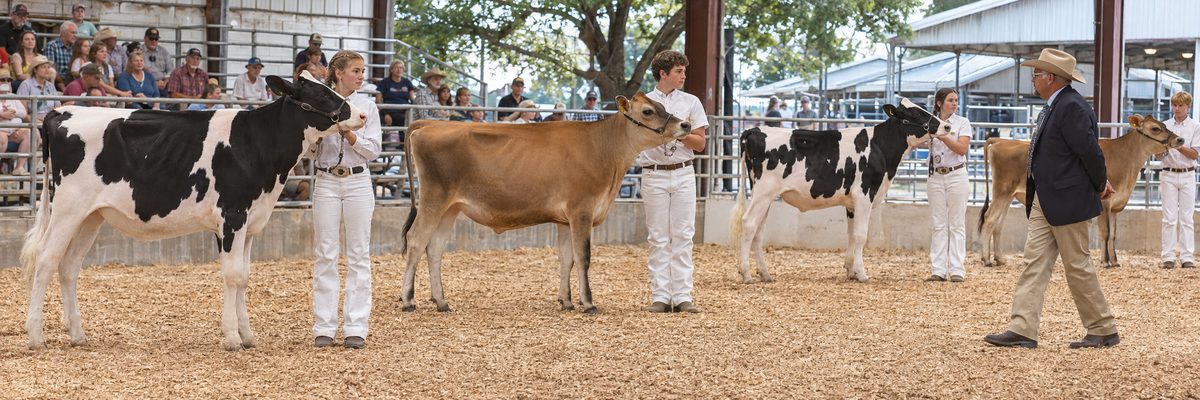
Halter training is mostly patience dressed up as a schedule. The heifer learns three things in order: the halter means something, pressure on the halter means move toward the pressure's release, and standing still is a good idea. Do short sessions, end each one on something she got right, and don't ever let go of the rope. A plan of six to eight weeks is a common target before a show, though some heifers take longer and a few seem to have been born knowing it.
The plan below is a sample, not a rulebook. Every heifer is different, and the University of Georgia extension bulletin on fitting and showing dairy animals puts it plainly: initially breaking an animal to lead can quickly become a test of endurance, so be patient and realistic about progress. Much of the method here follows that bulletin, and the rest is general practice. Ask your 4-H leader or a local dairy exhibitor to look over your setup, and bring an adult for every session until you and the heifer are both settled.
Before you start
- A sturdy rope halter for early work. The Georgia bulletin recommends a sturdy rope halter for most initial work.
- A solid tie spot with deep, dry bedding. Tie to something that won't give way, at about head height for the heifer, with a short enough rope that she can't wrap a leg in it.
- A quick-release knot. The bulletin says animals should always be tied with one. Learn it until you can tie it blind.
- A helper. Someone who can stand behind her and encourage forward movement, or catch the rope if things go sideways.
- Good footing and a fenced area so a heifer that bolts has nowhere to go but in a circle.
Week 1: Get used to the halter and the tie
Put the halter on, check the fit and let her wear it. According to the bulletin, start by tying her in a sturdy, well-bedded spot for short periods, in the range of 15 to 25 minutes, and never leave her alone during these early sessions, because she may struggle and hurt herself. When she fights, don't release the rope just because she's thrashing. If you let go when she fights, she learns that fighting makes the halter go away. Wait until she gives, even a little, then loosen up. Brush her while she's tied, scratch her tailhead and touch her legs so being tied becomes ordinary.
Handling a calf from birth makes this much easier. If you're also feeding a young calf, see first month tips for raising a bottle calf for 4-H for habits that help later on.
Week 2: First steps
After a few days of short tie-ups, start moving her with the halter. The bulletin suggests walking toward something she wants, such as feed or water. Expect some refusing, and some bolting where she doesn't seem to realize she's still attached to you. Don't let go of the rope. Brute strength rarely wins a tug-of-war with a heifer who outweighs you, so use short tugs, or have a helper encourage her from behind. Release pressure the moment she steps in the right direction, since that release is the reward. Watch out for the heifer that lunges at you as she moves forward.
Keep sessions short, about 15 to 20 minutes, a few times a day, as the bulletin recommends. Longer sessions frustrate both of you and can set you back.
Week 3: Walk with minimal pressure
By now she should be starting to follow with light pressure. Work on starting, stopping and turning. Walk a straight line, then a circle, then another straight line. Stop, wait a few seconds, and walk off again. If she plants her feet, ask once, then ask again slightly firmer, then release as soon as she moves. If she's still planted, ask her to take a step in any direction, which breaks the stalemate, then try forward again. Practice in a few places so she learns the halter works everywhere, not just by the barn.
Week 4: Stand, brush, wash
Now teach her to stand. Stop, let her settle, and ask for her front feet to be placed square. Use light pressure on the halter and your hands on her shoulder, never your boots. Rear legs come next. The tools are time and repetition, not force. Practice standing for longer periods while you brush and talk to her. A first wash a week or two before the show is useful too, and she'll pick the day you wore clean jeans to roll in the one wet spot in the lot. The bulletin notes early washing helps remove long-lasting stains and lets you spot skin problems in time to treat them. See how to wash and blow dry a show cow for the rest.
Weeks 5 and 6: The show halter and the show ring
A few weeks before the show, switch to the show halter and the lead with a chain. The bulletin notes there will be an adjustment period, especially for the chain portion of the lead. Practice leading at a slow walk, stopping, setting up and watching a pretend judge. Learn how to lead a dairy heifer in the show ring so your home practice looks like the real thing, and run through setting up with a friend walking around her. If you can, take her to a new place, even a neighbor's yard, and let her practice with another animal nearby.
Weeks 7 and 8: Polish and trailer practice
Practice loading and unloading from the trailer, standing tied in a strange barn and being clipped and washed. Show-day stress changes a heifer's behavior, as the bulletin notes that struggling against the halter and transportation to a show can alter heart and respiration rates. It's wise to know your heifer's normal before show week, so you can tell stress from sickness. If she's off feed, listless or running a fever, call your vet.
Regional and seasonal notes
In the hot Southeast and Southwest, train in the cool of morning or evening and give her water and shade after each session. In the Upper Midwest and Northeast, cold barns and mud change how she moves, so a hard, dry surface to practice on helps. Heat and slick footing both turn a calm heifer into a skittish one. If you're getting ready for a winter or spring show, winter prep for the spring dairy show season has seasonal tips.
Common mistakes
- Letting go of the rope when she fights, so she learns that fighting works.
- Long, frustrating sessions that end with both of you angry.
- Tying her with a regular knot or to a fence board.
- Skipping the show halter until show day.
- Leading her only in the barn and then expecting her to behave at the fairgrounds.
For more on why heifers sometimes behave the way they do, show heifer diva behaviors and what they mean helps you decide whether she's being difficult or just confused. The full University of Georgia bulletin, Is Your Heifer Fit to Show?, covers leading, washing and clipping.
Quick answers
How long does it take to halter break a heifer?
It varies by age, temperament and how much she's been handled. Many people plan on several weeks of daily short sessions, but some heifers take longer. Start early so you aren't rushing in the last week.
How often should I work with her?
A few short sessions a day, around 15 to 20 minutes each, work better than one long one. If you can only do one session, keep it focused and end on a good note.
What if she fights the tie?
Make sure she's tied with a quick-release knot and watched at all times. Don't release her while she's struggling. Wait for a calm moment, then release, so she learns that calm gets rid of pressure. If she hurts herself or panics, ask an experienced person for help.