Youth, Shows, Careers & Dairy Life
Dairy Showmanship Tips for First-Year Exhibitors
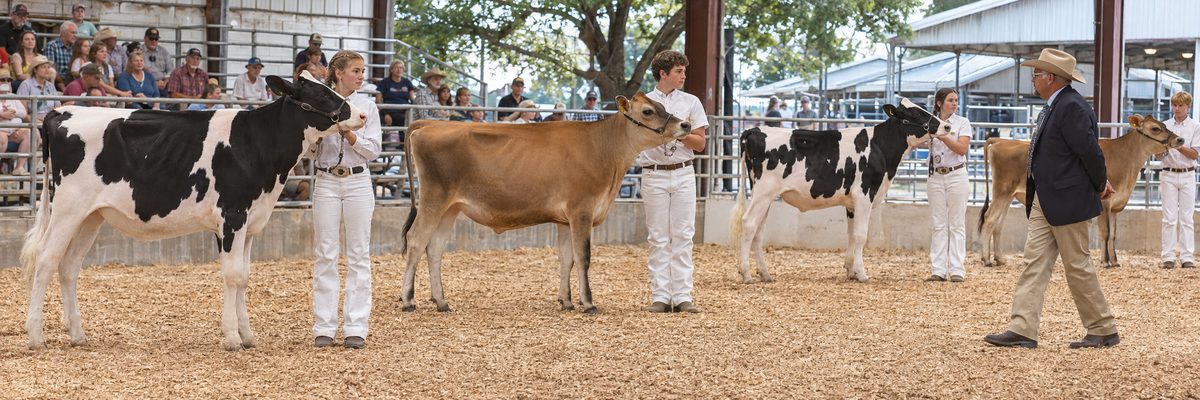
Most first-year showmanship placings aren't decided by talent. They're decided by small habits: a calm walk, a heifer standing square, eyes on the judge and no surprises in the lineup. The kid who practiced on a Tuesday night in a dusty barn almost always beats the kid who showed up with a better animal and a better haircut.
Here's the short version. Keep your animal between you and the judge, walk slowly around the ring, set her feet up properly and keep watching the judge, even when you're looking at your heifer. Dress clean in white, leave the gum at home, and know your animal's age and history. Everything else is polish.
Know the pattern of the ring
The University of Georgia extension bulletin on fitting and showing dairy animals describes the basics well. Showmen move in a clockwise direction around the ring, leading from the left side, so the animal stays between the exhibitor and the judge. Use the full ring instead of crowding toward the middle unless the judge asks you to. And move slowly. As the bulletin puts it, there is no race. The slow pace keeps your heifer together and looking her best. The one time to hurry is when the judge pulls you into the lineup, and then you move briskly to the right spot.
Forward movement is the standard now. Walking backward around the ring has largely gone out of fashion, so you lead forward with your shoulders turned toward the animal and the judge. When you stop to set up, you can face your animal, but keep your attention on where the judge is.
Set her up the way a judge expects
For all animals, the front feet go together, squarely under the shoulders, with the rear legs scissored. According to the Georgia bulletin, a heifer that isn't springing heavy has her rear leg closest to the judge placed back, while in a cow the rear leg closest to the judge goes forward. That lets the judge see where the udder will sit in a heifer, or the rear and fore udder in a cow. When the judge walks to the other side of the animal, change the legs. Make adjustments with pressure on the halter whenever you can, instead of kicking or stepping on her feet.
Know your heifer's flaws too. If she has loose skin in the throat, you might pull the skin forward a little. If she's narrow on the chest floor, you might set her wider on the front feet. Showing around a fault is a skill, and judges notice that you know your animal. For a heifer-specific walkthrough, how to lead a dairy heifer in the show ring covers the ring from the lead end.
Eyes on the judge, always
The bulletin says it flat out: always watch the judge, regardless of which way you are facing. Judges often signal with their hands, and missing a signal for the lineup can put you last instead of first. Watch classes before your own, when you can, to see how the judge moves and lines up animals. It's a free lesson. Just don't watch so hard that you stare, since watching the judge too intently shows up as a moderate fault on the scorecard.
Dress, halter and manners
- White clothes. The Georgia bulletin recommends white shirt and white pants, with boots rather than open-toe shoes. Skip logos, bright belts and anything that draws the eye.
- A halter that fits. It should sit on the bridge of the nose without being tight and without pushing into the eye. Pick a color that blends with the animal: brown or tan on most breeds, black on a Holstein.
- Neat lead strap. Looped neatly, never wound around your hand and never fastened in a loop.
- No gum, no phone. Chewing gum is listed as a moderate fault, and carrying or talking on a cell phone is a serious one.
- Be on time. Showing up late to the class is a serious fault. The ring doesn't wait for your heifer to finish a drink.
Be a good neighbor in the lineup
Leave a reasonable space between your animal and the one ahead of you, and keep a straight line. If the animal in front of you stops, don't pass. If your heifer won't settle in the lineup, it's okay to pull her out and re-enter, which beats letting her disturb the animals next to you. Disturbing other exhibitors counts against you, and being gracious about a bumped elbow counts for you.
Prepare the animal, not just yourself
Judges look at the exhibitor and the animal together. Clean ears and feet, a well-brushed switch, a clean muzzle and a clean, even clip all matter. So does a heifer that has been led enough to know what the halter means. If your heifer hasn't had the training, start with halter training a show heifer, and see how to clip a dairy cow for a show for the clipping side. A tidy show box makes show day calmer too, and the dairy show box checklist keeps you from borrowing a brush from a stranger.
Be ready for questions as well. Judges sometimes ask about birth date, breeding date, due date, diet or conformation. The bulletin lists not knowing your animal's birth date, fresh date, breeding date or due date as a moderate fault. Learn the numbers now, not in the ring.
A practice routine that works
- Walk the heifer around a practice ring clockwise, slowly, three or four laps.
- Stop and set her up. Check front feet, then rear legs, then head.
- Have a friend play the judge, walking around her while you switch legs.
- Practice lining up beside another animal with room to spare.
- Finish with a quiet scratch. She should remember the end of practice as a good thing.
If you want to know what the judge is actually scoring, how dairy showmanship is judged breaks it down, and mistakes first-time dairy showmen make lists the ones that cost the most. The full University of Georgia bulletin, Is Your Heifer Fit to Show?, is worth reading start to finish.
Quick answers
What is the most important thing in dairy showmanship?
Showing your animal to her best advantage while staying calm and attentive to the judge. Cleanliness, clipping and a well-trained animal help, but a showman who stays alert and adjusts quickly usually earns the nod.
Which way do you walk in the show ring?
Generally clockwise, leading from the animal's left side so the animal stays between you and the judge. Follow the ring steward and the judge, since local shows may give different directions on the day.
Should I look at my animal or the judge?
Mostly the judge. You can glance at your animal when you set her up or check her feet, but your attention should return to the judge, who is the one deciding your placing.