Milk Markets, Co-ops & Processing
How Milk Gets From Your Tank to the Store
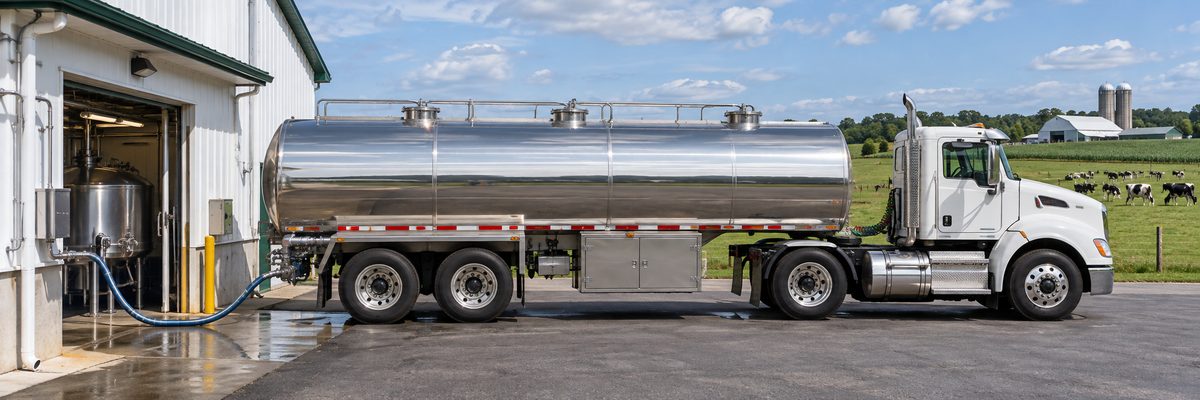
Milk leaves your bulk tank in a stainless steel tanker, spends a few hours or a couple of days getting tested, blended, heated, packaged and chilled, and arrives in a store cooler usually within days. Along the way it picks up a sampling record, a test result, a processing plant lot number and a date code. What it doesn't pick up, thankfully, is any memory of the cow that stepped on the milker last Thursday.
If you ship milk, you've seen the first step. The rest happens somewhere you probably haven't visited, and it helps to know what happens to your milk after the hose comes off, because each step explains something on your milk check or in a call from your field rep. Here's the route, in order.
Step 1: The tank and the hauler
The trip starts when the milk is cooled and held in your bulk tank. The hauler, who is usually a licensed milk sampler and weigher, arrives, checks the milk's temperature, agitates the tank, and draws a sample from the tank. The tank gets measured, the milk is pumped into the truck, and the sample is labeled and kept cold. That sample is the farm's ID: it goes to a lab and tells the plant what's in your milk and, if something goes wrong, which farm it came from.
The hauler also notes the time, the volume and the temperature. If you've wondered why the driver sniffs the tank and looks at the thermometer for so long, that's what's going on. More on the driver's side is in milk hauler pickup schedules and access.
Step 2: The ride
The tanker may be carrying milk from several farms, with each farm's milk kept track of by sample. Routes are planned around which farms are closest, how full the truck will be and which plant needs milk. Pickup frequency and route density shape the hauling cost that shows up as a deduction on your milk check.
Step 3: Receiving and testing at the plant
Before the load is unloaded, the plant checks it. Typical checks include temperature, smell and appearance, and a rapid screening test for drug residues. A load that fails can be rejected, and the plant uses the individual farm samples to trace the problem. Details are in what plants test milk for at receiving.
Separately, your farm's samples go through the routine tests that feed your milk check: butterfat and protein, somatic cell count, bacteria counts and other quality checks. Those results are the basis for premiums and penalties, as covered in how milk quality premiums work.
Step 4: Silos, separation and standardization
Once accepted, the milk is pumped into insulated silos, where it's kept cold. Then the plant separates it into cream and skim milk and recombines them to standardize fat content for whatever product is being made: whole milk, 2 percent, skim, cream, or milk for cheese, butter or powder. Milk bound for cheese typically goes to a different part of the plant or a different plant entirely.
Step 5: Homogenizing and pasteurizing
Fluid milk is usually homogenized, which breaks up fat globules so the cream stays mixed and doesn't rise to the top. It is then pasteurized: heated to a set temperature for a set time, then cooled quickly. Most large plants use high-temperature, short-time pasteurization in a continuous flow, while some small plants use batch methods and some products are heated much higher for longer shelf life. The differences are laid out in pasteurization explained: HTST, vat and UHT.
Step 6: Packaging
The pasteurized milk goes to filling machines that put it in jugs, cartons, bags or bottles, with date codes and plant codes printed on each. The plant keeps records tying each lot back to the raw milk that went into it, which is what makes recalls and trace-backs possible. Packaging is a place where fluid milk plants spend a lot of money and a lot of effort on cleanliness, because the milk has already been through the pasteurizer, and nobody wants it contaminated in the last ten feet.
Step 7: Cold chain and distribution
Milk moves from the plant to stores, schools and institutions in refrigerated trucks, often within a day or two of packaging. Some goes to a regional warehouse first. At the store, the cooler's temperature and the speed with which the milk is stocked make a difference in shelf life. A jug that's fine at the plant can spend an afternoon on a loading dock and arrive a different product.
Where the safety rules come from
Grade A milk in the US is regulated through a state and federal partnership built around the Grade A Pasteurized Milk Ordinance, which is administered with FDA and the states. The ordinance covers farm inspections, plant inspections, sampling, pasteurization and more. FDA's Pasteurized Milk Ordinance Centennial page explains the program in plain language, and your state dairy regulator is the agency that actually inspects your farm and your plant.
What this means on your end
- Your sample is your report card. Clean equipment and quick cooling show up on every test.
- Cold matters first. Every later step starts from the milk you shipped. Cooling at the farm comes before everything else on this list.
- Residues are a plant-wide problem. One bad tank can affect a whole tanker load, which is why plants take rejections seriously and why the farm that caused it usually pays.
- Time is a cost. The shorter the trip, the fresher the milk, and the more a plant values the farm's supply.
It's also worth knowing that different markets work differently. In the Southeast, much of the milk goes to fluid bottling, so freshness and consistent volume carry weight. In the Upper Midwest and Northeast, a big share goes to cheese and other manufactured products. In the West, large plants make everything from fluid milk to powder. If you sell directly from your own bottling room, you're doing every one of these steps yourself, and on-farm milk bottling equipment and startup costs is a good place to see what that takes.
Quick answers
How long does it take milk to get from the farm to the store?
Often only a few days, though it varies with pickup schedule, plant location and product. Fluid milk generally moves quickly because of its shelf life.
Is milk from different farms mixed together?
Yes, in tankers and plant silos. Each farm's sample is kept so the plant can trace a problem back to the source.
Who tests the milk?
Haulers collect samples, labs and plants run the tests, and state and federal regulators oversee the whole system. The farm's own routine checks matter too, since they catch problems earlier than anyone else can.