Youth, Shows, Careers & Dairy Life
A Short History of the Family Dairy Farm in America
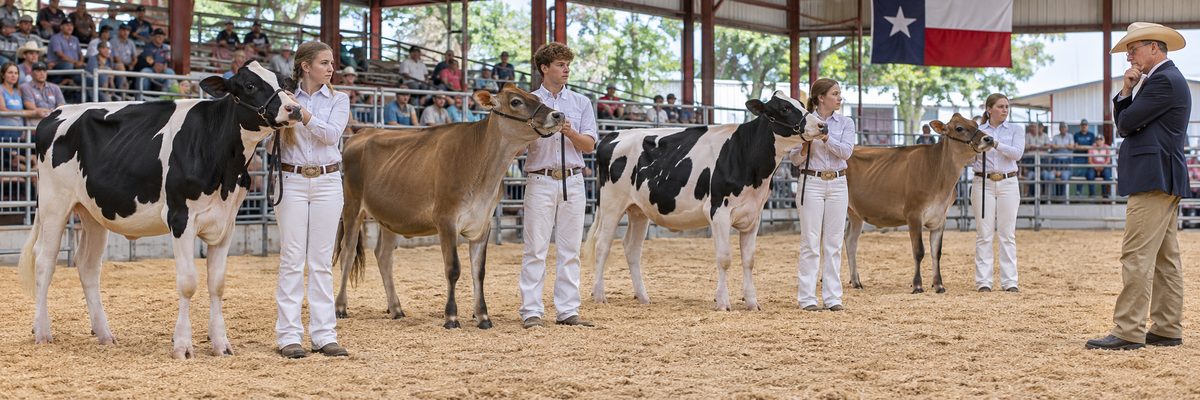
Go back far enough and nearly every American farm family had a cow. She gave milk for the kitchen, cream for butter, and a calf now and then. Dairying wasn't a business so much as a chore that happened twice a day with the same bucket and the same stool, and somebody in the family, usually a kid, got stuck with it.
Over the next few generations, that chore turned into one of the most specialized parts of agriculture. Herds grew, cows got far more productive, milk moved from cans to tanks, and the number of farms shrank while total milk kept climbing for most of that stretch. Through all of it, the family dairy remained the backbone. USDA's Economic Research Service still notes that most U.S. dairy operations are family owned, and that many farmers belong to producer-owned cooperatives.
What follows is a quick tour in broad strokes, because exact timing varied a lot by region and farm.
From the family cow to the commercial herd
In the early days, milk was a local product with a short shelf life, because there was no good way to cool it or move it far. Farms near cities sold fresh milk to neighbors and urban customers. Everyone else turned it into butter and cheese, which keep. That's why dairying took hold in places with cool weather, good grass and cheese or butter makers close by, such as New England, New York, Pennsylvania and later Wisconsin and Minnesota.
As cities grew and railroads spread, milk could travel farther, and the business changed with it. Cheese factories and creameries sprang up in rural communities, often owned by the farmers who supplied them, which is the origin of many of today's cooperatives. If you're curious how that model works now, how dairy cooperatives work picks up the thread.
Cans, pasteurization and the rules that came with them
Milk that travels is milk that can make people sick, and the public health story is part of the farm story. Pasteurization and sanitation standards made milk much safer, and with them came inspections, grading and the rules farms still follow. If you want to know why pasteurization matters, what pasteurization is and why it matters explains the science in plain English.
For a long stretch, farmers cooled milk in cans set in cold water tanks, hauled the cans to the road, and a truck collected them. Washing those cans was a daily job nobody missed when it went away. The switch to refrigerated bulk tanks and tanker pickup changed the farm: fewer trips, better quality and a milk truck that came on a schedule, the rhythm still set by hauler pickup schedules.
Machines arrive in the barn and the field
The tractor replaced the work team. The milking machine replaced a lot of strong forearms. Pipeline systems took the bucket out of the loop, and parlors changed the farmer's posture from kneeling beside a cow to standing at one end of a pit. The classic tiestall barn that so many families still run gave way, in larger herds, to freestalls and parlors. If you've wondered how those compare in daily work, tiestall vs parlor milking routine lays it out.
Breeding changed too. Artificial insemination let a farmer use a top bull he'd never meet, and sire proofs gave families real numbers to choose from. Combined with better feeding and cow comfort, production per cow climbed dramatically over several generations, while the number of cows in the country fell well below where it once stood. That's from general knowledge of the trend, so check USDA's National Agricultural Statistics Service and its Census of Agriculture for current figures on herd counts and farm numbers.
Prices, programs and the pressure to grow
Milk is perishable, which makes the market lopsided: the farm has to sell it every day to whoever picks it up. Over time, governments and cooperatives built pricing systems to bring a little order. Federal milk marketing orders set minimum prices for milk based on how it's used, and farmers still deal with those today, as the pieces on how federal milk marketing orders work and how to read your milk check explain.
Margins on milk have never been generous for long, and the pressure to spread costs across more cows pushed farms to expand or sell. ERS describes the long-term pattern as consolidation toward larger operations. The result is a broad range: a few hundred cows is a mid-size herd in some places, a small one in others, and in the Southwest and West dairies with thousands of cows are normal, while Northeast and Upper Midwest dairies are more often a few dozen to a few hundred.
Regions drifted apart
- Northeast. Smaller herds, many tiestall barns, and a lot of family succession questions. Hay season is short and the barn is older than the farmer.
- Upper Midwest. Cheese country. Strong cooperatives, a lot of family herds and a long history of dairy youth programs.
- West and Southwest. Big herds, dry lots or open corrals, irrigated forage and large-scale cow cooling.
- Southeast. Heat and humidity keep herd sizes and cow comfort strategies different from the north.
- Grazing regions. A steady minority of farms have built low-cost systems around pasture, as described in rotational grazing for dairy cows.
ERS also notes that some of the top milk-producing states, including California, Wisconsin, Idaho, Texas and New York, together make more than half the national supply. The map of where milk comes from has moved west and south even as the cheese-and-barn image stays stuck in the Midwest.
Barns, robots and the next stretch
Look at a modern family dairy and you'll find a mix of old and new: a hundred-year-old barn with a tablet on the wall, a robotic milker in the room where the stanchions used to be, activity collars on cows whose great-great-grandmothers wore a bell. Robotic milking has become part of the family farm story for people who want flexibility and have the capital, and first year robotic milking gives an honest look at what the change involves. The barn itself has its own history too, including the reason for the color, which a short history of the dairy barn covers.
For readers who want more of the human side, state historical societies hold a lot of dairy history, such as the Wisconsin Historical Society, which is a good place to start if you want old photographs of cheese factories and milk stations.
What didn't change
Cows still need to be milked on schedule, whether the cow lives in a tiestall barn in Vermont or a freestall in Idaho. Calves are still born at the worst possible hour. The milk check is still the thing that keeps the lights on, and the weather still has an opinion. The kid doing the chores still wants to know when somebody else will take a turn. And the best dairy decisions still tend to be made by someone who walked through the barn and looked at the cows.
Quick answers
Are most dairy farms still family owned?
Yes. USDA's Economic Research Service says most U.S. dairy operations are family owned, though many are far larger than the family farms of a few generations ago. Ownership structures vary, with partnerships, corporations and multi-generation arrangements all common.
Why are there fewer dairy farms than there used to be?
Higher production per cow, thin margins, labor needs and the cost of equipment and land pushed many farms to expand or exit. The result is fewer, larger herds producing more milk overall for much of that stretch.
Where can I find current numbers on dairy farms and cows?
The USDA National Agricultural Statistics Service publishes the Census of Agriculture and regular milk production reports. ERS also keeps a dairy topic page with background and market data.