Milk Markets, Co-ops & Processing
Every-Other-Day Milk Pickup: Pros and Cons
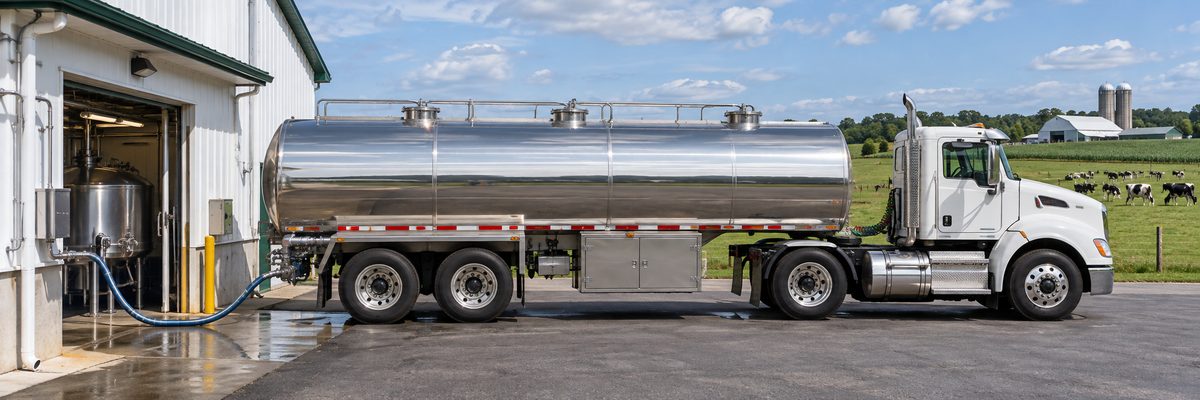
Every-other-day pickup means the milk truck comes once in a 48-hour stretch instead of daily, so your bulk tank has to hold and protect four milkings before it gets emptied. For many farms that trims the hauling bill and the number of times someone has to open the gate. In exchange you carry more risk: a bigger tank, more cooling load, and a longer wait if a storm or a breakdown shuts the road.
Whether you get the choice at all depends on your handler, your state dairy regulator and the route. Some plants will only run every-other-day on farms that have proven themselves on quality. Others pick up daily whether you like it or not, and you find out by asking, not by guessing. Either way, it's worth running the numbers once, because a pickup schedule is one of the few parts of the milk check you can sometimes negotiate.
What really changes when the truck skips a day
The milk itself doesn't change, but the margin for error does. Grade A rules generally call for milk to be cooled quickly after milking and held cold until pickup, and for the tank to have room for the full holding period. Regulators and handlers write this down in different ways, so ask for your handler's exact requirement rather than relying on a neighbor's version of it.
On a daily schedule, a tank that's marginal on cooling can limp along because the milk leaves before the problem gets expensive. On every-other-day, the same marginal compressor has two full days to turn a small problem into a bacteria count your field rep will call you about. The tank doesn't care that it was a busy week. For more on the cooling side, see how fast milk has to cool in the bulk tank.
The case for every-other-day pickup
Lower hauling cost per hundredweight
Most haulers charge by the stop, by the hundredweight, or by some mix of both. Half as many stops usually means a lower cost for the same amount of milk, and that deduction comes straight off your check. If you're a small or mid-size herd, the savings can be real money over a year, especially where the route is long and fuel is not cheap. The mechanics of those deductions are covered in milk hauling and stop charges.
Fewer interruptions
A truck that shows up at 3 a.m. every day also needs a clear lane, a lit hose port and a tank that's not mid-wash. Cut that in half and you cut the number of mornings the driver finds a skid loader parked in front of the milk house. Nobody's proud of that one, but everybody's done it.
Smoother plant scheduling
Handlers sometimes favor every-other-day on larger tanks because it fills the truck from fewer farms and keeps the route efficient. If you can offer a big, well-run tank, you're helping them as much as yourself, which is a decent starting point for a conversation.
The case against it
You need a bigger tank, and probably a bigger cooling system
A tank sized for one day of milk with a little cushion won't hold two days plus the cushion. Expanding means buying or leasing a larger tank, which is a capital cost, and often upgrading the compressor, the plate cooler or the pre-cooling setup. A plate cooler takes a lot of the heat out before the milk reaches the tank and can make a longer holding period far easier on the compressor.
Quality problems take longer to show up
If a cow's milk is contaminated, or a wash cycle was skipped, the evidence sits in the tank for two days instead of one. Bacteria counts and a preliminary incubation test look at the milk as it arrives, so a slow cooling problem on day one turns up in the sample from day two. On a daily route, you'd have caught the trend sooner and lost less milk.
Weather and breakdowns hit harder
When the truck misses a scheduled day on a daily route, you have maybe one extra day of milk to deal with. Miss a scheduled day on an every-other-day route and you're looking at three or four days of production with a tank that was nearly full on day two. Snow, ice and spring mud don't care about your pickup calendar. Plan for this in advance with the steps in a winter access plan, and you'll be glad you did the first time a plow goes in the ditch.
Side-by-side comparison
| Factor | Daily pickup | Every-other-day pickup |
|---|---|---|
| Hauling cost per hundredweight | Usually higher, more stops | Usually lower, fewer stops |
| Tank size needed | One day plus cushion | Two days plus cushion |
| Cooling demand | Moderate | Higher; plate cooler helps |
| Quality problems caught | Sooner, smaller loss | Later, larger loss |
| Storm or breakdown buffer | Tighter on tank space after one miss, but less milk to hold | Tank is usually fuller; a missed pickup can force dumping |
| Best fit | Smaller tanks, marginal cooling, weather-prone lanes | Right-sized tank, strong cooling, reliable access |
Regional differences
In the Upper Midwest and Northeast, winter access is the big concern: long lanes, drifting snow and plow schedules that start with the county road and finish with yours. Every-other-day can work there, but only with spare tank capacity and a plan for the day the truck doesn't come. In the Southeast and Southwest, heat is the headache. A tank that cools fine in January may struggle in August, so a longer holding period needs a stronger cooling system, not just a bigger tank. Large Western dairies often run on handler-set schedules built around tanker routes, so the question there is less about preference and more about what the plant already runs.
How to decide
- Ask your field rep what pickup schedules the plant and the state allow for your herd size and tank.
- Check your tank's actual capacity against two days of milk at your peak production, not your average.
- Have the compressor and cooling system checked by a refrigeration tech, ideally before summer.
- Price the hauling difference on your last few milk checks, and compare it against the cost of upgrades.
- Walk the lane. If you'd have trouble getting a pickup truck in after a storm, you'll have trouble getting a tanker in too.
- Write down your backup plan for a missed pickup before you need it.
If you're still comparing options, milk hauler schedules and access covers what drivers need from you, and extension dairy programs such as University of Wisconsin Extension Dairy publish milk quality and facility resources worth reading before you spend money on a bigger tank.
Quick answers
Can I switch from daily to every-other-day pickup?
Sometimes. It depends on the handler, your tank capacity and your recent quality record. Ask your field rep, and be ready to show tank size and cooling performance.
Does every-other-day pickup save money?
It often lowers hauling deductions because there are fewer stops, but the savings can be eaten up by a larger tank or a cooling upgrade. Run both numbers before you commit.
What happens if a pickup is missed on an every-other-day schedule?
You may be holding several days of milk in a tank that was already close to full. Call your handler right away and ask about a rescheduled pickup, and have a backup plan ready so you aren't deciding about dumping at midnight.