Milk Markets, Co-ops & Processing
Milk Hauling Charges and Stop Charges Explained
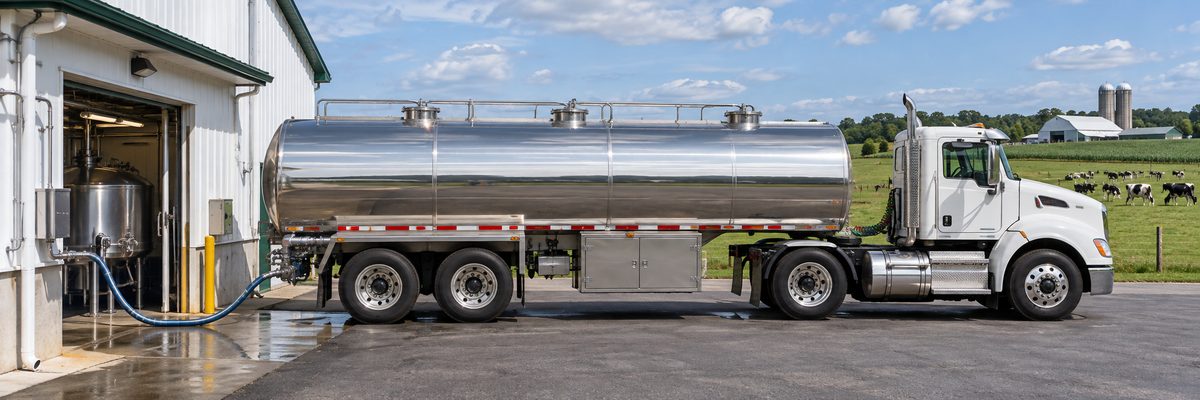
Hauling is the line on your milk check that makes the guy down the road say, "I'm paying how much?" and the guy two counties over say, "That's all?" Both can be right. Hauling charges aren't set by one national rule. They come from your handler, your co-op or your hauler's contract, and they depend on how much milk you ship, how far the truck travels, and how many stops it makes to get your milk.
Small farms usually pay more per hundredweight than big ones, because a truck stopping at a 40-cow dairy hauls less milk per stop than one stopping at a 2,000-cow dairy. That's arithmetic, not an insult. The good news is that several parts of the charge are things a farm can influence, and a few are worth a phone call.
What goes into a hauling deduction
Handlers structure hauling differently, so look at your own statement and your own contract. Common pieces include:
- Per-hundredweight rate. A set charge for each hundredweight picked up, sometimes tiered by volume so bigger shippers pay less per unit.
- Stop charge. A flat fee each time the truck pulls into your farm, regardless of how much milk it takes.
- Minimum-load or minimum-volume charge. A floor that applies if your pickup falls below a certain amount, which can hit small herds or farms in a seasonal dry-off.
- Mileage or zone charge. Extra cost for farms far from the plant or off the main route.
- Fuel adjustment. A surcharge that moves with diesel prices.
- Sample and testing fees. Sometimes bundled with hauling, sometimes listed separately.
Not every farm sees every item. Some co-ops pool hauling costs across a region, so a farm at the end of a long gravel road pays about what a farm next to the plant pays. Others charge by actual route cost. You can't tell which you're on without reading the fine print, and the fine print is rarely the fun part of the evening.
Why the same milk costs different amounts to haul
Distance and route density
A truck that picks up from eight farms in ten miles is a very different operation from one that drives thirty miles between stops. Dense dairy country, such as parts of Wisconsin, Idaho and the central valleys of California, tends to have cheaper hauling per hundredweight. Spread-out dairy regions, including parts of the Northeast hill country and the Southeast, often have higher costs because there are fewer farms per route mile.
Volume per stop
Stopping, connecting the hose, sampling and washing the tanker's gear takes about the same time whether the tank holds 800 gallons or 8,000. That fixed time is why stop charges exist and why small shippers feel them hardest.
Pickup frequency
Daily pickup means more stops and more cost. Going to every-other-day, where it's allowed, can lower the bill, though it needs a bigger tank. The tradeoffs are laid out in every-other-day milk pickup.
Access and road conditions
A driver who can't get in during mud season or after a storm creates costs for everyone, and some handlers will pass those costs on or drop a farm from the route if access is a repeat problem. The truck weighs a lot more than your pickup, and the lane that's fine for one isn't always fine for the other.
Where hauling shows up on the milk check
On a typical statement, hauling appears as a deduction, either per hundredweight or as a total, next to other items such as co-op dues, marketing fees, checkoff and advertising assessments. If you aren't sure which lines belong to hauling, reading your milk check line by line is a good start, and the blend price, the figure those deductions come out of, is worth understanding before you start comparing buyers.
Pricing under Federal Milk Marketing Orders sets minimum prices handlers pay for milk, but hauling and many other deductions are usually handled by the handler or co-op under its own agreements with members. USDA's Agricultural Marketing Service dairy marketing order pages explain how federal orders work, and your handler or state dairy agency can tell you what applies in your area.
Ways a small farm can trim the hauling bill
- Read the contract. Find out exactly what's charged: stop, volume, minimum, zone, fuel. You can't argue with something you haven't read.
- Check whether you can move to a different pickup schedule. Fewer stops can lower the per-hundredweight cost, but only if your tank and cooling can handle it.
- Look at volume tiers. If a tier break sits just above your current production, an extra few cows or a small production gain could drop your rate.
- Ask about route sharing. Neighbors on the same road may be able to coordinate so the truck's stops are efficient, or a nearby small dairy may join the same route.
- Fix access problems. A packed, graveled, well-drained lane with a turnaround spot can mean fewer missed pickups, which means fewer extra charges and fewer angry phone calls.
- Compare buyers. If you have more than one handler in reach, the hauling terms matter as much as the headline price. See co-op vs independent milk buyer and the list of questions in what to ask before signing a milk contract.
- Join the conversation at the co-op. Many co-op boards review hauling policies, and members who show up with numbers get heard more than members who send a text to a cousin.
Mistakes to avoid
- Assuming a higher milk price automatically beats a lower one. A premium that's wiped out by hauling and stop charges isn't a premium.
- Letting a lane fall apart until the driver refuses to come in.
- Adding a second milking schedule or a seasonal dry-off without checking minimum-load rules.
- Comparing your charges to a neighbor's without knowing whether you're on the same route, the same buyer and the same tank size.
For a broader look at how co-ops handle these costs and what they do with the money, see how dairy cooperatives work for member farms.
Quick answers
What is a stop charge on a milk check?
It's a flat fee for each time the truck stops at your farm to pick up milk. It exists because loading time and sampling cost about the same regardless of how much milk is in the tank.
Why do small dairies pay more to haul milk?
Each stop moves less milk, and the fixed costs of the truck, driver and sampling are spread over fewer hundredweight. Volume tiers and minimum-load rules can make the gap wider.
Can I negotiate my hauling rate?
Sometimes, especially if you have options among buyers or can change your pickup schedule. At co-ops the rate may be set by policy, so the better route is often to raise the issue at a member meeting.