Milk Markets, Co-ops & Processing
Class I, II, III and IV Milk Explained
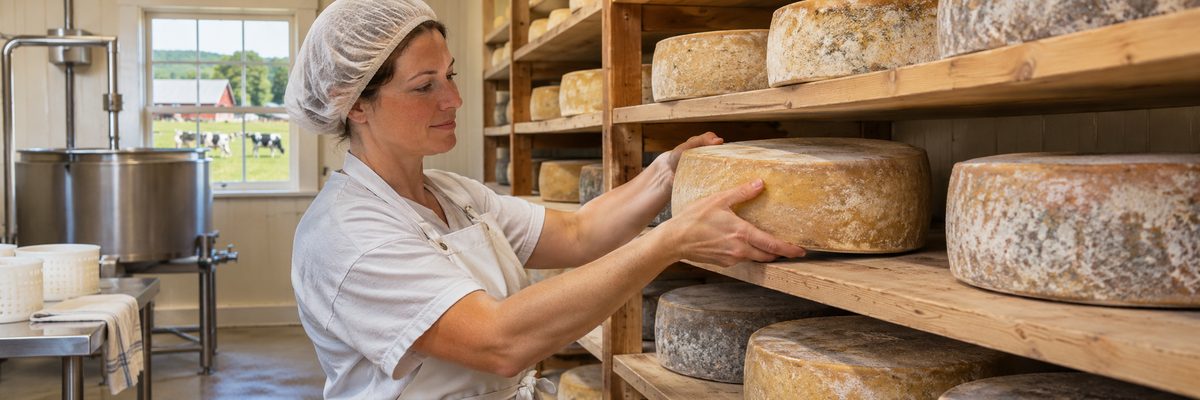
Milk classes are a pricing system, not a quality grade. The class tells you what a processor does with the milk, and it sets the minimum price that processor owes. Class I is milk you drink, Class II covers soft products like ice cream and yogurt, Class III is cheese, and Class IV is butter and milk powder.
You'll never see a Class III cow or a Class I cow, because the milk all comes out the same way. The class is assigned on the processing side after the milk leaves your tank. What you see on your own check is a blend of all of them.
It does help to know which class your market leans on, though, because that's where your price swings come from.
The four classes at a glance
| Class | What it covers | Where it matters most |
|---|---|---|
| Class I | Fluid milk for drinking, such as whole, reduced-fat and skim | Southeast, Florida, Northeast and other population centers |
| Class II | Soft products: ice cream, yogurt, cottage cheese, sour cream and cream products | Wherever those plants sit, often near cities and dairy regions alike |
| Class III | Cheese, such as cheddar, and the whey that comes out of making it | Upper Midwest, Idaho, parts of the Southwest and West |
| Class IV | Butter, nonfat dry milk and evaporated or condensed products | Regions with big drying and churning plants, including the West |
This is the general picture. The exact definitions of each class live in the federal order regulations, and the USDA AMS posts the formula documents on its price formulas page.
Class I: milk in the jug
Class I is the milk that ends up in the cooler at the grocery store, and the class tends to be the most valuable, because the product is perishable, has to be near the people who drink it, and is moved in smaller loads. Part of the Class I price is a location differential, which means the price is higher in places farther from major production areas. That is why Southeast and Florida dairies have historically seen stronger fluid pay than Upper Midwest dairies, which ship mostly to cheese.
Class I is priced ahead of the month it applies to, so bottlers know their milk cost in advance. The formula has been revised in recent federal order reforms, so check current AMS documents rather than relying on an old explanation. For the regional story, see Southeast fluid milk markets and Class I premiums.
Class II: the soft stuff
Class II is for products such as ice cream, yogurt, cottage cheese and sour cream. It's often described as the middle child. It gets less attention than the others, but it has a real market, especially near large yogurt and ice cream makers. Its price formula is built from the butter and nonfat dry milk markets plus an added amount to reflect its use. For many farms, Class II milk simply shows up as part of the blend.
Class III: where cheese sets the pace
Class III is the one farmers talk about most, partly because it drives the futures market and partly because so much US milk goes to cheese. Its price is built from wholesale cheese and dry whey prices, less a make allowance for the cost of manufacturing. When cheese prices climb, Class III follows. For the link between the CME cheese market and your farm check, read how block cheese prices set your milk price.
It also has its own set of numbers worth watching. Class III futures are one of the tools farms and co-ops use to see where the market thinks prices are going.
Class IV: butter and powder
Nobody has ever bragged at the coffee shop about a great Class IV month, which tells you where it sits in the pecking order.
Class IV covers milk used for butter, nonfat dry milk and condensed or evaporated products. Think of it as the pressure valve for the system. When milk is plentiful, it gets dried or churned for later. Class IV tends to matter more for dairies near big drying plants, many of them in the West, and for farms whose components are heavy on butterfat. It's also tied closely to the export market for powder and, at times, to butter demand around the holidays.
Most farms get a mix of classes through the pool. That doesn't make Class IV irrelevant to a cheese-state farm, because its price plays into how the Class I and II prices are figured.
How classes turn into your check
A federal milk marketing order pools the value of milk across all classes and pays farms a blend. That means you aren't paid the Class III price just because your milk went to cheese. Your pay is built on the order's blend, the components in your milk, and whatever your buyer adds or subtracts. How federal milk marketing orders work explains the pool, and the blend price explains what ends up on the statement.
Class prices are announced by USDA on a schedule, and the Class III and IV prices are figured from product prices collected during the month, so they come out after the month ends. The AMS Dairy Market News page at ams.usda.gov links to class price announcements and weekly market reports.
Common mistakes to avoid
- Expecting your check to equal the Class III price. It almost never does, and the gap can be large.
- Ignoring regional mix. A fluid-heavy order behaves differently from a cheese-heavy one.
- Treating one month's price as a trend. Class prices bounce around, and a single announcement tells you very little.
- Forgetting components. The price is quoted per hundredweight at a standard test, and your milk is paid on its own butterfat and protein. See butterfat vs protein for that part.
If you've ever tried to explain milk classes to a spouse over supper, you know it goes best when you hold up four glasses and a cheese stick. Don't skip that step.
Quick answers
Which milk class pays the most?
It changes from month to month. Class I usually carries a built-in premium, but Class III or IV can pull ahead depending on cheese, butter and powder markets. Check the current numbers from USDA rather than trusting rules of thumb.
Does my milk get a class when it leaves the tank?
Yes, but it happens at the plant level, not on the farm. The plant reports how much milk went to each use, and the order pools the results across all handlers.
Why does everybody talk about Class III?
Cheese uses a large share of US milk, and Class III futures at the CME are widely followed. That makes it a useful benchmark, even though your own check is a blend of more than one class.