Youth, Shows, Careers & Dairy Life
Dairy Skillathon Prep for 4-H and FFA Teams
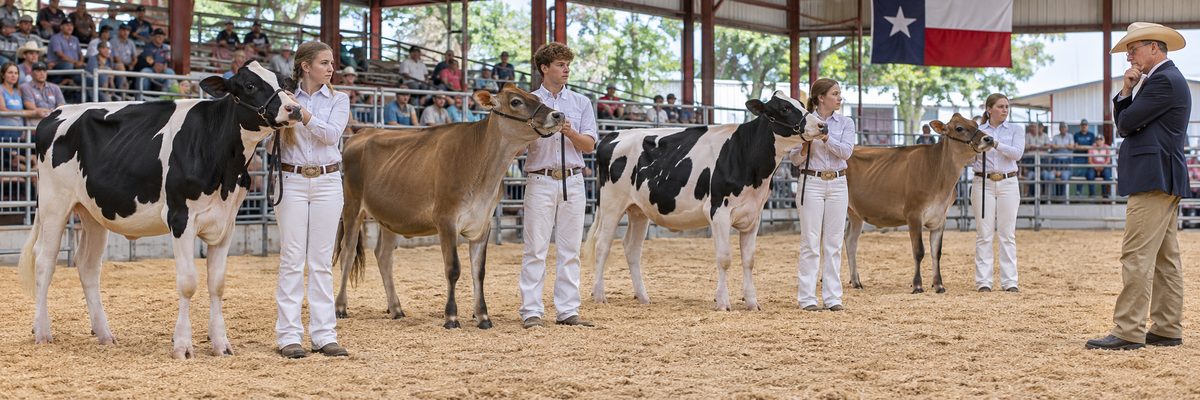
A dairy skillathon is a contest where you rotate through stations and prove you know the stuff that happens in a dairy operation when nobody is showing a cow. You may identify a feed sample, name a piece of milking equipment, answer a few questions on farm safety, and then place a class of heifers. It is part pop quiz, part scavenger hunt, and part test of whether you can read a label without panicking.
Contest rules differ by state, so start with your own contest notice. What follows draws on published skillathon formats from several state programs and tells you how to build practice that carries over to whichever one you enter.
What a skillathon usually includes
Two public examples give a feel for the range. Virginia's 4-H/FFA dairy skillathon, described on the Virginia Tech youth dairy page, uses these classes:
- Feeds, with identification and multiple choice questions
- Dairy products, identification and multiple choice
- Dairy equipment, identification and multiple choice
- Anatomy and dairy breeds
- Dairy management, multiple choice
- Farm safety, multiple choice
- Two judging classes, with reasons on one
In that contest, each class carries the same point value, contestants cannot bring books or notes into the contest area, and teams of three or four count the top three scores. Phones and electronics are off limits during the contest.
North Carolina State Extension describes its dairy skillathon as including the identification of dairy products, feedstuffs and milking and dairy equipment, the evaluation of forage samples, the evaluation and judging of dairy cattle, and problem-solving. Teams there have four members, and the lowest score is dropped as the alternate.
Wisconsin's 4-H dairy pages list skillathon topics that have included feed ingredients, dairy cattle identification, careers in the dairy industry, bio-security, parts of the udder, the dairy cow's digestive system, identifying dairy products, artificial insemination equipment and evaluating pedigrees. In other words, the possible list is long, and your contest may pick any slice of it.
Build practice stations at home
The fastest way to learn a skillathon is to build one. A card table, a few jars and a phone camera get you most of the way there.
| Station | How to build it | What to practice |
|---|---|---|
| Feeds | Small labeled jars or bags: corn silage, haylage, alfalfa hay, whole cottonseed, soybean meal, ground corn, minerals, and so on, from your own dairy or a feed dealer | Name it, say whether it is a forage, energy or protein feed, and say what it does in a ration |
| Dairy products | A few packages: milk, cheese, butter, yogurt, ice cream, cottage cheese | Identify each and know the basic category |
| Equipment | Photos or real items from a parlor or calf barn: teat cup liner, strainer, calf bottle, CMT paddle, hoof knife, halter, show stick | Name it and say what it is for |
| Anatomy | Diagram of the cow, udder and digestive system | Label each part, and learn the four compartments of the stomach |
| Management and safety | Write 10 multiple choice questions per topic from extension publications | Calf care, milking routine, biosecurity, safe handling |
| Judging | Photo classes or a local farm visit | Placing and reasons |
Feed ID is a good example of how practice pays. A feed bunk full of unlabeled things looks like a salad to an outsider, and a team that has handled each ingredient will identify it in seconds. Ask your local dairy or feed dealer for small samples, and be polite about it. They will usually tell you more than you asked.
Forage and feed basics
Forage evaluation shows up in several contest formats, so it helps to know what a quality sample looks like. Practice with real samples of hay or haylage, noting leaf-to-stem ratio, color, smell and any mold or foreign material. To go deeper, see how to sample forage for a lab analysis and how to read the results in a forage test. If the contest puts a ration or feed sheet in front of you, the guide on reading a dairy ration report can help.
Safety counts, so study it
Farm safety is its own class in some contests, and the questions are usually common sense plus a few specifics. Study basics like behavior around fresh cows and bulls, PTO and tractor hazards, and manure pit gas. A good starting point is dairy farm safety rules for kids and teens. You will also be glad later that you learned it.
Practice plan for a team
- Get the official rules and study list. If there is no list, ask the organizer which categories to expect.
- Assign each member two or three stations to build and teach. Rotate every few weeks.
- Run timed rotations. Set a timer for each station, with no notes, no phones, and no whispering. Skillathon stations go by fast.
- Score everyone. Keep a spreadsheet by station. If the team is weak on equipment, the next practice is equipment.
- Review mistakes right away. Do not wait for the next week. Mistakes are fresh for about an hour.
Skillathon knowledge overlaps with the dairy quiz bowl, so a team that studies for one is studying for both. Breed and anatomy stations are easier if you have practiced telling the breeds apart, and the judging classes use the same skills described in these dairy judging contest tips.
Mistakes to avoid
- Studying only the cow. The stations are about feed, milk, equipment and safety as much as cattle.
- Guessing an ID without reading the question. The question may ask what a feed is used for, not what it is called.
- Neglecting the alternate. The alternate is the person who gets a bad stomach on contest morning. Train all of them.
- Ignoring dairy products. They are the easy points, and lots of teams still miss them.
Quick answers
What is a dairy skillathon?
It is a hands-on contest where youth rotate through stations testing practical dairy knowledge such as identifying feeds, products and equipment, answering management and safety questions, and sometimes judging cattle. Formats differ by state.
How many people are on a skillathon team?
Often three or four. In some contests the lowest score on a four-person team is dropped, and in others the top three scores count, so check your own rules.
Can I use notes in a skillathon?
Usually not. Virginia's contest, for example, does not allow books, notes or electronic devices in the contest area, so plan on knowing the material cold.