Barns, Cow Comfort & Equipment
Using Temperature-Humidity Index in the Barn
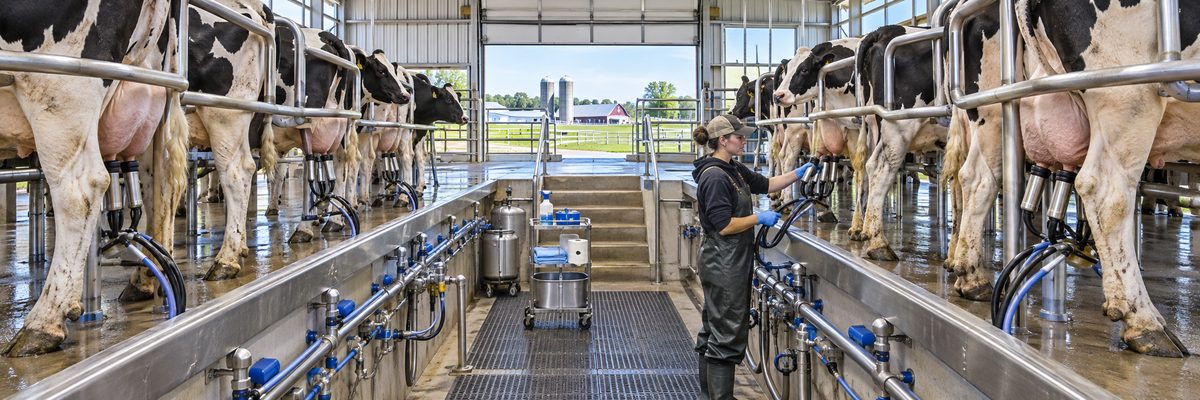
A cow can be heat-stressed on a day that feels perfectly fine to the person feeding her. That's the problem with using the thermometer on the porch as your cooling plan. Temperature is only half the story, because humid air keeps a cow from shedding heat, and that's what the temperature-humidity index, or THI, is built to account for.
THI is one number that combines air temperature and relative humidity. The higher it goes, the harder it is for the cow to cool herself and the more milk, fertility and comfort start to slip. Most extension guidance puts the first signs of stress at a THI around 68, which can happen on a moderately warm, sticky morning, not just a scorcher.
So the useful question isn't "how hot is it?" It's "what's the THI at cow height in my barn, and what do I do at each level?"
What the numbers mean
University of Minnesota Extension lays out a clear scale, with respiration rates and milk loss that give the numbers a face:
| THI | Stress level | Respiration (breaths/min) | Typical milk loss |
|---|---|---|---|
| Under 68 | None | 40 to 60 | None expected |
| 68 to 71 | Mild | 60 to 75 | About 2.5 lb per day |
| 72 to 79 | Mild to moderate | 75 to 85 | About 6 lb per day |
| 80 to 90 | Moderate to severe | 85 to 100 | About 9 lb per day |
| 90 to 99 | Severe | 100 to 104 | Over 10 lb per day |
Those milk loss figures are averages from that source, and they show up a couple of days after the heat starts. So a cow that looked fine Tuesday can be down on Thursday, and the cost is already on the milk check before anyone notices a thing. Your herd's response will depend on production level, breed, shade, airflow and how acclimated the cows are. Jerseys and crossbreds often handle heat differently than high-producing Holsteins, and dry-lot herds in the Southwest live with heat in a different way than a Wisconsin herd that sees a short summer spike.
Reading a THI chart
Most extension offices, universities and dairy equipment suppliers publish a THI chart, a grid with temperature down one side and relative humidity across the top. Find your air temperature, slide across to the humidity, and read the number in the box. Color bands usually mark the stress levels.
Two practical points:
- Use the same chart every time. Different charts use slightly different formulas, and arguing over a point or two on a hot Tuesday doesn't help the cows.
- Read the sensor you trust. Many controllers and phone apps calculate THI for you. Check one against a handheld reading when you set it up.
Don't use the official weather station reading from town. The barn runs warmer than the airport, and the holding pen runs warmer than the barn.
Where to put the sensor
Ohio State University Extension advises placing sensors at cow height in holding or resting areas, away from offices and breezeways. That's the part people get wrong. A sensor on the wall by the milk house door reads the temperature where the cows aren't. If you manage several pens, put one in the pen that's most at risk, usually the holding area and the high-producing or fresh cow groups.
Check calibration at the start of each season. A sensor that reads two degrees low will quietly shave off the cooling you needed.
Setting your cooling triggers
Ohio State suggests starting cooling when THI hits roughly 65 to 68, which is about 70 to 75 degrees Fahrenheit at moderate humidity. The University of Wisconsin subtropical cooling paper uses a similar rule, turning on fans at 68 degrees or at THI 68 if a humidity sensor is in use. Starting earlier costs a little electricity. Starting late costs milk, breeding and cow comfort that don't come back quickly.
A workable staged plan looks like this:
- Around THI 65 to 68: start fans in the holding pen and over the stalls and feed line.
- Around THI 68 to 72: add soakers at the feed line and in the holding area, running on a cycle. Sprinklers and soakers for heat-stressed cows has timing ideas.
- THI above 72: run everything, check water supply, shorten holding time, and consider moving the most heat-sensitive cows to the cooler parts of the barn.
- THI in the 80s and up: treat it as an emergency. Watch fresh cows, close-up cows and the big producers for open-mouth panting.
The right trigger for your herd may differ. Southeast and humid regions tend to need cooling earlier and for longer, because evaporation is limited. Dry-air regions can lean more on evaporative cooling. Humid heat cow cooling in the Southeast shows what that looks like in practice.
THI is a tool, not the whole barn
THI tells you the weather. It doesn't tell you what the cows are doing about it. A barn with great airflow and shade may have comfortable cows at a THI where another barn is struggling. That's why you pair the number with what you see: respiration rate, bunching, standing time, drop in intake. Reading cow behavior to spot heat stress goes through what to look for.
Minnesota's emergency thresholds are worth keeping on the wall: if more than about 10 percent of cows are breathing over 100 breaths per minute, or more than 5 to 10 percent have body temperatures above 105 degrees, you've got a problem that needs action now. A sick cow in that situation is a call to the herd vet.
Cows have a reputation for knowing the weather before the forecast does. This farm.FM piece on using your cattle to predict the weather is a fun read on tuning into what they're telling you, and the cows haven't once been wrong about the barn being too hot. For action, though, you still want a sensor and a number.
Common THI mistakes
- Using temperature alone and starting cooling too late on humid days.
- Putting the sensor in a cool spot. The sensor never lies, but it can be standing in the wrong place.
- Ignoring nights. If the barn doesn't cool off overnight, cows start the next day behind.
- Forgetting the holding pen, where cows stand tightly packed for up to an hour. Cooling the holding pen before milking deals with it.
- Skipping maintenance. A THI trigger that starts a fan with a slipping belt is just good intentions. How many fans a dairy barn needs covers the checks.
For the full scale and cooling recommendations, see University of Minnesota Extension on heat stress in dairy cattle and Ohio State's cool tips for dairy cows.
Quick answers
At what THI do dairy cows start heat stress?
Extension sources generally put the onset around THI 68, with mild stress from 68 to 71 and rising from there. Many herds start cooling slightly earlier, around 65 to 68.
How do I calculate THI?
Use a chart from your extension office or a controller or app that combines air temperature and relative humidity for you. Use the same method each time and put the sensor at cow height.
Does THI matter in cold climates?
Yes, even in the Upper Midwest and Northeast, summer THI can climb into the stress range for several weeks. A short season still costs milk, so a simple plan beats improvising.