Barns, Cow Comfort & Equipment
Tunnel Ventilation for Dairy Barns Explained
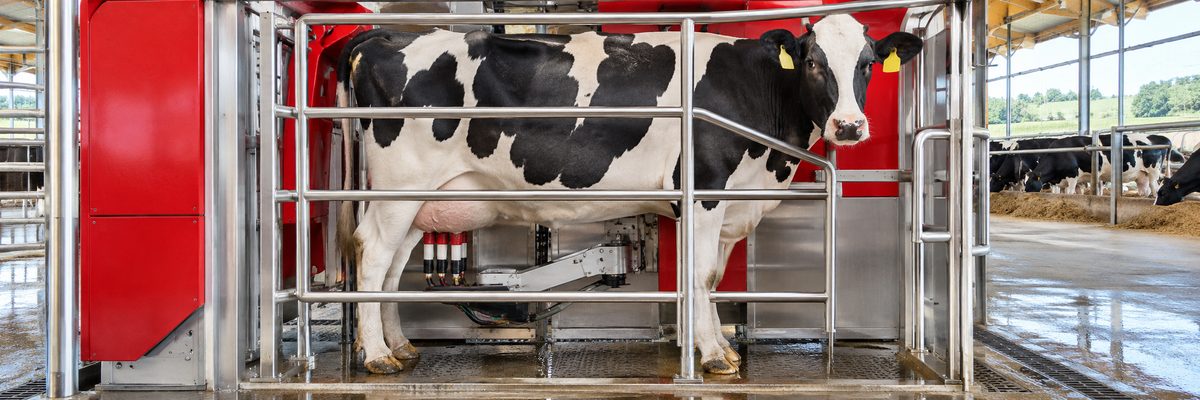
Tunnel ventilation is what happens when you decide the wind isn't reliable enough to be in charge of your cows. Instead of waiting for a breeze, you close up the building, put a bank of big fans on one end, open inlets on the other, and pull air down the barn at a steady speed. Think of a wind tunnel, only the test subjects chew cud and don't sign waivers.
It's most common in long, narrow barns in hot regions and in larger dairies where the payoff on milk and cow health justifies the building changes. It is not a bolt-on. The barn has to be built or modified to hold it, and that's where most of the cost and the surprises live.
If you're weighing it against open sidewalls with fans, the short version is this: tunnel gives you control and airspeed, and takes away your free power from the wind. Whether that's a good trade depends on your climate, your herd size and how many extra hours of heat-stressed cows you want to live with.
How it works
A tunnel barn is basically a sealed tube. Curtains or walls close the sides and the roof is tight. Inlets at one end let air in, and large exhaust fans at the opposite end pull it through. Air flows past the cows along the length of the barn at a speed you can predict, rather than a speed that depends on what the weather's doing.
The airspeed is the point. In hot weather, moving air across the cow is what carries heat off her body. A University of Wisconsin biological systems engineering paper on cooling in humid subtropical climates lists a target of roughly 433 to 704 feet per minute at cow level for mechanical ventilation, along with a summer minimum on the order of 1,000 cubic feet per minute per cow. It also notes that fans in staged systems reach full operation around the low 70s in degrees Fahrenheit. Those figures come from a warm, humid region, so they're a reference point, not a design for your barn. A British Columbia provincial guide, for comparison, sets a minimum of about 200 feet per minute over resting cows, with about 400 preferred in hotter conditions.
What the building has to provide
- A tight, even cross-section. Air takes the path of least resistance. Gaps, open doors and uneven roof lines let it skip the cows and leave dead spots.
- Controlled inlets. Fresh air should come in evenly and at speed. Inlets that are blocked, torn or left half-open ruin the pattern.
- Enough exhaust capacity. Fans are staged, with some coming on early and the full set at higher temperatures. That staging is what keeps electric costs sane.
- A good controller. Sensors at cow height, not by the office door, with a THI or temperature setpoint.
- Backup power. A sealed barn without moving air is a bad place to be, and the power company picks the worst day to prove it. If the power goes out in July, you need a plan and a generator or an easy way to open the barn up.
Length matters, and the cow at the far end will tell you so. Nobody enjoys being the last one to get the air everyone else already breathed.
Air picks up heat, moisture and ammonia as it travels, so the cows at the exhaust end get warmer, wetter air than the ones at the inlet. Designers deal with this by limiting barn length, staging fans, or adding cooling at the inlet. It's something to raise with any designer who says the barn can be any length you want.
Adding cooling to the tunnel
Tunnel ventilation is often paired with evaporative cooling, either pads at the inlet or misting, plus soakers at the feed line. This works best in drier climates. The Wisconsin paper gives an example of evaporative cooling at 90 degrees and 60 percent relative humidity lowering air temperature by about 8.6 degrees, which works out to a THI reduction of about 3. In humid regions, the gain is smaller, so don't count on evaporation to do all the work. A BC guide similarly warns that evaporative cooling of incoming air loses effectiveness above about 60 percent relative humidity.
If you're in the Southeast or the Gulf region, humid heat cow cooling in the Southeast goes into what works when the air is already wet. For dry heat, cooling cows in Arizona and New Mexico summers covers a different set of tools.
What it really costs
Skip the dollar figures you'll see in brochures, which are always for the barn you don't have. Capital cost depends on barn size, existing structure, the number and size of fans, controls and whether you're building new or retrofitting. Get at least two written quotes from different suppliers and ask for the full scope, including curtains, inlets, controls and electrical work. How much a freestall barn costs per cow shows where ventilation sits in a complete barn budget.
Running cost is easier to estimate than people think. The Wisconsin paper gives a worked example for forty one-horsepower fans running through a Florida cooling season at about eleven cents a kilowatt hour, which came out to roughly $22,000 a year in electricity. That's one example in one climate, not a quote, but it shows the point: fans are a real line item, and staging and setpoints matter. Ask the supplier to model run hours for your region and your power rate.
Tunnel vs. open barn with fans
| Question | Natural ventilation plus fans | Tunnel ventilation |
|---|---|---|
| Airspeed control | Depends on weather | Consistent and adjustable |
| Winter airflow | Passive, easier to run dry | Needs careful staging and inlets |
| Power dependence | Lower | High, backup required |
| Building changes | Often modest | Often significant |
| Best fit | Moderate climates, open sites | Hot climates, large herds, long narrow barns |
If your region gets only a few weeks of real heat, the open-barn route may be enough. Natural ventilation in freestall barns explained shows how far a good open barn can take you, and how many fans a dairy barn needs covers the middle option.
Before you commit
- Visit two or three tunnel barns that have run through at least a couple of summers and a winter. Ask what they'd change.
- Check how the system behaves in cold weather. A summer system that can't ventilate gently in January isn't a full solution.
- Ask about power: what happens in an outage, and how fast the barn can be opened.
- Look at maintenance: fan belts, shutters and curtain mechanisms need regular attention, and a tunnel with half its fans working isn't a tunnel.
- Talk to your milk buyer and lender about the timeline and payback. Milk response to cooling varies by herd and by region.
For design resources, check with your state's land-grant dairy extension. UW-Madison Dairy Extension is a good starting place, and the University of Wisconsin cooling paper for subtropical climates lays out the numbers cited above.
Quick answers
What is tunnel ventilation in a dairy barn?
It's a mechanically driven system in a closed barn where large fans at one end pull air from inlets at the other, moving air down the barn at a controlled speed. It's meant to give cows consistent cooling regardless of wind.
Is tunnel ventilation worth it for a small dairy?
Usually it's a better fit for larger herds in hot regions, where the cost is spread over more cows. Smaller herds often get more value from fans, soakers and shade in an open barn.
Can you use tunnel ventilation in cold climates?
Yes, but it needs winter staging and careful inlets so cows aren't in a draft and the barn stays dry. Ask the designer how the system will run in your coldest and wettest weeks.