Barns, Cow Comfort & Equipment
How to Size Freestalls for Your Cows
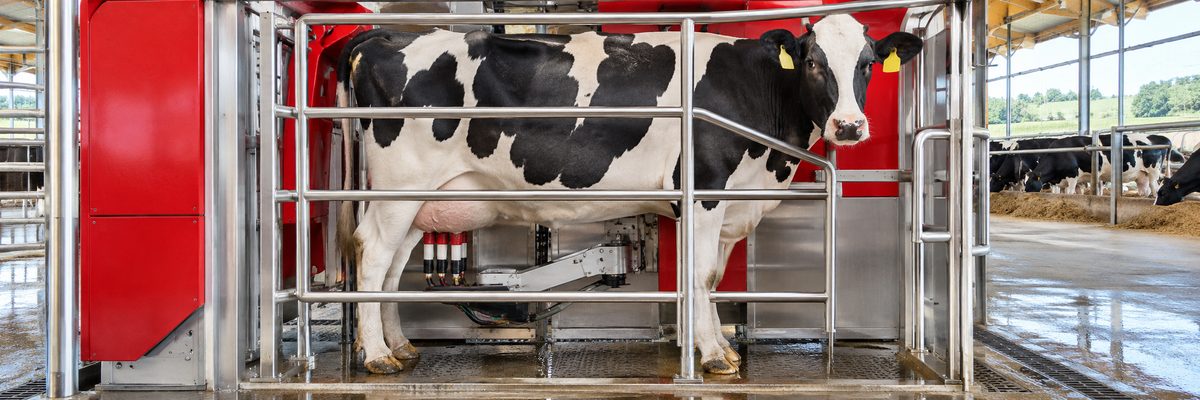
Freestalls are sized to the cow, not to the catalog. A stall that fits a 1,000-pound Jersey will have a 1,600-pound Holstein lying crooked, perching with her front feet on the bed, or giving up and sleeping in the alley. Width, length and lunge space all scale with body size, and getting them wrong costs you lying time, which is milk.
The short version: for mature Holsteins in the 1,300 to 1,500 pound range, plan on stalls about 45 to 48 inches wide center to center, roughly 9 feet long against a wall (a little shorter with open front lunge space), and a rear curb no taller than about 8 inches. Smaller breeds step down from there, and your biggest cows step up. Nobody has ever complained that a cow was too comfortable, though a few contractors have complained about the bill.
Start by measuring the cows you actually have
Catalog dimensions assume an average cow. Your herd is not an average, it is a pen of individuals, and the ones that cause trouble are the big ones in third lactation and beyond. Before you cut a single pipe, put a tape on the cows.
Walk the high-group pen and estimate body weight, or better, pull recent weights if you have a scale at the parlor exit. Measure the largest cows in the group for body length and hip width. Then design for the upper end of the herd, not the middle. A stall that fits the biggest cows fits everyone else, while the reverse makes a big cow wear a stall like a pair of borrowed boots.
Heifers, Jerseys and Brown Swiss are not Holsteins, and mixed-breed herds need a decision up front. Many small herds run one stall size and accept a compromise, which is fine as long as you know whose comfort is being traded. Larger herds usually group by size and build different stalls for first-lactation animals.
Typical dimensions by cow weight
Penn State Extension publishes a freestall table that is a solid starting point. The figures below are drawn from it and rounded into ranges, so treat them as guidance and check your own plans against the Penn State freestall design guide before you order steel.
| Cow weight | Stall width (center to center) | Length, closed front (wall or head-to-head) | Length, open front |
|---|---|---|---|
| 900 to 1,100 lb | 41 to 43 in. | 90 to 96 in. | 78 to 82 in. |
| 1,100 to 1,300 lb | 43 to 45 in. | 96 to 102 in. | 80 to 86 in. |
| 1,300 to 1,500 lb | 45 to 48 in. | 102 to 108 in. | 90 to 96 in. |
| 1,500 to 1,700 lb | 48 to 52 in. | 108 to 114 in. | 96 to 102 in. |
Other university tables will differ by an inch or two, and that is normal. Designers argue about those inches the way farmers argue about corn hybrids. What matters is that you land in the right neighborhood and that every dimension below works together.
Width: the inch that decides who lies down
Width is the dimension farmers shave first, because every inch multiplied by a barn full of stalls adds up in concrete and roof. It is also the one cows complain about loudest. A stall that is too narrow makes a cow lie with her legs jammed against the divider, or choose not to lie at all. Too wide, and she may turn around or lie crossways, which puts her rear end in the alley, and then you are hosing manure out of the bed.
If your herd runs heavy and you are choosing between 45 and 48 inches, 48 is the safer bet for mature Holsteins. The difference is one extra inch per cow-side, but you can feel it when you watch them lie down.
Length and lunge space
A cow rises by throwing her head forward and her weight onto her front knees. She needs room ahead of her to do it, and that room is called lunge space. Closed-front stalls (against a wall, or head to head with another row) have to be longer because the cow cannot swing her head through the front. Open-front stalls can be shorter because she can lunge into the open space beyond the stall.
The common mistake is putting a solid obstruction, such as a feed rail, a wall or a bolted-on pipe, right where her head needs to go. The result is a cow that rises slowly, rises sideways, or never quite gets up until you walk behind her. Extension guidance is to keep the front of the stall clear of obstructions; Penn State describes an open-front stall as needing an unobstructed opening about 32 inches high across the full width.
For a cow of 1,300 to 1,500 pounds, the Penn State table above works out to about 68 to 70 inches of body space plus roughly 38 to 40 inches of head and lunge room in a closed-front stall. That is where the "about nine feet" rule comes from, and it is the figure to beat if you can.
Bed height, curbs and slope
The curb at the rear of the stall should be tall enough to hold the bed and short enough that a cow can step up without catching a hoof. Most recommendations land around 8 inches for sand stalls and mattress platforms. Higher than that and cows hesitate at the step, and your lame cows will tell you first.
The bed itself should slope slightly upward toward the front, about an inch or two along the length of the bed. Mattress stalls need a firm, flat base and a modest layer of fresh bedding over the top. Sand stalls need depth, and keeping that depth topped up is an ongoing job, covered in keeping freestall bedding dry and clean.
Dividers, neck rails and brisket locators
Once you have width and length right, the hardware decides whether the stall actually works. The neck rail sits over the cow and keeps her from walking forward too far into the bed. The brisket locator stops her from sliding too far forward and gives her something to push against when she rises. Position either one badly and you get cows standing half in, half out, which is a whole subject of its own: neck rail and brisket locator placement.
If cows are already perching, the cause is usually the stall rather than the cow, and why cows stand half in, half out of stalls walks through what to check first.
Checklist before you build or retrofit
- Estimate the heaviest cows in the pen, not the average cow.
- Measure width, length and curb height of existing stalls in three or four places. Old barns drift.
- Confirm the front of each stall is clear of pipes, rails and feed-alley obstructions.
- Choose a bed style (sand, mattress, or something else) before fixing the curb height, since it changes the numbers. The tradeoffs are in sand versus mattress stalls.
- Walk the barn at night and watch which stalls are empty and which are crowded. Empty stalls in a full pen are usually a design message.
- Price the change before you pull a single bolt. What a freestall barn costs per cow is a useful reality check.
Common mistakes to avoid
- Sizing stalls for the average cow and ignoring the bigger ones.
- Putting the divider loops or rails at a height that blocks side lunge for the big cows.
- Letting the bed wear down so the effective curb gets higher every month.
- Assuming a retrofit stall catalog number matches your barn, without checking the slab dimensions.
- Skipping the night walk. Cows tell you more in one evening than a spec sheet will.
If you only have an hour, the cow comfort walk-through will show you whether your stalls are the issue or whether the problem is somewhere else, like the water tub that is too far from the pen.
Quick answers
How wide should a freestall be for Holsteins?
Mature Holsteins in the 1,300 to 1,500 pound range generally do well with stalls about 45 to 48 inches wide, center to center. Bigger cows, around 1,500 to 1,700 pounds, need 48 inches or more. Watch how your own cows lie and adjust.
How long should a freestall be?
For mature Holsteins, plan on roughly 9 feet against a wall or a closed front, and a bit less if the front is open and the cow can lunge forward. Head-to-head platforms need much more total length because two cows share the space. Measure your biggest cows first.
Can I use one stall size for the whole herd?
You can, but you are choosing which cows to disappoint. If the herd is mostly one breed and a similar size, one size works. If you have a mix, building a smaller stall for heifers and first-calvers is cheap insurance.