Barns, Cow Comfort & Equipment
Tiestall Length, Width and Tie Chain Setup
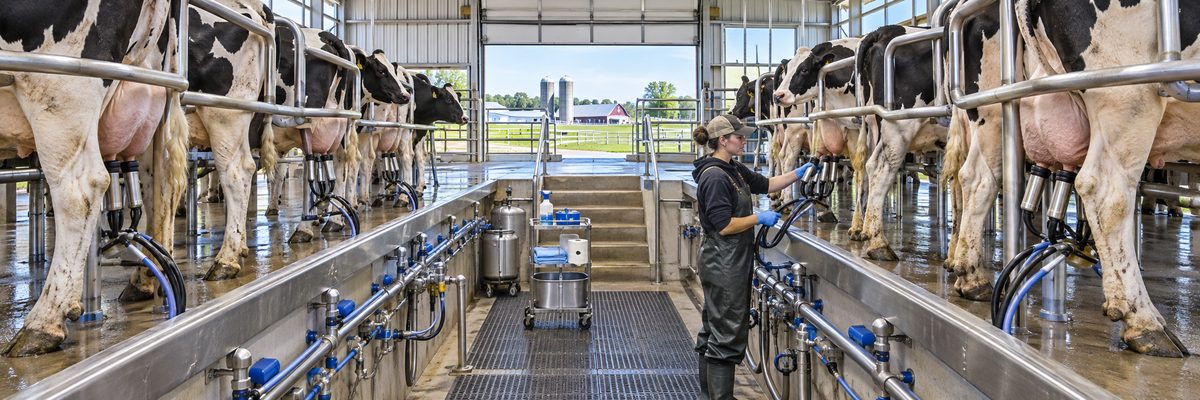
Most tiestalls in the country were built for a cow that no longer exists. She was smaller, she gave less milk, and she didn't mind sharing a bed with a six-inch curb. Today's Holstein is bigger, and the stall that fit her grandmother now has her standing half in the gutter or lying with her legs tucked like a lawn chair.
Here is the short version. Platform length for a mature Holstein generally runs somewhere around 84 to 90 inches depending on whose design table you read, width runs in the mid-50s to 60 inches center to center, the tie rail sits about 48 inches over the bed, and the neck chain should be short enough that she can't get a leg over it but long enough that she can still stand, lie, and reach her feed. Everything else is adjusting those numbers to the cows you actually have, not the cows in the drawing.
Don't bring a tape measure to the barn expecting the barn to be right. It won't be. Bring it to measure the cows, who will hold still exactly never.
Start with the cow, not the blueprint
Tiestall design tables are written around cow size, usually body weight or rump height. The University of Wisconsin's Dairyland Initiative lists mature Holstein stalls in three groups, and the width and chain numbers step up with the cow:
| Cow size (Holstein) | Approx. weight | Stall width | Chain and clasp, total |
|---|---|---|---|
| Small | 1,400 lb | 54 in. | 34 in. |
| Medium | 1,600 lb | 57 in. | 36 in. |
| Large | 1,800 lb | 60 in. | 38 in. |
Ontario's cow comfort guidance lands in the same neighborhood from a different direction: loops or dividers mounted on roughly 54-inch centers for an average mature cow, with herds ranging from about 50 to 60 inches depending on cow size. It also suggests building wider than the bare minimum, because a stall just wide enough for her hips leaves her no choice in how she lies.
If you milk Jerseys, Guernseys or Ayrshires, you can run narrower and shorter. With mixed sizes, the honest answer is two or three stall sizes, which is easier said than done in a barn with a concrete floor and a ninety-year-old mortgage on the wall.
Length: how far back the bed should run
Platform length is the distance from the manger curb to the gutter curb. Too short and her hind feet end up on the gutter edge, which means a sore hock and a cow that lies down only when she's too tired to stand. Too long and she backs up, drops her manure on the bed, and you scrape it by hand twice a day.
Ontario lists about 70 inches for first-lactation heifers and about 72 inches for mature cows on the lying platform itself, while the Wisconsin tables work from the larger overall stall lengths in the mid-80s up to about 90 inches for big cows. The numbers aren't in conflict, they're measuring from different points, so check which one a table means before you cut anything.
The tie rail: height and position
The tie rail (some folks call it the neck rail or head rail) controls where the cow stands. Set it too low and she can't rise without hitting it. Set it too high and she wanders back, ends up crooked, and wears a bald spot on her neck or damages her spine.
- Height. Wisconsin recommends about 48 inches above the stall surface. Ontario ties the height to rump height, about 0.8 times, with 44 to 48 inches typical. Heights above roughly 48 to 50 inches risk neck and spinal injury.
- Position. Roughly 8 inches forward from the cow-side edge of the manger curb in the Wisconsin design, or 8 to 12 inches forward of the curb center in Ontario's, so she stands over the manger rather than behind it.
- Cow trainer. If you use one, it goes about 48 inches forward of the rear curb point for Holsteins, set just above the backline and raised a couple of inches after the cow learns the drill. Adjust it for every new cow. A trainer that never moves is just an electric fence in a bad mood, and she'll learn to ignore it in a week.
Tie chain setup
The chain is where most tiestall comfort is won or lost. The rule everyone repeats is simple: the chain should reach no farther than the top of the manger curb. A longer one lets the cow get a front leg over it, and a leg caught in a chain is a ruined evening and sometimes a ruined leg.
- Measure from the underside of the tie rail to the top of the manger curb. That's your maximum chain length, clasp included.
- Start with the table length for her size (about 34 to 38 inches total, with 36 a common middle).
- Mount the chain bracket so it runs fore and aft, not sideways, to cut down on leg entrapment.
- Keep the clamp tail from sticking up. A tail pointing at her neck eventually finds it.
- Watch her stand and lie down. If she has to fight the chain to rise, it's too short. If she can step sideways out of line, it's too long.
Ontario also notes that cows in heat may need a slightly longer chain to show it, and a shorter one for roughly a day while you're trying to catch a breeding. Whether that fits your routine depends on how you detect heat, and your herd vet or reproduction advisor can help you decide.
Curbs, beds and the stuff that gets overlooked
A tall manger curb is the sneaky villain in older barns. Wisconsin recommends no more than about 8 inches on the cow side, since anything over about 4 inches makes rising harder. A cow can't lunge forward over a curb that fills her field of motion, so she waits. Waiting means standing, and standing is hard on feet.
Bedding choice changes the stall dimensions you can live with. Wisconsin calls deep sand the optimal choice, with a retainer to hold it, and treats mattresses as the second option. Ontario says solid mats need a generous cover of bedding, at least about 3 inches, and that mats and mattresses lose their softness and need replacing after a few years. If you're picking between them, choosing stall mattresses for dairy cows covers the tradeoffs.
Tiestalls are still common in the Northeast and parts of the Upper Midwest. If you're working inside an old bank barn, updating a Northeast tiestall barn without rebuilding is a practical place to start, and tiestall comfort upgrades that pay off sorts the upgrades by what they return.
Mistakes that show up in every tiestall barn
- One size for the whole row. The first-calf heifer and the old cow in stall 14 don't share a hip width. Put big cows on the wider stalls and heifers on the narrow ones where you can.
- Measuring the empty stall. Measure while the cow is standing in it. The stall she can't fit is the one with a belly rubbed raw.
- Skipping the lying check. Walk the barn when the cows are supposed to be resting. If most are standing, your numbers are wrong or the beds are.
A decent habit: add a stall check to your regular rounds. The cow comfort walk-through you can do in an hour shows what to look for, and that's about the only thing in the barn you can fix with a wrench and an hour.
One more thing: Canada has been moving away from continuous tethering in new construction, and US expectations vary by milk buyer and certification program, so ask your handler before you pour new concrete. For a barn that is not tiestall, how to size freestalls for your cows has the numbers.
Source tables to compare: the UW-Madison Dairyland Initiative tiestall design page and Ontario's tie-stall dimensions guide.
Quick answers
How wide should a tiestall be for a Holstein?
For mature Holsteins, design tables run roughly 54 inches for smaller cows up to about 60 inches for large ones, measured center to center. If your herd has mixed sizes, size for most of the cows and give the biggest ones the widest stalls.
How long should a tie chain be?
Typically about 34 to 38 inches including the clasp, depending on cow size, and never longer than the distance from the tie rail down to the top of the manger curb. If a cow can get a leg over it, it's too long.
How high should the tie rail be?
Around 48 inches above the stall surface for mature Holsteins is the usual starting point, lower for smaller breeds. Adjust by watching how she stands, rises and lies down, and don't go much above 48 to 50 inches.