Youth, Shows, Careers & Dairy Life
Things Every Dairy Kid Learns Before Age Twelve
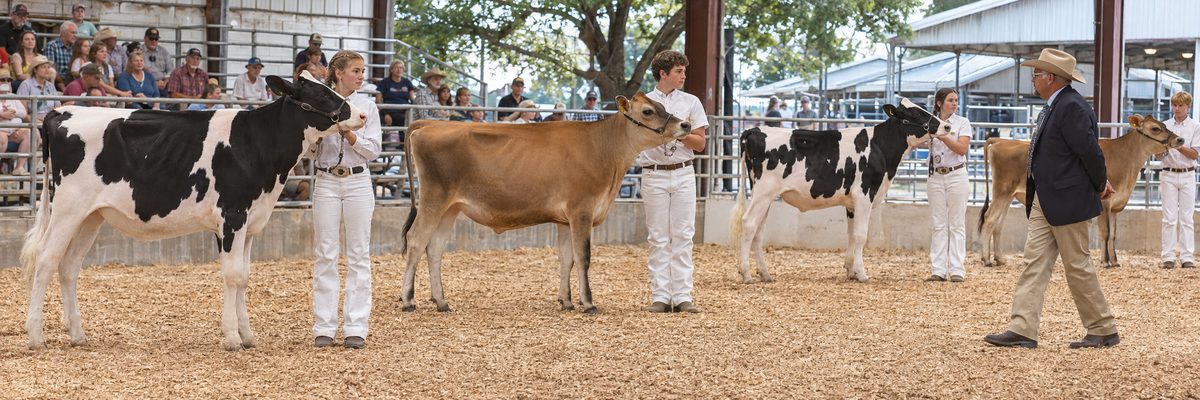
Ask a dairy kid what they did over the weekend and the answer is "chores," same as the weekday answer, minus the school bus. Somewhere in there they also learned things that most adults pay a lot of money to attend seminars about: reliability, observation, and the fact that a living thing doesn't take a day off because you'd like to go to the lake.
This isn't a how-to list. It's a collection of lessons that show up in dairy families so reliably you could set your watch by them, with a few notes for parents on turning the barn into a safe and good place to grow up. Not every kid gets all of them, and some skip a few if the family farm has a robot in it. But most would nod.
1. Cows keep a schedule, and so do you
The first big lesson is that milking happens twice a day, and the cows are not flexible about it. A kid who grows up in a dairy learns early that other people and animals depend on you showing up at the same time, again and again, whether it's warm, raining or your birthday. That sticks. Teachers and future bosses can tell, and they appreciate it.
It's also the reason a dairy kid is the one who arrives early to everything and looks vaguely suspicious of anyone who doesn't.
2. You can tell a lot by looking
Dairy farmers spend a lot of time just standing and watching cows. Are they eating? Are they lying down? Is anyone standing off by herself? Kids pick this up faster than you'd think. A ten-year-old who can say "number 214 isn't right" and be correct is already doing the most valuable work on the place. It's what the pros call observation, and it's the base of every herd health program. If you want to see where that skill leads, what a dairy herdsman does all day is mostly just this, with a clipboard.
3. Animals are living things, and that includes the bad days
Barn kids learn that animals get sick, calves are born at all hours and sometimes things don't turn out the way anyone wanted. That's a heavy lesson, and the way the adults handle it matters. Kids do best when someone tells them what's happening in plain language, lets them be sad and shows them how the family does the right thing for the animal. It's a good lesson in being responsible for something that can't speak for itself.
4. A bottle calf is a full-time relationship
Few things teach responsibility faster than a hungry calf at the gate at five in the morning. A first calf is a gentle introduction to feeding, cleanliness, watching for scours and understanding that a skipped feeding is somebody else's problem. If your kid is ready for a calf of their own, raising a bottle calf for 4-H is a sensible place to start. And yes, the calf will chew on your jacket, your boots and your hand, in that order of affection.
5. Safety rules aren't suggestions
Dairy kids grow up around big animals and big machines, and they pick up a respect for both. The rules are simple and boring and they matter: stay out of a cow's blind spot, never stand behind a nervous heifer, keep clear of gates under pressure, stay away from the manure pit, and ask before you touch a machine. The dairy farm safety rules for kids and teens are worth reading together, and so is the national farm safety work at Cultivate Safety. Kids can handle real rules when they come with real reasons. Telling a nine-year-old "because I said so" works about as well as telling a cow.
6. Wash your hands, then wash them again
Hygiene in a dairy isn't a nicety. Milk is food, and calves are fragile. Kids learn to scrub boots, rinse buckets, wash bottles properly and wash up before eating, and they carry that habit into every kitchen they'll ever stand in. They also learn the specific smell of a barn, which follows them to school, church and every first date, and which they stop noticing around age six.
7. Work is part of the family
A lot of dairy kids learn what a working family looks like, with real jobs and real contributions, from the day they can carry a bucket. Done right, it gives them pride in what they can do. Done wrong, it feels like free labor with no thanks. The difference is mostly in the tone: assign jobs that match their size and skill, let them see how the work connects to the milk check, and say thank you out loud. A kid who learns what a good day's work feels like never really loses it.
8. Barns have a sense of humor, and so do the people in them
You can't spend years in a barn without developing a dry sense of humor. The cow who steps on the milker at the exact moment the vet arrives, the gate that never latches, the heifer who knows precisely where the weak spot in the fence is. Kids soak up the jokes along with everything else, and dairy families tend to be funny people whether they intend it or not. If you need a sample, these red barn jokes on farm.FM take the most famous building on the farm and hand it a punchline. And if you wonder why the barn is red to begin with, a short history of the dairy barn has the answer.
9. You can be good at something no one else at school understands
The 4-H and FFA dairy world gives kids a place to be really good at something unusual. Showmanship, judging, record books and projects teach skills that look nothing like what their classmates are doing, and they build confidence, public speaking and a thick skin when a judge likes someone else's heifer better. For the parents wondering how to get started, how to start a 4-H dairy cattle project covers the first steps without much fuss. Land-grant extension programs such as Penn State Extension's dairy resources are a good next stop for reading material.
10. Everybody's tired, and that's mostly fine
The last lesson, and not always a happy one, is that dairy work is tiring. Parents are tired, kids are tired and the cows seem to be the only ones with energy. Kids learn to keep going, and the best families teach them when to stop: to rest, to ask for help and to say out loud when something is too much. The skills of working hard and the skills of taking care of yourself belong in the same lesson plan.
A note for parents
- Teach the safety rules early and repeat them. Safety habits are built by repetition, not lectures.
- Give kids real jobs, sized to their age and ability, and supervise them.
- Explain why. A kid who understands the reason follows the rule even when you aren't looking.
- Let them have time off. A kid who gets some freedom is more likely to choose the barn later.
- Say thank you, in front of other people.
Quick answers
What age can a child start doing dairy chores?
It varies by child and by the task. Small kids can help with safe jobs like feeding bottle calves under supervision, while larger animals and equipment come later and with training. Match the job to the child, not the calendar.
How do I keep my kids safe in the barn?
Set clear rules about where kids can go, what they can touch and who's watching them, and keep them out of areas like manure pits, machinery and bull pens. Reading a safety guide together is a good start.
Does growing up on a dairy actually help later in life?
Many people say so. Reliability, observation, handling responsibility and a work ethic carry over into almost any job, whether or not the person stays in agriculture.