Do Rumination Monitors Catch Sick Cows Early
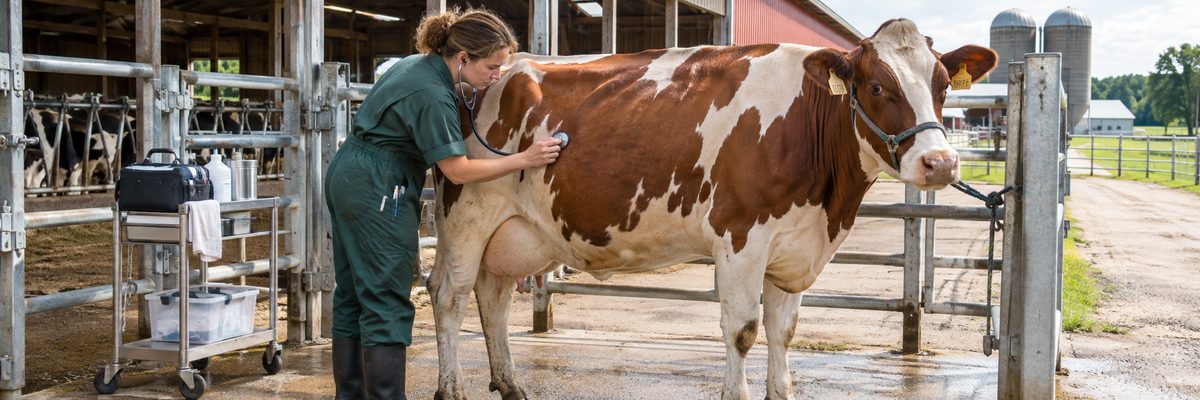
Sometimes. A rumination monitor can flag a fresh cow who has quietly stopped chewing her cud before she looks sick to the human eye, and that can save a day or two on treatment. It cannot tell you what is wrong with her, and it cannot replace somebody who walks the pens and knows a cow that looks off. Think of it as a very persistent hired hand who only knows how to say "look at number 4127."
The question for most dairies is not whether the sensors work in principle. It is whether the alerts are good enough, and whether your crew will act on them, to justify the cost. A tag nobody checks is just an expensive earring.
How the monitors work
Penn State Extension's overview of precision livestock farming dairy technologies explains that these systems use wearable sensors, often accelerometers, attached to the cow, with software that turns the data into alerts. The sensor stores behavior until the cow walks past a base station, the data goes to a server, and an algorithm decides whether she deviates from normal.
That last part is the key. Most systems set a baseline for each cow, usually a rolling average over several days, or a comparison to her own behavior over the last couple of days, or a fixed threshold. So the alert is not "this cow ruminates too little." It is "this cow is doing something different from what she normally does." A cow whose rumination time drops, whose activity changes or whose eating pattern shifts gets flagged.
Collars and ear tags are the two common wearable styles, and some farms use leg pedometers as well. Collars sit on the neck and typically track rumination and activity. Ear tags are lighter and often favored on fresh cows and heifers. Which one is better depends on the product, your barn and the money, so ask for references from herds that look like yours.
Where they earn their keep
Fresh cows
The transition period is where most farms see the payoff. Fresh cows can have ketosis, a displaced abomasum, metritis, milk fever or mastitis, and the early sign for several of them is a cow that eats less and chews less. A rumination dip can nudge you to take temperatures and run your fresh cow check protocol on the right animal the same morning.
Estrus detection
Penn State notes that most validated sensors are used for estrus detection and for checking whether a cow is pre-clinically sick. Many farms bought the system for heat detection and got the health alerts as a side benefit. If you already breed to a sensor, health alerts may cost you little extra.
Big herds and thin labor
With a few hundred cows and a crew stretched across three shifts, an alert list tells you which cows to look at first. In a 40-cow tiestall barn, the person milking probably already knows who skipped her grain. Same technology, different return.
Where they fall short
- They do not name the disease. A rumination drop is a symptom, so you still need an exam, a thermometer and a decision about treatment.
- False alerts wear people out. Penn State points out that producers often ignore alerts if the system throws too many false ones, and that many commercial thresholds were designed for other herd settings. Most software lets you adjust thresholds, so tune them to your feeding schedule, housing and routine.
- Normal events look abnormal. Moving a pen, a ration change, heat, a long wait in the holding pen or a loud day with the hoof trimmer can change behavior without any disease at all.
- Some diseases show late. Lameness, slow mastitis and some chronic problems may not shift rumination early enough to matter.
- Batteries, base stations and lost tags happen. A tag in the manure pit does not generate many insights.
Questions to ask before you buy
- What exactly does it measure: rumination, activity, eating time, temperature, or a mix?
- Has it been tested on herds like mine, with similar housing and feeding?
- Can I change alert thresholds, and who helps me do it?
- What happens to alerts when the cow is moved between pens?
- What does the subscription cost per cow per month, and what are the replacement tag costs?
- How does it connect to my herd software, parlor and records?
- Who has to look at the alerts every day, and when?
Your extension dairy specialist and your herd vet are good people to ask, since they have seen these systems on several farms. Ask your local dairy extension office for an unbiased opinion before the sales rep's second visit.
Making the alerts actually useful
Set a rule on who checks the list, when and what happens next. A workable routine looks like this: the herdsperson checks the alert list after the morning milking, walks to the flagged cows, takes temperatures where the protocol calls for it and records findings. Anything with a fever, a sunken look or a missed milking goes to the vet. You will quickly learn which alerts are usually nothing and which ones are usually the real thing.
Also keep your human checks going. Sensors work alongside normal vital sign checks, a look at the bunk, and a walk through the pens. Treating a flagged cow means following the treatment and withdrawal plan your vet set, with proper treatment records. The monitor tells you where to start. It does not finish the job.
Money-wise, work out a payback before you sign anything. Count what a missed fresh cow costs you in lost milk, treatment, extra days to breed and possible culling, and compare it to the yearly cost of the system. If you can only find a payback by assuming everything goes perfectly, the dairy gods are probably laughing.
Quick answers
Do rumination collars replace checking fresh cows by hand?
No. They help point you to the cows that need a closer look, but a temperature, an exam and a decent set of eyes are still how you decide what is wrong. Most farms use both.
Are ear tags or collars better for rumination?
Both are used successfully, and the answer depends on the product and your management. Ask for data and references from herds with similar housing, and ask what the replacement and subscription costs look like.
Will a small herd benefit from rumination monitors?
It can, mainly if you have limited labor or you want estrus detection too. In a small herd where you see every cow twice a day, the extra information is smaller, so check the payback closely.