Dairy Business, Finance & Labor
Water Costs and Rights for Western Dairy Farms
East of the Mississippi, water is mostly something that falls on the farm and needs to be drained off. In much of the West it's a commodity with an owner, a priority date and a bill. A dairy there can have perfect cows, a tight parlor and a fair milk contract, and still get into trouble because the well went down, the irrigation district raised its rates or the water right that came with the farm turns out to be less than the seller thought.
So treat water as two things at once: an operating cost you can measure, and a legal asset you have to understand. This article covers both in general terms. Water law is a state-by-state affair, so the real answers come from your state water agency, a water attorney and your irrigation district, not from a web page.
What a dairy actually uses
The cows come first. New Mexico State University's extension publication on water for dairy cattle gives an equation that predicts intake from dry matter intake, milk yield, sodium and temperature. Its table for a 1,500-pound lactating cow producing 40 to 100 pounds of milk a day works out to roughly 18 to 36 gallons of drinking water per day, climbing with both production and temperature. A dry cow in their example drinks around 12 gallons. Multiply a few hundred to a few thousand cows by those numbers, and drinking water alone is a serious volume. Cows have never read a water code, but they drink as if they wrote one. More detail on intake is in water needs of dairy cows.
The drinking trough is only part of the picture. Add:
- Cooling water for sprinklers, soakers and misters during heat, which can matter as much as drinking in a Southwest summer.
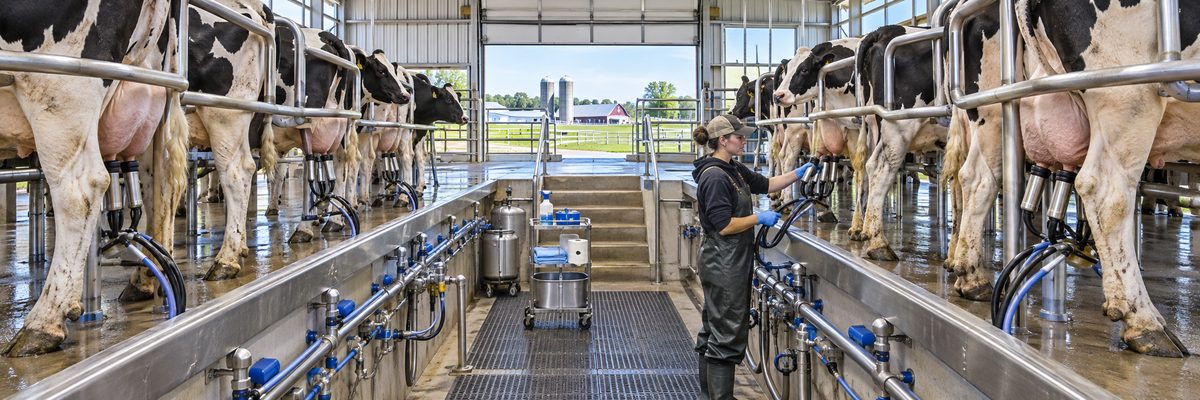
- Parlor, holding pen and equipment wash water, plus plate cooler water that is often reused for the cows.
- Flush water, where flush systems move manure.
- Calf, heifer and hospital pen water.
- Irrigation for forage, which is typically the largest water use on a farm that grows its own feed.
A UC Davis explainer on how water is managed on Western U.S. dairies describes the same idea: water on a dairy often passes through several uses before it leaves, which is why a reuse plan can cut both the water bill and the lagoon volume. Whether that works for you depends on state rules and your permit.
Where the dollars hide
Water rarely shows up as one line on the books. It's spread across:
- Pumping power. Deep wells and long lifts burn electricity. If the water table drops, the cost rises with it, and pump repair or well deepening can be a large one-time bill.
- District or ditch assessments. Irrigation districts and canal companies charge by acre, by share or by volume. Rates and delivery schedules change.
- Purchased or leased water. Some farms rent water in dry years. Prices can swing widely depending on the season and local supply.
- Treatment and testing. Hard water, salts, iron and bacteria add chemical, filter and equipment costs. Hard water and dairy cleaning is a common headache in the Mountain West.
- Storage and conveyance. Tanks, ponds, pipelines, and the plumbing that quietly leaks while everyone looks elsewhere.
- Compliance. Meters, reporting, nutrient management and wastewater permits in states that regulate them.
Put each of these into your cost of production. If you want water to show up in your numbers, figuring cost of production per hundredweight shows where to add it, so you can see whether a dry year is a nuisance or a threat to margin.
The rights side, in plain terms
The National Agricultural Law Center's water law overview explains that water allocation is generally governed by the states, each with its own system, while water quality is governed mostly by federal law. It also notes that agriculture accounts for the large majority of consumptive water use nationally and over 90 percent in many Western states, which is why competition for it is fierce.
From general knowledge, rather than from that source, the common Western pattern is prior appropriation, often summed up as first in time, first in right. A right typically has a priority date, a quantity, a point of diversion and a permitted use. In dry years, senior rights get water and junior rights may get none. Many Western states also regulate groundwater, with permits, metering, basin management or pumping limits, and some basins are over-allocated. California's groundwater sustainability law is one well-known example. Specifics differ, so confirm with your state water agency.
Questions to ask before buying or leasing a dairy
- What water rights or permits are tied to the land, and are they on paper, adjudicated or just assumed?
- What's the priority date, and how often has water been curtailed?
- Are wells permitted and metered, and what does the pumping record look like over several years?
- Does the right actually transfer with the sale or lease, or does it need approval?
- Has the water been used in line with the permit? In many places, long non-use can put a right at risk.
- What are the district assessments, and what's the delivery history?
- What's the water quality, and what does the farm do about it?
Get a water attorney involved before closing. A bad assumption here can cost more than the barn. If you're thinking about the land side of a deal, what it costs to buy a first dairy farm lists other items worth checking, and irrigated pasture dairies in the West shows how water drives the forage plan.
Ways to blunt the risk
- Measure first. Meter wells and key lines so you know what you use before someone else tells you.
- Fix leaks and check floats. A stuck float valve can run all night and the meter will remember it.
- Reuse where permitted. Cascading water from cooling or the plate cooler to troughs or flush systems cuts volume. Check permit conditions first.
- Diversify forage. Mix in lower-water crops or buy part of the feed if your allocation can't cover it.
- Keep the paperwork clean. Records of use, permits and payments are your best defense in any dispute.
- Look at conservation programs. Cost-share for irrigation efficiency and water storage exists in some places. Ask your NRCS office or conservation district.
Quick answers
How much water does a dairy cow need per day?
It depends on milk production, feed intake and temperature, but a lactating cow commonly drinks somewhere in the range of 20 to 35 gallons a day according to university estimates. Heat pushes it higher, and cooling water is on top of that.
Does a water right transfer when I buy a farm?
Sometimes, sometimes not. It depends on state law, how the right is documented and whether it has been used properly. Have a water attorney or your state water agency confirm before closing.
Can I reuse parlor water for the cows or fields?
Some reuse is common, such as plate cooler water going to troughs, but wash water and wastewater are regulated differently. Check your state rules and permit conditions with your agency or consultant before changing anything.