Dairy Business, Finance & Labor
Workers Compensation Insurance for Dairies Explained
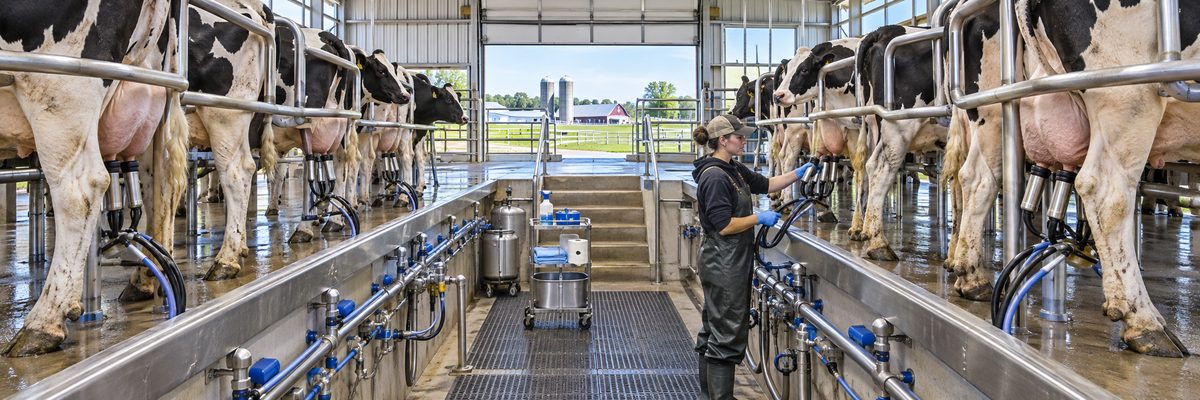
Dairy is one of the more physical jobs in agriculture. A thousand-pound cow can move a person faster than the person can move out of the way, and the list of other hazards runs from slick floors to skid steers to manure storage. Workers compensation insurance exists for the day somebody gets hurt, and for a dairy with employees it is usually one of the bigger line items on the insurance bill.
Here is the core of it. Workers comp pays medical costs and a share of lost wages to an injured employee no matter who was at fault. In exchange, the employee generally gives up the right to sue the employer over the injury. Whether your dairy is required to carry it depends on your state, how many people you employ, how much you pay them, and in some places whether the workers are family, seasonal or full-time.
Details here are general. Workers comp rules are state law, and the farm exemptions are written differently in every state that has them. Your state workers comp agency and a licensed farm insurance agent are the authorities on what applies to you.
Do you have to carry it?
Many dairies do, but some do not. The Center for Agricultural Law and Taxation at Iowa State describes farm labor as an area where the law treats agriculture differently, noting that farm employers are not subject to many federal labor laws and that many states exclude farm employment from their workers comp systems in some way. Those exemptions vary widely. Some depend on the number of employees, some on payroll size, some apply only to casual or seasonal labor, and some cover family members. Their discussion of this is on the Iowa State Center for Agricultural Law and Taxation site.
Two points matter if you think you qualify for an exemption.
- Read the exemption narrowly. Cornell's small farms program points out that some farmers wrongly assume they are exempt. In Pennsylvania, for example, the exemption has specific payment and days-worked limits per employee that must be met, and a farm that crosses them is covered by the law. Their discussion is in Do You Need Workers' Compensation for Your Small Farm?
- Exempt does not mean uninsured is wise. In states with an exemption, farms can often choose to opt in voluntarily, which brings the injury-claim protections that come with participating in the system. Others buy farm employer's liability coverage as a backstop. Your agent can explain how each works in your state.
The Cornell article also warns that employers who are required to carry coverage and do not lose the legal protections of the system. They can end up paying the injured worker's medical bills and lost wages directly and defending a negligence lawsuit, and many states add fines or criminal penalties. That is a bad bargain for the price of a policy.
What coverage actually includes
A standard workers comp policy has two parts. Part One covers benefits required by state law: medical care, a portion of lost wages, disability benefits and death benefits where applicable. Part Two, employer's liability, covers certain lawsuits that fall outside the comp system, such as claims by family members of an injured worker. Policies are written for a stated period and are based on an estimate of payroll that gets checked at an audit.
Workers comp does not replace your farm liability coverage. They answer different questions: comp handles injuries to your employees, liability handles injuries to everybody else, such as a milk truck driver, a feed rep or a school group on a tour.
What drives the premium
You pay for the risk of the work, and insurers estimate that risk with a handful of inputs.
| Premium driver | What it means on a dairy |
|---|---|
| Payroll | Premium is a rate applied to each hundred dollars of covered payroll, so more employees or higher wages means a larger premium |
| Classification | Employees are put in a class code by the type of work; a milker and an office bookkeeper are not charged the same rate, so keep accurate job duties |
| Experience modification | Your claims history compared with similar farms; a bad few years pushes it up, and it follows you for a while |
| State and carrier rates | Rates and filing rules differ by state, and some states run a state fund |
| Safety program and loss control | Written training, guarding and return-to-work policies can influence pricing or dividends with some carriers |
| Owner and family inclusion | Whether owners and family members are covered, excluded or included at a stated payroll changes the bill |
| Subcontractors | If a contractor you hire has no coverage of their own, an auditor may count their pay as your payroll |
The audit deserves respect. At the end of the policy period the insurer compares your estimate with actual payroll, and a dairy that added a second shift mid-year may owe additional premium. Keep clean payroll records so you can explain every line. Your record keeping system should make that easy rather than a scavenger hunt.
Where dairy claims come from
Without making up numbers, the usual suspects on a dairy are not mysterious. Animal handling injuries, such as kicks, crushes against a gate, and head-butts from a protective fresh cow. Slips and falls on wet alleys and in the parlor pit. Equipment hazards from skid steers, feed mixers and PTO shafts. Manure storage and confined space exposure. Back and shoulder strain from repetitive work. For some of these, reading manure pit gas safety for dairy crews or tractor and PTO safety will do more for your loss history than any change of carrier.
The Occupational Safety and Health Administration has an agriculture page that collects its farm-related resources. Federal rules on small farms are narrower than most people expect, but the hazards do not care about the paperwork. Safety is both the right thing to do and the cheapest premium strategy there is.
Ways to keep the cost reasonable
- Get the classification right. Review the job descriptions your insurer has on file. Misclassified office or sales employees can be charged farm rates, and the reverse can cause trouble at audit.
- Write down your safety rules and train on them. Start in the first week; the first-week onboarding plan is a good place to put a safety walkthrough. A written procedure and a signed training log help your agent make the case for your farm.
- Have a return-to-work plan. Light duty, such as calf feeding or record entry while a back heals, keeps people connected and often shortens claims. Coordinate with the treating physician.
- Report injuries promptly. Late reporting makes claims more expensive and harder to manage. Make sure every employee knows who to tell and that nobody gets grief for speaking up.
- Shop with a farm-savvy agent. Not every carrier writes agricultural risks, and some farms find coverage hard to place outside a state fund. An agent who writes dairies regularly knows who is writing in your state.
- Check contractor certificates. If you hire outside labor, ask for proof of their own coverage before they start.
A tight safety culture does not happen by accident, and neither does a tidy loss history. It also helps to see how the premium fits into the whole yearly insurance review instead of treating it as a separate bill that shows up and ruins a month.
Quick answers
Does a small dairy need workers comp?
It depends on your state and your payroll. Some states exempt small farms or certain farm workers, while others require coverage as soon as you have an employee. Ask your state workers comp agency or a licensed agent, and do not rely on a neighbor's answer.
Are family members covered?
Often they are treated differently from other employees. Some states exclude them from mandatory coverage, and some policies let you include or exclude owners and relatives. Decide with your agent whether you want the protection.
What happens if I skip coverage and a worker is hurt?
If you were required to carry coverage, you may be directly responsible for medical bills and lost wages and may face a lawsuit and penalties. Even where you are exempt, an uninsured injury can cost more than a year of premiums.